

Malaysia Reaffirms Air Force Modernisation Route
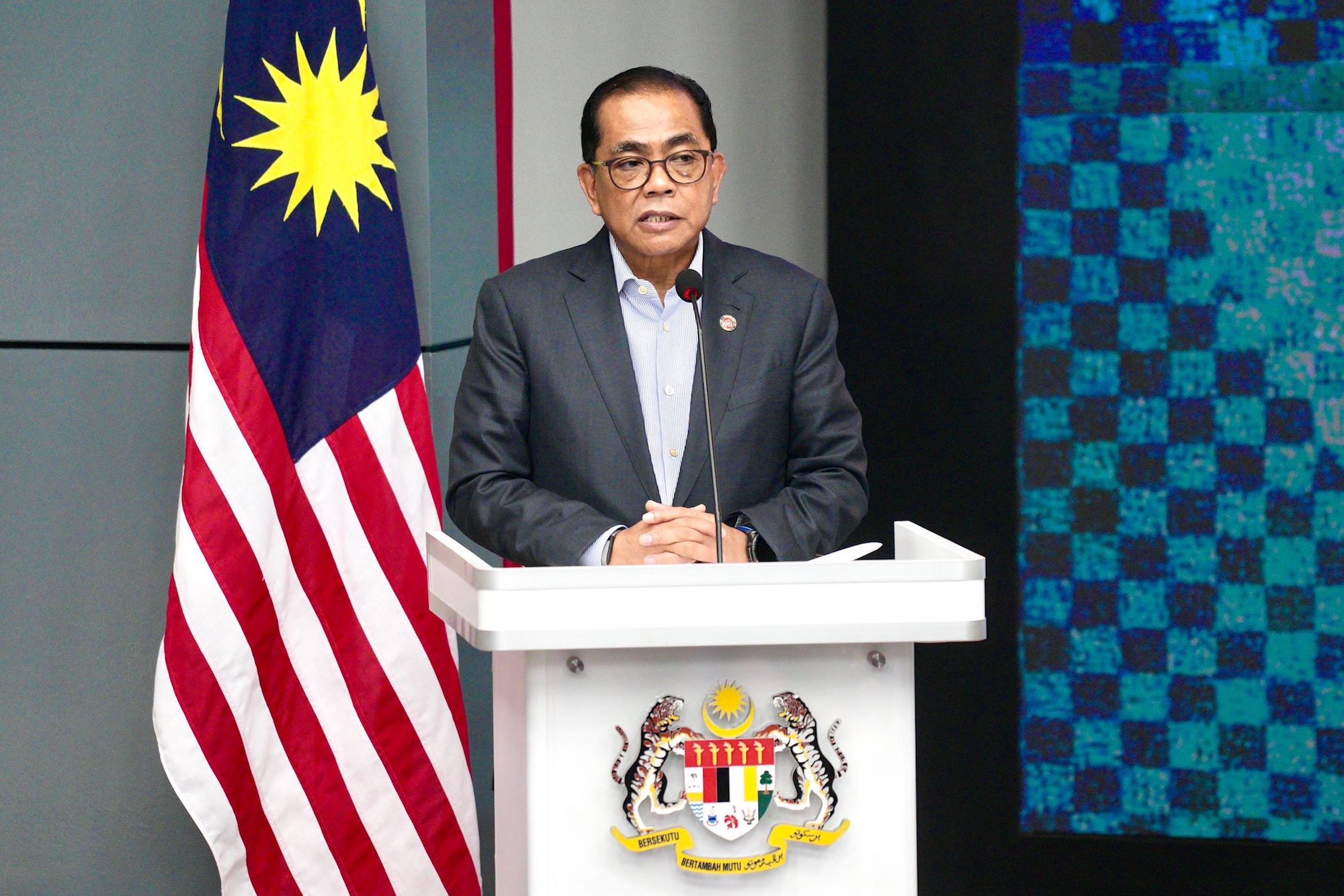
DURING a parliamentary session, Malaysia’s defence minister Khaled Nordin reaffirmed the plans of his ministry and Malaysian Armed Forces (MAF) to modernise the Royal Malaysian Air Force (RMAF) in line with the Capability Development Plan 55 (CAP55) plan from 2021-2055. The first phase which runs from 2021 to 2030 will see the implementation of seven core strategic programmes in order to better close the gap in critical capabilities and in turn, increase operational effectiveness.
The programmes comprised the acquisition of maritime patrol aircraft, utility helicopters, medium-altitude long-endurance (MALE) unmanned aerial vehicle (UAV), fighter lead-in trainer and light combat aircraft (FLIT-LCA), long range air defence radar, F/A-18C multi-role combat aircraft and medium range air defence (MERAD) systems.


Out of the seven programmes, only the air defence programme is left in the air with no decision as of yet. The minister revealed in October that US$1.8b would be used to maintain and procure defence assets, including very-short, short and MERAD (VSHORAD, SHORAD, MERAD) platforms for the Malaysian Army and RMAF respectively among other big-ticket items.
Though no candidates have been made public, the government has allocated around US$462 million for two batteries of MERAD platforms that will form the backbone of Malaysia’s medium range air defence. Firms such as MBDA, Diehl Defence, Kongsberg, Aselsan, NORINCO, LIG Nex1 among others are likely some of the top names in consideration with a variety of highly capable MERAD systems offered.

After that, the only programme still yet to be finalised is the Kuwaiti Air Force (KAF) F/A-18C/D Hornet procurement as a stop-gap measure. RMAF chief General Muhamad Norazlan himself travelled to Kuwait in November to assess the ongoing evaluation of RMAF technical staff on the 38 units of inactive F/A-18C/D Hornets as US approval now allowed access to documentation and maintenance records. The airframes would be evaluated based on its long-term viability specifically on maintenance requirements.
A technical evaluation from Nov 11-26 by the RMAF evaluation team was crucial for the RMAF to holistically judge the technical aspects, operational levels and readiness of the KAF Hornets. The outcome of the evaluation would then be the reference for the RMAF and government to decide on the feasibility of the aircraft as a long-term stop-gap in line with RMAF operational requirements.
Malaysia’s bid for the Hornets started as early as 2017 before fizzling out and reigniting again last year. The deal received congressional greenlight from the US in line with the Arms Export Control Act in June but is contingent on Kuwait’s receipt of its brand-new F/A-18E/F Super Hornets from Boeing. Transfer of the Kuwaiti Hornets to Malaysia will only proceed after delivery of the new aircraft. Gen Muhamad Norazlan added: “If the KAF receives four Super Hornets, four Hornets will be transferred to us and so on”.
The 27 F/A-18C single seaters and 6 twin-seater F/A-18Ds operated by the gulf state air force would substantially increase the RMAF Hornet’s nest comprising 7 of 8 F/A-18Ds flying since 1997 and receiving a multitude of upgrades since. The addition of these aircraft would serve as a stop-gap measure before the force’s new fighter aircraft is decided likely in 2035. One RMAF F/A-18D Hornet was lost in a crash on August 21 while one one Kuwaiti Hornet crashed during a training mission, claiming the life of its pilot last October.
The RMAF is expected to take delivery of its first P-72M maritime patrol aircraft (MPA) from Italian aerospace giant Leonardo before the end of 2026. Furthermore, the subsequent aircraft is scheduled to be handed over within the next three months of the first unit. In July, Malaysia announced its intention to acquire another pair of P-72M maritime patrol aircraft (MPA) from Leonardo on top of 28 AW149 helicopters.
Progress on the MPA programme had exceeded 60% and is on schedule as of May 2025. Malaysia signed an estimated US$200 million deal for two P-72M MPAs with Leonardo during the previous Langkawi International Maritime and Aerospace (LIMA) exhibition in 2023. The MPA programme under CAP55 envisions an MPA fleet of six airframes to be procured in phases.
Furthermore, Leonardo will also supply 28 helicopters as part of the government’s leasing plan for 28 rotorcraft for 15 years. The 28 helicopters would then be distributed amongst the Royal Malaysian Air Force (RMAF), Malaysian Army, Royal Malaysian Navy (RMN), Malaysia Coast Guard (MCG), Royal Malaysia Police (RMP) and Fire and Rescue Department. Though there may be plans to acquire more dedicated combat search and rescue (CSAR) helicopters for the RMAF.

Three units of Turkish Aerospace Industries’ (TUSAS) Anka-S MALE UAV ordered in 2023 are slated to arrive by February 2026 together with relevant support systems. As of November, the UAVs are now undergoing the final integration before delivery by the end of this year, seemingly ahead of schedule according to the RMAF. Moreover, six pilots and 6 weapons sensors officers from the RMAF’s No. 11 Squadron successfully completed five months of simulator and live-flight training in Turkiye.
On the 18 FA-50M light fighters ordered from South Korea’s Korea Aerospace Industries (KAI), six RMAF pilots and 51 engineers are set to travel to South Korea in October 2025 and January 2026 respectively to train on operating the platform. As of July, the project reached 69% completion and is progressing slightly ahead of schedule for an October 2026 completion date.
The FA-50M variant would be equipped with state-of-the-art active electronically scanned array (AESA) radar and sniper advanced targeting pod as well as an in-flight refuelling system. It will replace the Hawk aircraft in the light strike role and complement the F/A-18Ds as well as Su-30MKMs by delivering precision–guided munitions and stand-off weapons.
Also in July, Malaysia finalised its procurement of two additional Thales GM400 Alpha long-range air surveillance radars, adding on to an earlier order of one GM400 Alpha in December 2023. Thales will also engage in Transfer of Knowledge and Train-the-Trainer courses delivered under the Industrial Collaboration Programme (ICP), while strengthening its installed base in Malaysia. The first GM400 Alpha is being tested currently, with progress being 60% and expected to be operational and delivered in April 2026. –-shp/adj/dl (Pix:RMAF, MBDA, DIEHL, KONGSBERG, ASELSAN, ADJ, LIG NEX1)