


Cut Last-Mile Delivery Costs, Times By Up To 50% With QuikBots
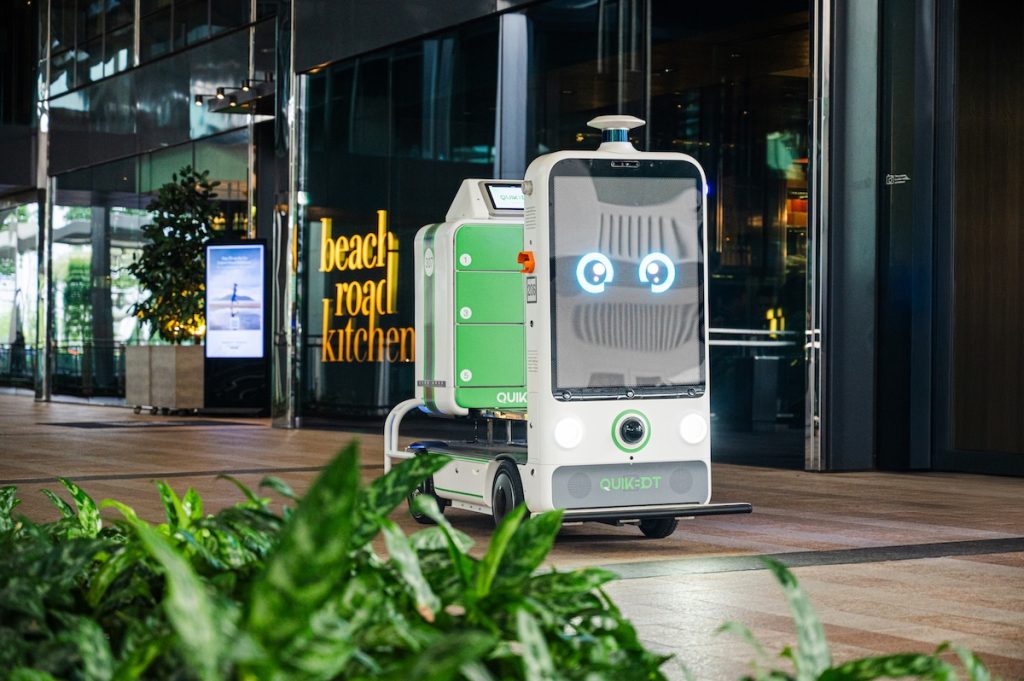
QUIKBOT Technologies is the world’s first provider of an Agentic-AI-powered interoperable robotics platform for autonomous delivery in smart cities, including aviation environments such as airports, MRO clusters, cargo hubs and operational support buildings.
It closes that gap, digitising, orchestrating and automating internal movement across aviation facilities using autonomous mobile robots. The result is secure, traceable movement with real-time visibility across multi-storey, controlled environments. Company founder and CEO, Alan Ng, recently had a chat with the Asian Defence Journal…
ADJ: Could you give us an overview of what the company does and the core solutions you offer?
AN: QuikBot Technologies delivers an Agentic-AI-powered interoperable robotics platform for autonomous delivery. While aircraft, ground systems and passenger infrastructure have advanced significantly, internal deliveries and asset movement inside terminal buildings remain manual. Our platform digitises and automates these workflows using autonomous mobile robots, enabling secure movement with full traceability and real-time visibility.
ADJ: Can you share with us some of the issues that QuikBot looks to tackle?
AN: Internal logistics including supplies, tooling spare parts and documents are still manual and fragmented. Airports have invested heavily in passenger automation and baggage digitalisation, yet internal movement often remains labour based. [Source: SITA Air Transport IT Insights 2023]. QuikBot digitises and automates movement end to end and reduces manual effort.
ADJ: What are some of QuikBot’s ventures into the aviation sector?
AN: We support secure cross-terminal deliveries, crew and staff logistics, tooling movement, MRO workflows, restricted zone deliveries and landside to airside automation. Our approach aligns with aviation safety, security, and compliance standards.
ADJ: Aviation relies heavily on efficiency and precision. As automation becomes more prevalent, how does QuikBot’s approach help streamline processes for airlines, airports or aviation service providers?
AN: QuikBot turns movement into data and data into orchestration. By integrating with access controls, lifts, turnstiles, IoT systems and enterprise platforms, automation becomes multi-floor and multi-facility with reliable routing and real-time visibility. This improves turnaround performance, resource efficiency, and operational continuity.
ADJ: Looking ahead, what are some opportunities or challenges you foresee as automation becomes more deeply embedded in aviation operations?
AN: Airports span large areas and support large workforces. Internal logistics supports both operational movement and daily staff needs. Automation of internal deliveries is a major opportunity. Challenges relate to interoperability, regulatory alignment and operational trust.
ADJ: What partnerships or ecosystem collaborations are you hoping to explore at the Singapore Airshow?
AN: We aim to collaborate with airport operators, airlines, MRO organisations, systems integrators, digital platform providers and regulatory partners who share a vision for scalable internal logistics automation.