Airbus Defence And Space Reaffirms Asia-Pacific Commitment
AIRBUS Defence and Space has outlined a comprehensive strategic roadmap for the Asia-Pacific region, emphasising a shift from standalone platforms to integrated system solutions. Highlighting major milestones in autonomous refuelling, tactical airlift, and regional innovation, the company reaffirmed its role as a long-term partner in achieving regional sovereignty and technological innovation.
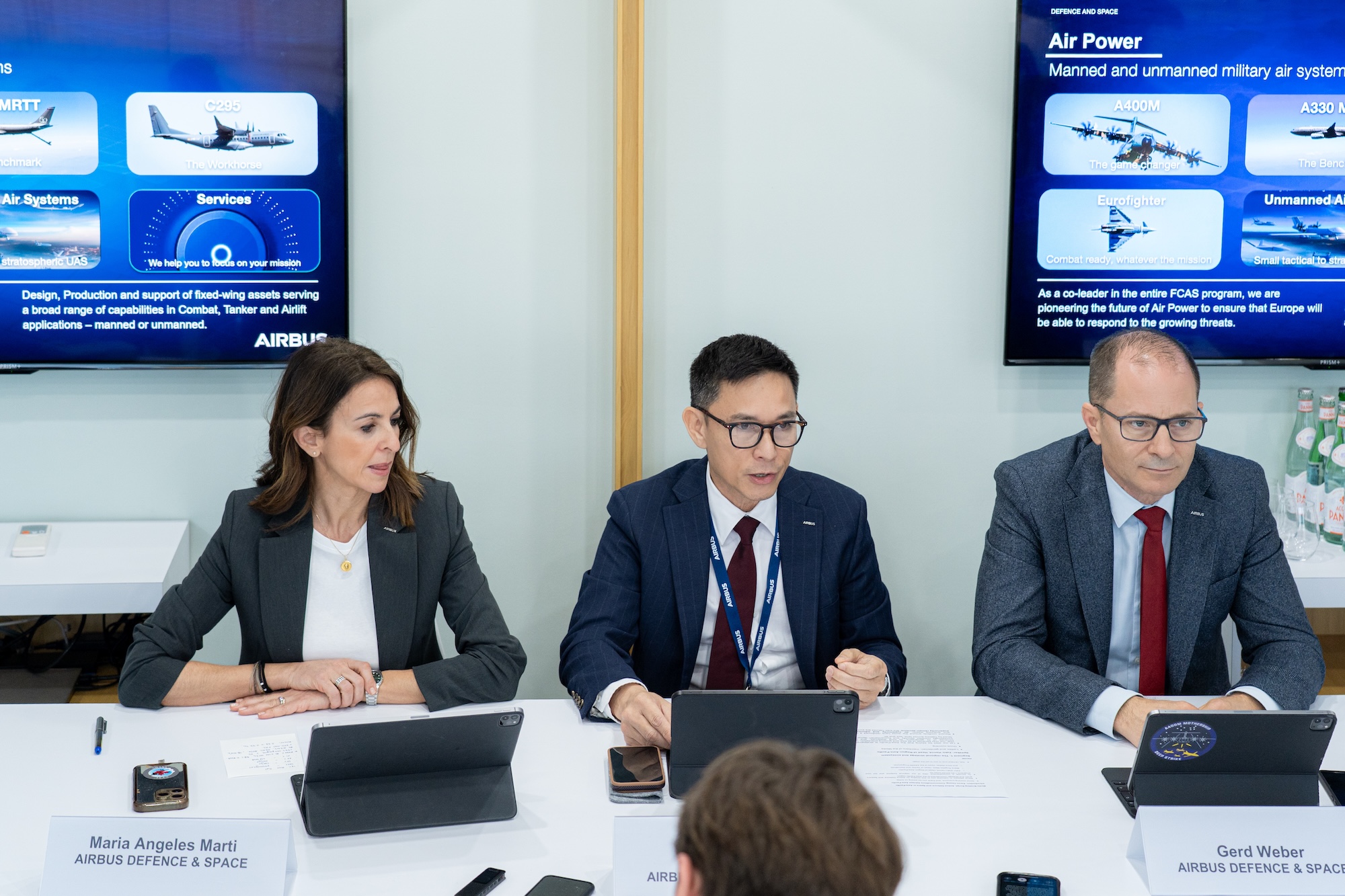
Speaking to regional media at the Singapore Airshow, Airbus Defence and Space Head of Region Asia-Pacific Zakir Hamid opened the briefing by addressing the evolving nature of air superiority. “In a region defined by vast distances and complex security demands, superiority is no longer defined by platforms alone,” said Zakir. “It is defined by the speed of decision-making and resilient connectivity.”
Airbus is addressing these needs through a balanced fleet concept designed for high availability and value, combining the high-frequency operations of the C295, with the heavy lift capabilities of the A400M and long-range air-to-air refuelling missions of the A330 Multi Role Tanker Transport (MRTT). Zakir also highlighted Asia-Pacific’s role as a global innovation engine, with three of Airbus’ four global Tech Hubs located in Japan, Korea, and Singapore, focusing on future energy, advanced composites, and space technologies.
The company’s Head of Tanker and Derivatives María Ángeles Martí, announced a major technological breakthrough–the full certification of the A3R (Automatic Air-to-Air Refuelling) system by the Spanish National Institute for Aerospace Technology (INTA). Developed in collaboration with the Republic of Singapore Air Force (RSAF) and Singapore’s Defence Science and Technology Agency (DSTA), the system requires no additional equipment on receiver aircraft and significantly reduces operator workload while increasing safety.
Looking ahead, Airbus is pioneering the A4R (Autonomous Assets Air-to-Air Refuelling), which will allow tankers to autonomously guide receiver aircraft into position without pilot intervention. Entry-into-service is expected early next decade.
In the tactical segment, Martí noted the continued success of the C295, with 38 aircraft in service across six regional nations, and revealed that an A321XLR MPA (Maritime Patrol Aircraft) concept is currently under study to meet future long-range surveillance requirements in the region.
Head of the A400M Programme Gerd Weber highlighted the aircraft’s “game-changer” status in Asia-Pacific. Following Malaysia, Indonesia recently became the 10th global operator in November 2025, with its second aircraft scheduled for delivery later this year. “The A400M bridges the gap between strategic and tactical airlift, citing recent disaster relief missions in Indonesia where the aircraft accessed austere runways unreachable by other heavy lifters.
He also cited future developments for the A400M which increase in payload from 37 to 40 tonnes, its multi-role “Mothership” capabilities where the aircraft can serve as a hub for Intelligence, Surveillance, and Reconnaissance (ISR) and Command & Control (C3), as well as as the integration of a modular firefighting kit capable of dropping 20,000 litres of water, offering a critical tool for regional civil protection against wildfires.
Furthermore, the briefing underscored the importance of Space as the backbone of modern operations. Asia-Pacific remains a dominant market for Airbus, accounting for approximately 50% of OneSat telecommunications orders and hosting the world’s largest direct receiving stations.
On the environmental front, Airbus Defence and Space’s Air Power product portfolio is currently up to 50% SAF (Sustainable Aviation Fuel) compatible, aligning operational readiness with the sustainability goals of Asia-Pacific nations.
Closing the session, Zakir emphasised Airbus’ role as a stabilising force in a complex geopolitical landscape. “Airbus offers stability, predictability, and a long-term commitment. We are not just a supplier; we are building resilient, collaborative defence ecosystems tailored to the unique needs of the Asia-Pacific.”-shp/adj/dl (Pix:AIRBUS)