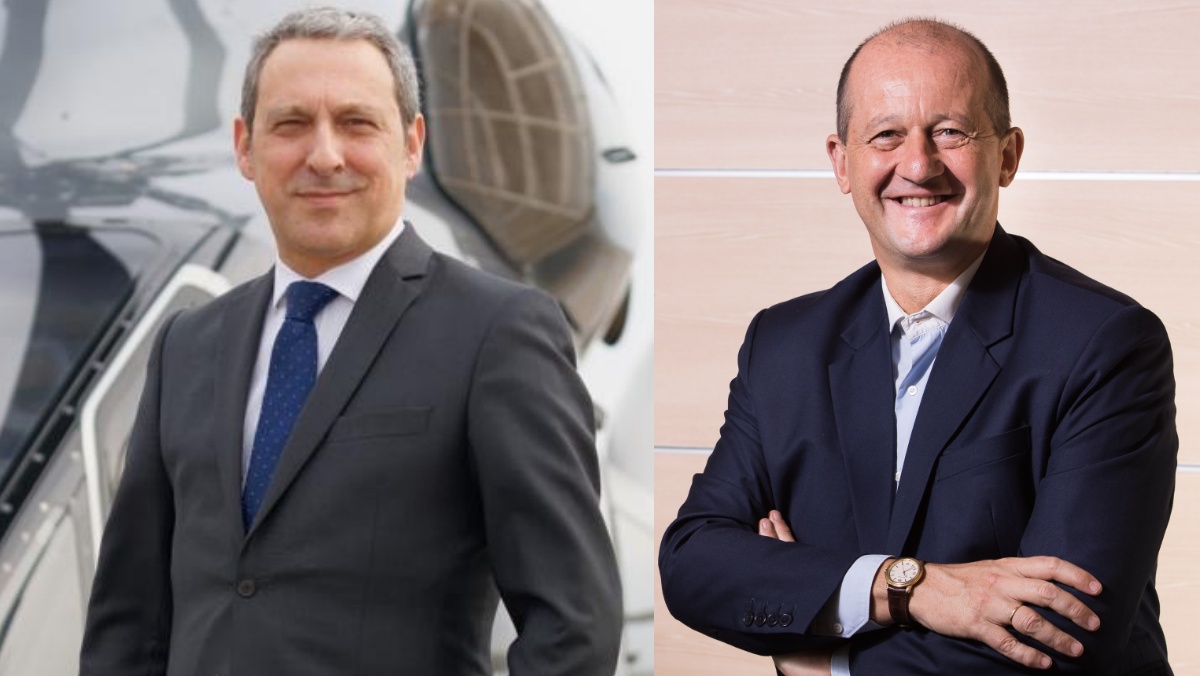
Olivier Michalon & Vincent Dubrule, Airbus Helicopters
AT the recent Singapore Airshow 2026, Asian Defence Journal spoke to Airbus Helicopters executive vice-president of global business Olivier Michalon and senior vice-president/head of APAC Vincent Dubrule on the firm maintaining its steady growth pace.
ADJ: With momentum on the side of Airbus Helicopters in the Asia-Pacific region, how will the company look to capitalise on that going into 2026?
OM: For Airbus Helicopters, 2025 has been an excellent year – our orders for both civil and military helicopters reached 536 nett (540 gross) which is an excellent, excellent performance in all market segments. Our full range of helicopters have been successful, either beating or exceeding the target across all continents. Our research and development (R&D) programmes are also on time. As you know, we are now also a drone manufacturer, so we are already focusing a lot in this sector.
To conclude, 2025 was a very exciting year, and I am sure 2026 will be even more exciting, considering all the projects we have in the region and beyond. Despite it being a challenging year with every contract being a battle, we believe that nothing comes easy. All in all, Airbus Helicopters finished Number One in market shares, across the civil and parapublic markets with 51% market shares. We are also glad to add that we led the defence and security market for the first time, securing 28% of the demand.
VD: In the Asia-Pacific region, we are continuing our strong efforts from last year and focusing more on the unmanned aerial systems (UAS) range. With the Flexrotor unveiled last year, we were able to secure orders for the Flexrotor in Australia, and to plant seeds everywhere in order to increase that. Therefore, this year we hope to further develop orders of the Flexrotor, on top of our usual military orders from several countries, not to mention a number of prospects this year. Though we cannot disclose much in detail, there has definitely been an increase in interest with a strong, consistent focus in the military segment. As you probably know, roughly two-thirds or more of the worldwide budget for helicopters are put into military helicopters, so it is an important market for Airbus Helicopters.
ADJ: Could you also briefly enlighten us on the full range of helicopters offered by Airbus?
OM: We have a wide spectrum of aircraft with most of our helicopters being dual-purpose for both military and civil applications. Our M family, H125 is the most sold single engine aircraft around the world with approximately 8,000, delivered since its conception. It is considered as the ideal training platform amongst the high altitude, utility type helicopters. Although it is not a brand-new type of helicopter, it is regarded as among the most reliable single engine helicopters in the industry. So we will continue with the H125. Next, the H130 which is only for civilian use, typically flown for emergency medical services (EMS) or VIP purposes. Following that, the H135 light, twin engine helicopter for training is considered as a very good solution. We will soon deliver the first units for the Royal Canadian Air Force (RCAF) which purchased a total of 19 units. Currently, we are competing with the H135 for a trainer helicopter tender in Singapore. The tender is in the civil parapublic segment, which has played a key role as one of our greatest success stories in the EMS segment.
Then in 2025, we introduced the H140, a brand new helicopter design that is larger than the H135. So it is not an evolution of the H135 it is actually an entirely new helicopter which we developed because the market asked for it. We co-developed the helicopter with around 10 of our customers based on all their requirements, which made it a highly interesting venture as it was built by the customer, for the customer. Upon its first introduction to the market, we had a very strong first year with 61 bookings from the three biggest EMS operators in the US and the three main EMS operators in Europe as well, all in the first year. And that is a very strong start to the journey as we continue to push harder due to the extremely positive responses from the market. It is a clear signal that with the H135 for EMS and other segments in the future, we are going in the right direction.
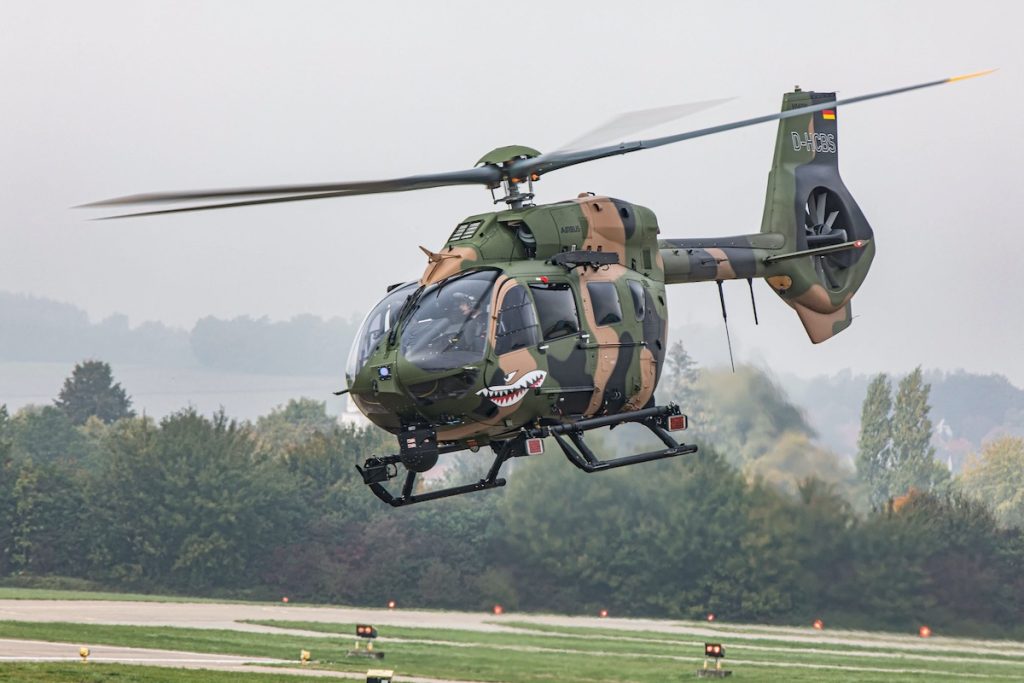
After that, we have the H145M, which can be said to be unmatched in its segment, it can be described best as a Swiss army knife. It can do everything, making it the best value for money with its impressive dynamics. Our bookings for the H145M have multiplied four times compared to five years ago. That is because the H145M is unique in the industry and is experiencing growing demands. In light of that, we had to ramp up our production to cope with that growing demand and maintain competitive lead times. For the civil version flown for EMS, law enforcement and VIP purposes, it has also enjoyed great success. Moving on to the H160 which has been only civilian until now, flying EMS, law enforcement, VIP, oil and gas, search and rescue (SAR) with the French Navy. We will deliver the first EMS H160 to a hospital in Houston, Texas later this year. Currently, the H160 is accumulating a lot of flying hours, and the feedback is highly encouraging. The first prototype for the H160M took flight five months ago, with the first customers being the French Army, French Air and Space Force, French Navy and National Gendarmerie. So, Gendarmerie got its very first several weeks ago but it is not an M variant. First delivery of the M variant is still a couple of years away on a path to serve as the backbone of the French Armed Forces as well as replace five helicopter types across all branches with only one platform – the H160M. That, of course, entails significant economies of scale and synergies paired with some strong interest already from the export market for the H160M. So right now, we are working hard on that.
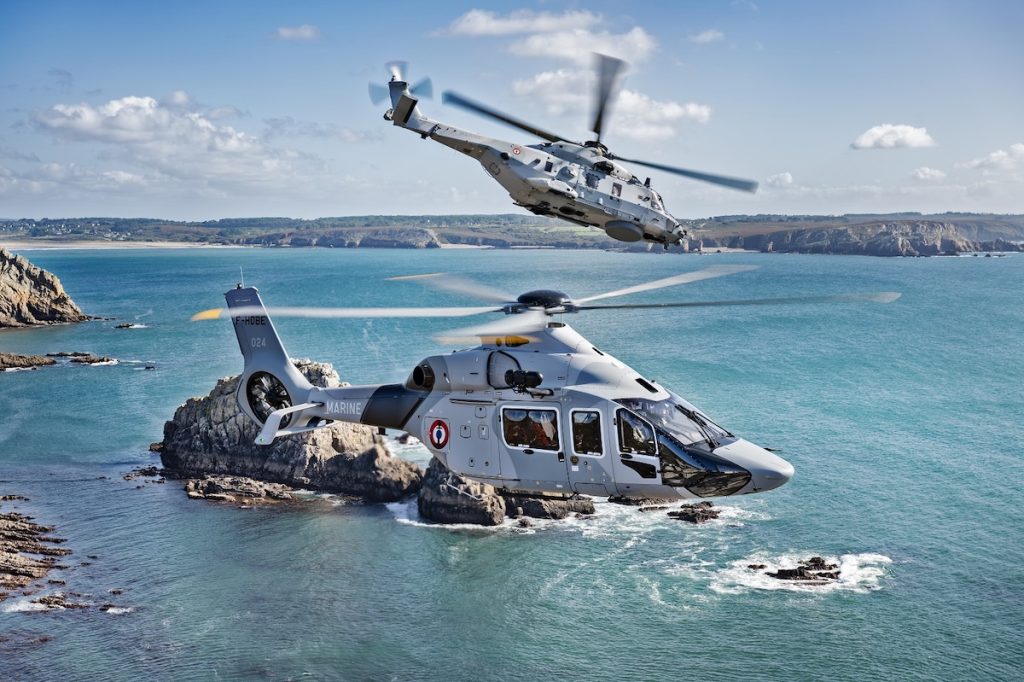
Additionally, we have the H175 which is very prominent in oil and gas along with parapublic services. The M variant is also being developed at this time, with ongoing negotiation with some big prospects. Then of course, our H215, H225 family and the NH90 which has had a strong momentum going. Right now, we have reached a level of maturity where the market is realising that it is not only the most modern helicopter, but possibly the best in its category. The NH90 has even won awards, including from the US Navy (USN), believe it or not. There is an annual contest dubbed the “Hook ‘Em” Award which rewards excellence in anti-submarine warfare (ASW) and of course includes naval helicopters identifying submarines. The NH90 NFH has actually won the award for several years in a row.
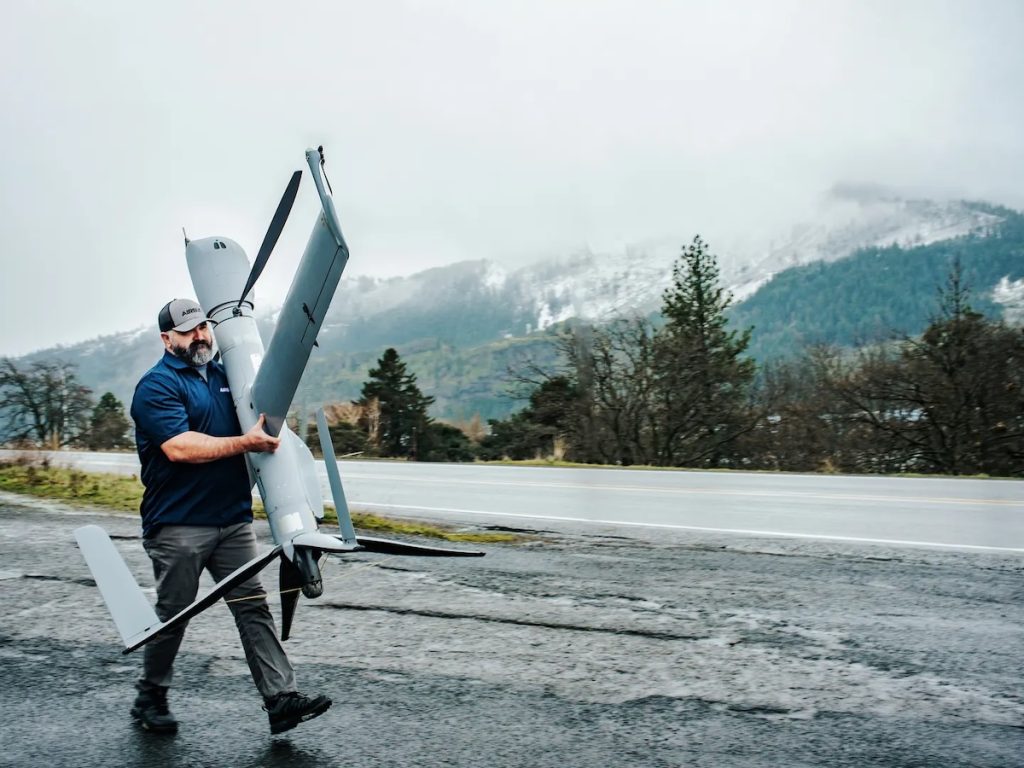
Before we finish, we have drones. Our VSR 700 is a 750kg unmanned aerial vehicle (UAV) for naval missions, but we will also have an army version. Then we have the Flexrotor which was successfully combined with the Republic of Singapore Air Force’s (RSAF) H225M, a highly successful demonstration between the helicopter and the drone, so we have much more exciting things in store.
ADJ: The H225M is perhaps the most popular military helicopter in Southeast Asia with Malaysia, Singapore, Thailand and Indonesia operating them. How has Airbus looked to better enhance the capabilities of the H225M and others in the range?
OM: As you know, our products evolve all the time – we constantly strive to improve our product because it is in our DNA. So there are several active projects right now defining the new standards of the H225M. Usually, these improvements are also linked to some contracts we have signed. A recent contract signed a year and a half ago involves a lot of new developments, which will be available for the export market soon. So, between our self-funded R&D budgets and customer-funded R&D budgets, you can expect the H225M to constantly improve. We signed a contract with the Royal Netherlands Air and Space Force (RNLASF) where they wanted to enhance their combat search and rescue (CSAR) capabilities. Then, they told us what they wanted and we looked at what was feasible and possible, which helped us to continuously improve our product.
Airbus’ HForce can be used aboard all the M models today, from the H145 onwards to the H225M, or possibly even the H125 in the light single segment. So that is another advantage we have as it offers commonality in training then in operation. Pilots can switch from one type to another rather easily, greatly reducing the time to qualify from one platform to the other. And this family concept provides a great, great advantage, it is one of the key attributes to our successes because it is seen as a key competitive advantage by various armed forces who put their faith in us.
I would say that in the region, especially within Southeast Asia where there is a cluster for the H225M, it is interesting to see that the global demand for H225M has never been that high. Previously we had believed that 20-25 orders per year was a good year, but last year we recorded orders for 70 units if we combine the NH90 and H225M in the heavy military helicopter segment. So, our positioning in the heavy segment of military helicopters is getting stronger and stronger, which is a clear positive sign and we are continuously impressed with the growing demand for H225M. Furthermore, the H225M is here to stay, it is not an aircraft we will stop manufacturing in 15 or 20 years, we will continue to improve and manufacture it at least until the 2060s.
VD: The H225 from the Super Puma family is our heaviest helicopter in the 11-tonne class. And in Asia Pacific, both the military and civil versions of the H225 are present in nearly all countries within Southeast Asia and Northeast Asia. So it is interesting to note that most of our existing customers in Southeast Asia are actually interested in increasing the size of their fleet, which may give you a clue on our prospects.
Furthermore, in February we celebrated the momentous occasion of the H225 and H225M fleet attaining one million flight hours. Airbus Helicopters marked the milestone with our customers, because of the platform’s exceptional performance. Among our customers, Malaysia is the highest flyer in terms of highest flight hours per aircraft and per year, and we are all proud to have made it possible.
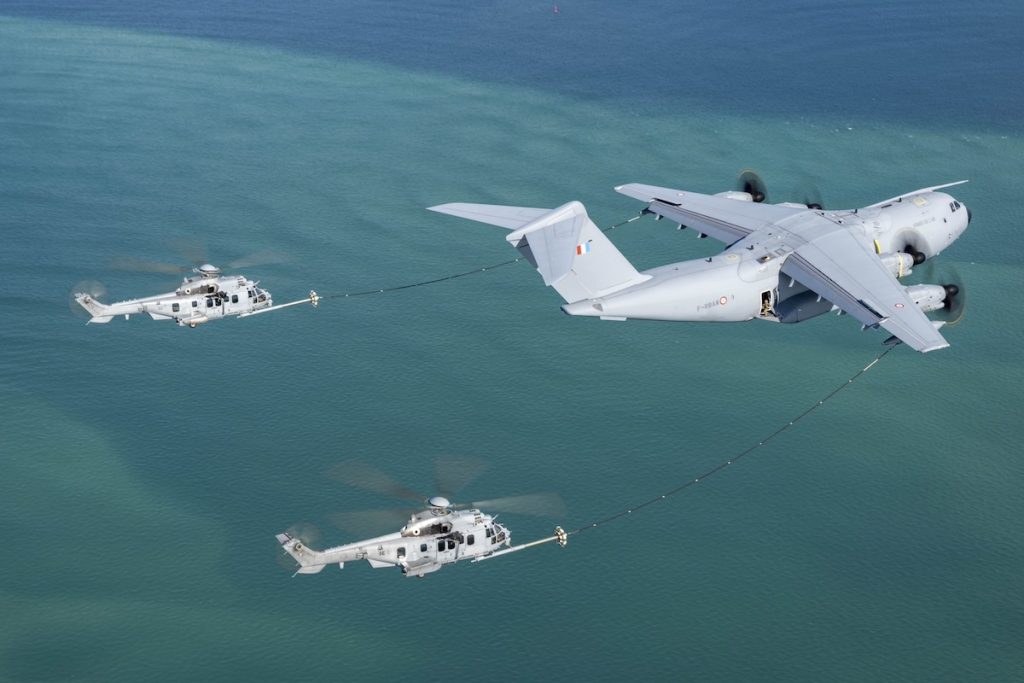
Aside from that, the H225M is the only helicopter that has an air-to-air refueling (AAR) capability, when you have a downed fighter pilot, for instance, or personnel that are far out at sea beyond the normal range of any helicopter, the H225M itself already has the furthest range. So, if the H225M can be refuelled from an Airbus A400M, then the range is unlimited. With that expansive reach the H225M can easily complete any mission required of it. With almost every country having fighter pilots, these pilots know if they are downed for any reason in hostile areas, it is either that they are on their own or they will be picked up by their own side or allies that have the means to do so. That is why for example in Malaysia, AAR was one of the specifications for their subsequent batch of helicopters. Their existing fleet of 12 H225Ms could be reconfigured but it would be complex, but it is clear that AAR is an important capability that they hope to, and need to possess.
OM: And to the best of my knowledge, no other manufacturer is able to offer that. We are ready to export that technology with the support of the French authorities to explore the H225M with AAR capabilities for our existing customers and future customers. There have been ongoing discussions about more H225Ms to expand the fleet and we are optimistic about that because the Royal Malaysian Air Force (RMAF) is a strong supporter of the H225M, and rightfully so because militaries deserve military helicopters.
ADJ: How does Airbus’ uncrewed/unmanned aerial systems (UAS) complement manned helicopters and also how has the Asia-Pacific region responded to Airbus Helicopters’ pairing of manned and unmanned assets, for both existing and prospective customers?
VD: Our HTeaming trial with the RSAF and DSTA was the outcome of our agreement with those two parties around six months ago and it was realised just before the end of January. The trials to control the Flexrotor in flight and in-mission from an H225M. And this teaming combination definitely enhances the capabilities of both platforms. Today, you can have one drone but tomorrow you could probably have two or three controlled from one helicopter. Then, you can fly away with the drone beyond its initial range of the drone, which is 80km from the helicopter, and this is really the future. So HTeaming, or manned-unmanned teaming (MUM-T) is part of the future developments we are working on, and this cooperation agreement with the RSAF is a manifestation of that.
OM: We see that MUM-T, what Airbus terms as HTeaming where our helicopters and drones work together as a mission efficiency amplifier. We do not see drones as a replacement of the helicopter, which could be feasible for some very small specific missions, but more in the civil sector rather than in the military. We envision them working together and this is clearly part of our strategy. What we demonstrated with the RSAF’s H225M can be done with any helicopter in our range, from the smallest H125 to the H225M or NH90 and everything in between. It is very easy, it just takes four antennas and a unique tablet developed by us. From here onwards, helicopters will be prepared and built in anticipation for potential HTeaming missions. So, it is complementary, our value proposition is improved precisely because of this capability.
We remain patient, and confident that we still have the best solution, and it makes sense. If customers are happy with the current fleet of H225M, the rational decision is to continue. That is why we believe that at some point, the most rational decision will be made to expand the fleet of H225M because of commonality and additional performance.
ADJ: How has Airbus adapted to supply chain challenges in recent years as the race for rare earth materials continues?
OM: Our supply chain is solid as of now and is not an issue so far. France and Germany have agreements with other nations which provide some security regarding the supply of such rare materials.
VD: If I may complement in one sentence, there may be a risk on quantities of such materials but its use of aeronautics is small compared to the worldwide use. If needed, our supply chain will make it happen because they are ready to pay a little more for that small quantity.
OM: Logistics wise, Airbus Helicopters’ supply chain has gotten stronger since the Covid-19 pandemic. Though it has not been the easiest journey, the entire aerospace industry was hurt, along with every other industry around the world. It did take a little bit longer than we expected to recover, but what I find absolutely remarkable is the trust our customers have in us. In challenging times, we didn’t hide or try to find excuses, we remained optimistic and we are fortunate to receive such strong support from our customers. Their support gave us even more fuel to do all that we could to recover, which contributed greatly to our good shape presently. However comfortable we are today, we can always do better.
During the pandemic, some of our small but critical suppliers, encountered financial difficulties, to which the French government came to us and offered financial assistance to cope with the situation. In the end, we redirected that assistance to our suppliers who needed it more in order to continue supporting us too. If our suppliers can remain afloat, then we will be fine. In the end, it is together in times of great adversity that we see our true partners. Airbus, the government, our entire supply chain and customers all remained committed and strong to push towards the same goal really helped us make it through those tough times.
VD: An industry is not something steady, companies have to be agile, and ready to learn from whatever happens and major disruptions such as Covid-19 do not occur often. So, it was practically the first time we experienced disruptions in our supply chain, from the first tier to the fifth. It was a learning experience for us from which we were able to recover and now we try to be even more resilient to such events.
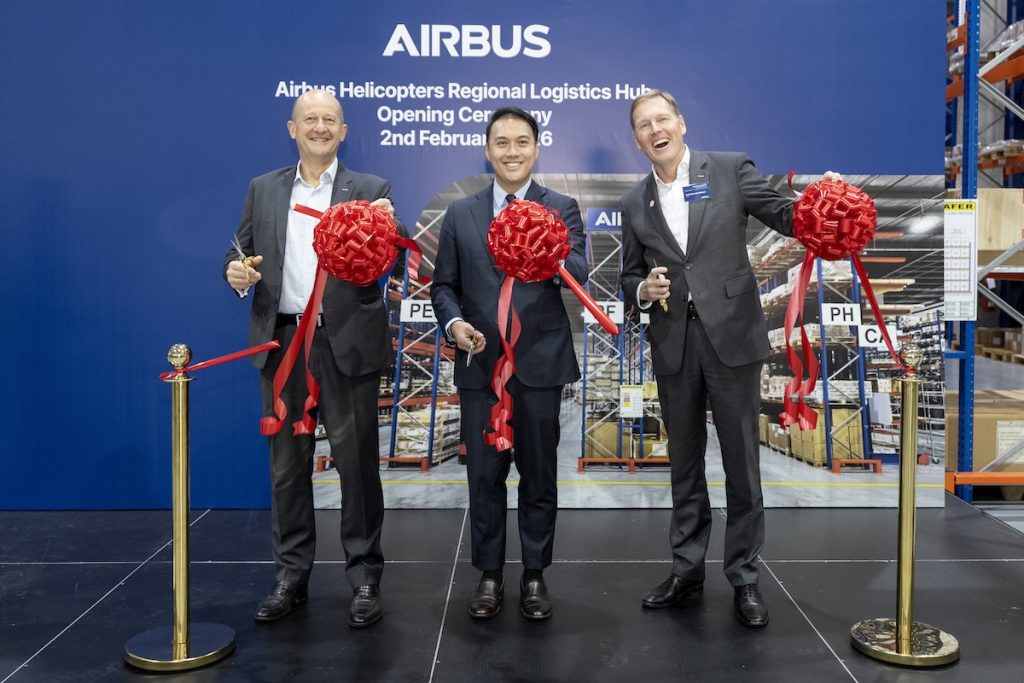
Touching on logistical bonds, Airbus Helicopters officially opened our regional logistics centre which is located here in Singapore, around Changi in a free trade zone. In order to be more resilient, we selected a place that is first of all, well connected to the entire Asia-Pacific region which is practically just a flight from nearly everywhere. Secondly, a location that is safe in terms of continuity, which Singapore is well known for. This allows to reduce the risks of potential disruptions such as linked to flight restrictions, export controls and so on. So this was a sound decision made around one and a half years ago which finally came to fruition. Its opening is important because it highlights our commitment to be closer to our customers, furnishing us with better capabilities in ensuring our customers receive all necessary support because solid logistics makes things happen. It is good to have a great helicopter, but they need a steady supply of crucial parts in order to continue flying.