

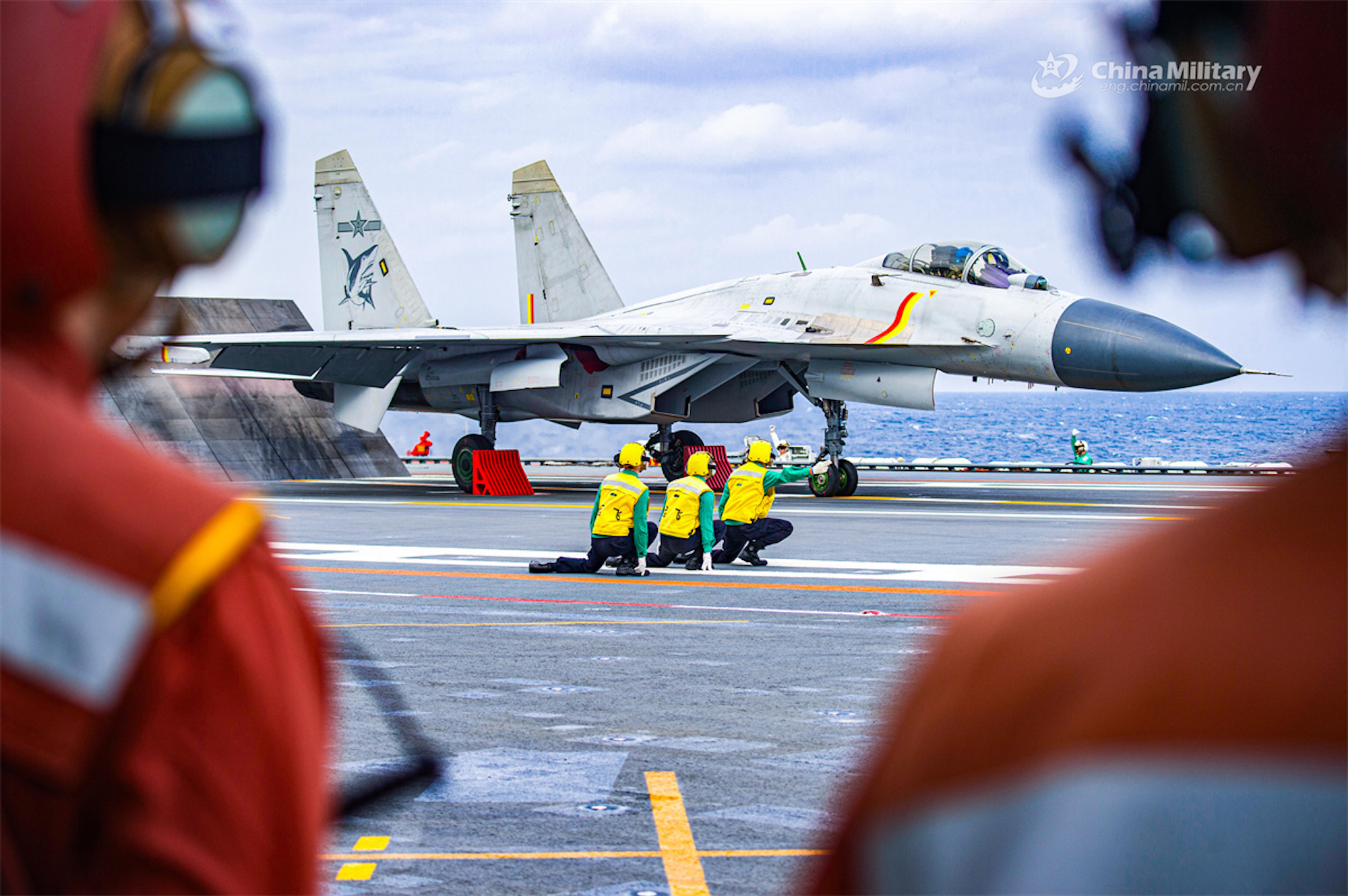
China, Japan Fighter Lock On Ordeal Continues
ACCORDING to Japan’s defence ministry, Chinese People’s Liberation Army (PLA) Navy J-15 fighters had fire-control radar locks on Japanese Air Self-Defense Force (JASDF) F-15 fighter jets at least twice over international waters off southeastern Okinawa on December 6. The JASDF aircraft had been monitoring the PLAN aircraft carrier CNS Liaoning operating in the Philippine Sea.
A fighter’s radar is often used to lock onto targets in fire-control mode with missiles and signal potential attack and also for wide-area search mode which can detect and track multiple targets. The radar lock is often perceived as a highly provocative manoeuvre as it is the step immediately before launching offensive weapons.
To which, Japan lodged a formal protest to China, labelling the incidents as an “extremely regrettable” act at a time where China-Japan relations had deteriorated sharply over the stance of Japan’s new prime minister Sanae Takaichi on potential Japanese involvement should any Taiwan contingency break out.
Japan had scrambled the F-15s in response on the Chinese J-15s potentially entering Japanese airspace with China stating that the Japanese jets approached within 50 kilometres of their training zone. Japanese media reports cited sources that revealed Chinese radar locks occurred from 50km away on the first occasion while the second radar lock was made from over 110km away.
In response, China’s counter-protest stated that “frequent close-in reconnaissance and disruptions” by Japanese jets caused the security risk while Japan maintains that its aircraft kept safe distances. Japan said around 140 training takeoff and landing sorties took place on the Liaoning between Saturday and Monday.
“China’s claim that Self-Defense Forces (SDF) aircraft seriously impeded the safe flight of Chinese aircraft is unfounded,” said Japan’s Chief Cabinet Secretary Minoru Kihara. The Chinese foreign ministry spokesperson Guo Jiakun said, “Our manoeuvres are professional, standard, and beyond reproach. To activate search radar during flight training is commonly done by carrier-based aircraft of all countries. It’s also a normal measure to ensure flight safety.” Adding “We strongly urge the Japanese side to immediately stop its dangerous harassment of China’s military exercise and training, and stop all irresponsible allegations and political manipulation.”
The new Japanese defence minister Shinjiro Koizumi met with Australia’s deputy prime minister and defence minister Richard Marles in Tokyo after the incident for the Australia-Japan Defence Ministers meeting. Marles said, “the events last night are concerning and Australia has also experienced concerning events in interactions with the PLA.”
On Dec 9, China then released audio recordings of notifications to Japan in Mandarin and English regarding the PLAN’s planned carrier-based aircraft training prior to the incident, also alleging that Japan responded in receipt of the message. Furthermore, China also claimed that its aircraft also detected radar search signals from the Japanese aircraft.
Those claims were disputed by Koizumi, noting that China had not published prior notices for drills, such as “notices to air missions,” or NOTAMs which are often customary. “China claims to have announced the training airspace and sea area in advance, but we are not aware of any such prior notification”, he added.
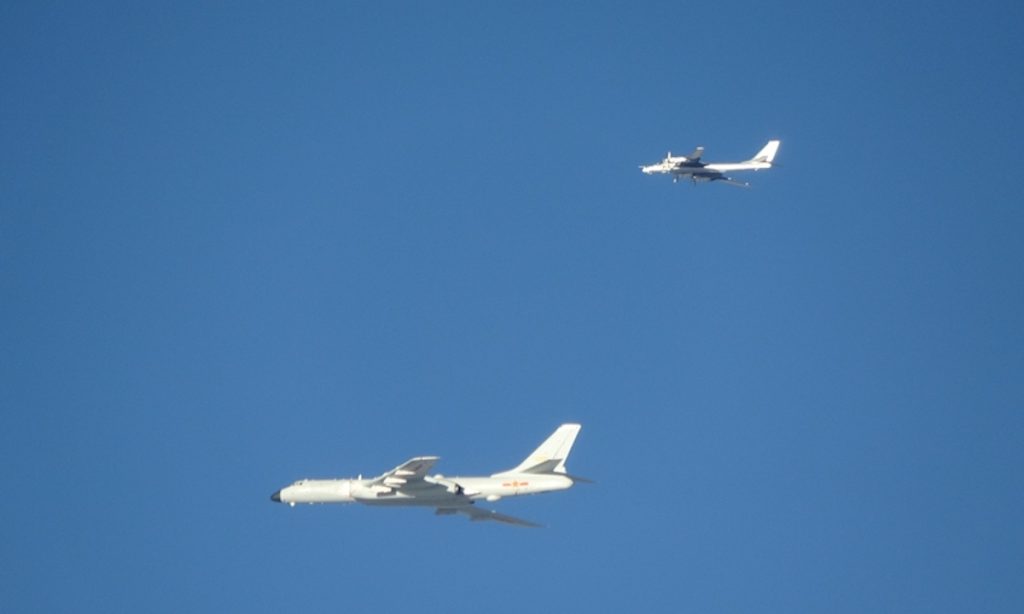
On the same day, China and Russia then held a joint bomber patrol over international waters near Japan and South Korea, prompting the scrambling of fighters from both nations. The 10th joint strategic patrol saw the involvement of China’s H-6K, J-11, Su-30, and J-16 together with KJ-500A AEWC with a Russian Tu-95
Two Russian Tu-95s flew between the west of Japan and southeast of South Korea before rendezvousing with a pair of PLA H-6K bombers and continuing on a long-distance joint flight before being joined by four PLA J-16s. After that, one Russian A-50 airborne early warning and control (AEW&C) aircraft together with two Russian Sukhoi Su-30s were spotted to Japan’s north with JASDF fighters scrambled to intercept in response. South Korea also dispatched fighters after the joint flight briefly entered the country’s Air Defense Identification Zone (KADIZ).
“Two Chinese military planes and seven Russian aircraft successively entered the KADIZ at around 10 a.m. prompting the military to dispatch Air Force fighter jets in preparation for a possible accidental situation, according to the Joint Chiefs of Staff (JCS)”, according to South Korean media. The aircraft did not violate South Korea’s air space, with the military detecting the aircraft before entering the KADIZ.–-shp/adj/dl (Pix:CHINAMIL)