
Duncan Looi
ASELSAN has signed agreements valued around US$2.75 billion with the Presidency of Defense Industries (SSB) for the procurement of hybrid air defence systems. Among the agreements was a US$549.1 million export deal with an undisclosed foreign customer also for air defence platforms.
The total exceeds previously announced blockbuster deals, including a US$1.85B air defence agreement last September and another US$1.6B agreement for additional air defence production this July. The SSB accounted for 30.6% of Aselsan’s net sales and 37.8% of its trade receivables in its latest disclosed financial statements.
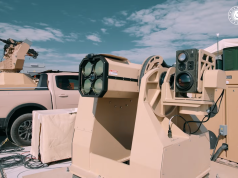
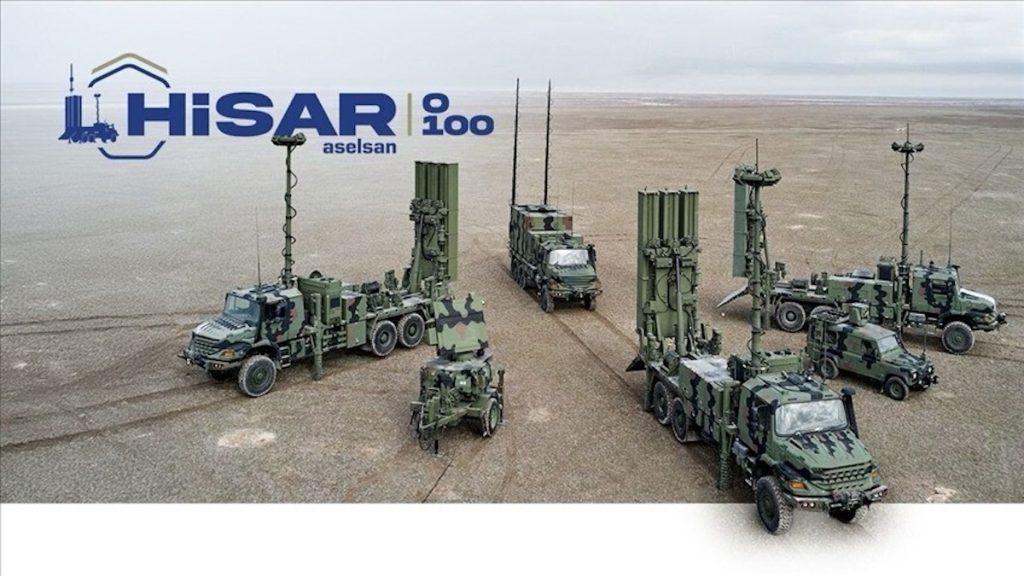
The company filed a Public Disclosure Platform (KAP) notification in early October for the direct export of integrated air defence systems, radar architecture and fire control nodes to an unspecified country. The package included ASELSAN’s very short-range air defence (VSHORAD) and SHORAD platforms such as the 35mm KORKUT self-propelled anti-air gun (SPAAG) and SUNGUR man-portable air defence system (MANPADS). Additionally, the contract also included the short-range HISAR-A and medium-range HISAR-O surface-to-air missile (SAM) as well as the HERIKKS early warning and command control system and KALKAN fire control and surveillance radar.
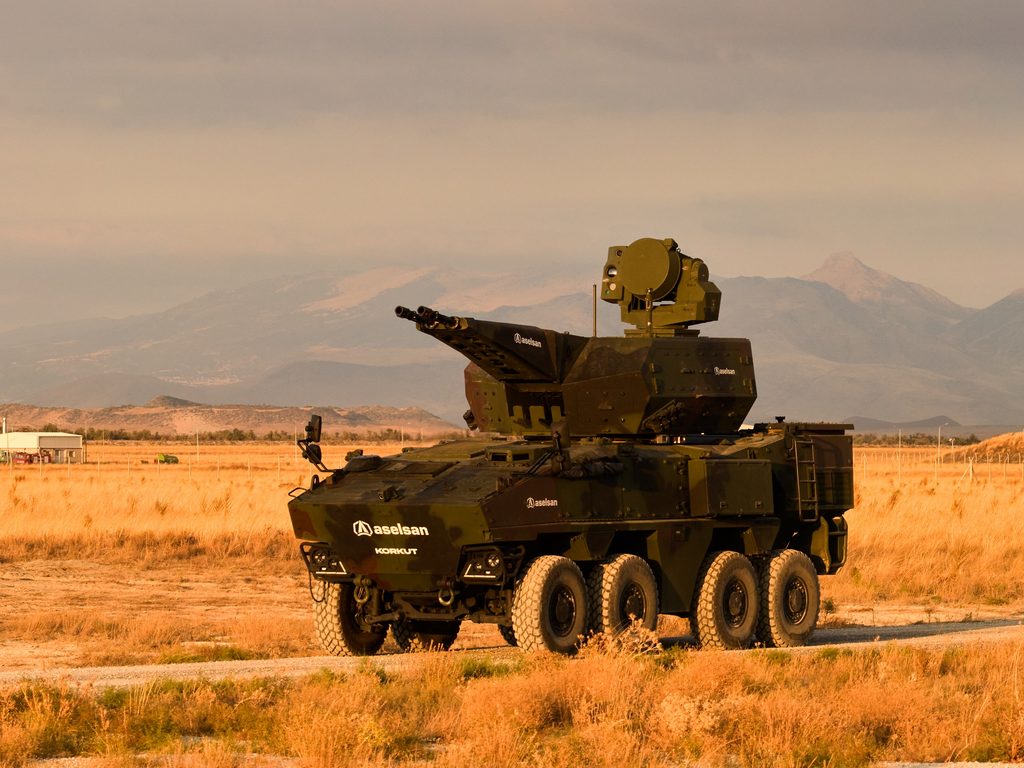


The KORKUT 35 is an all-weather-capable SPAAG with twin 35mm autocannons capable of firing up to 1,100 rounds per minute at aerial targets of up to 4km away using smart munitions. It was recently showcased in a live-fire demonstration attended by international military top brass and observers from 12 nations, including those from the Asia-Pacific region.
In demonstrations conducted under different scenarios, the KORKUT 35 system, which is effective against fighter aircraft, cruise missiles, air-to-ground missiles (AGM), helicopters and unmanned aerial vehicles (UAV), was demonstrated with a particular focus on its capability to defend against kamikaze UAVs and mini/micro UAVs, which are among today’s most frequently encountered threats.
The HISAR systems were developed under the coordination of the SSB through cooperation between ASELSAN and ROKETSAN, while the missile warheads were developed by Turkiye’s defence research institute Tubitak Sage. The systems are designed to counter threats including fighter aircraft, helicopters, cruise missiles, air-to-surface missiles and UAVs.
The HISAR-A is designed primarily to protect mobile and armoured units against low-altitude threats, with the HISAR-A+ variant able to intercept as far out as 15km while the HISAR-O provides medium-altitude point and regional air defence. Meanwhile, the HISAR-O+ can engage targets at distances of up to 25km.
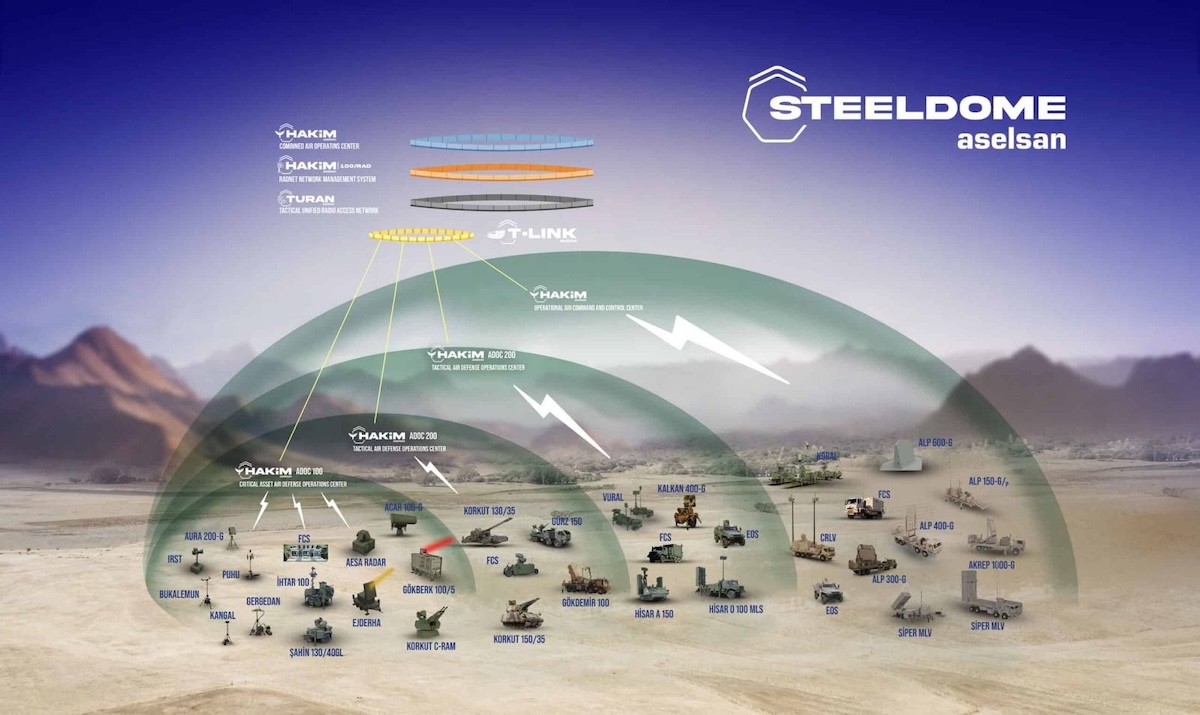
Turkiye’s ASELSAN is major part of the nation’s multi-layered “Steel Dome” air defence system, delivering various components that make up the system as the company said that ongoing serial production efforts are further strengthening the Steel Dome. Steel Dome is Turkiye’s integrated, layered air defence architecture, bringing together radar and other sensors, command-and-control systems and weapons to detect, track, and counter aerial threats across different ranges and altitudes. Its capabilities include long-range air and missile defense, early warning and systems designed to counter drones.
In the Asia-Pacific region, Malaysia is looking to procure two batteries of medium-range air defence systems. Though no candidates have been made public, the government has allocated around US$462 million for two batteries of MERAD platforms that will form the backbone of Malaysia’s medium range air defence. Firms such as MBDA, Diehl Defence, ASELSAN, NORINCO, LIG Nex1 among others are likely some of the top names in consideration with a variety of highly capable MERAD systems offered.-–shp/adj/dl (Pix:ASELSAN)