

S. Korean KSS-III Submarine Docks In Guam En Route To Canada
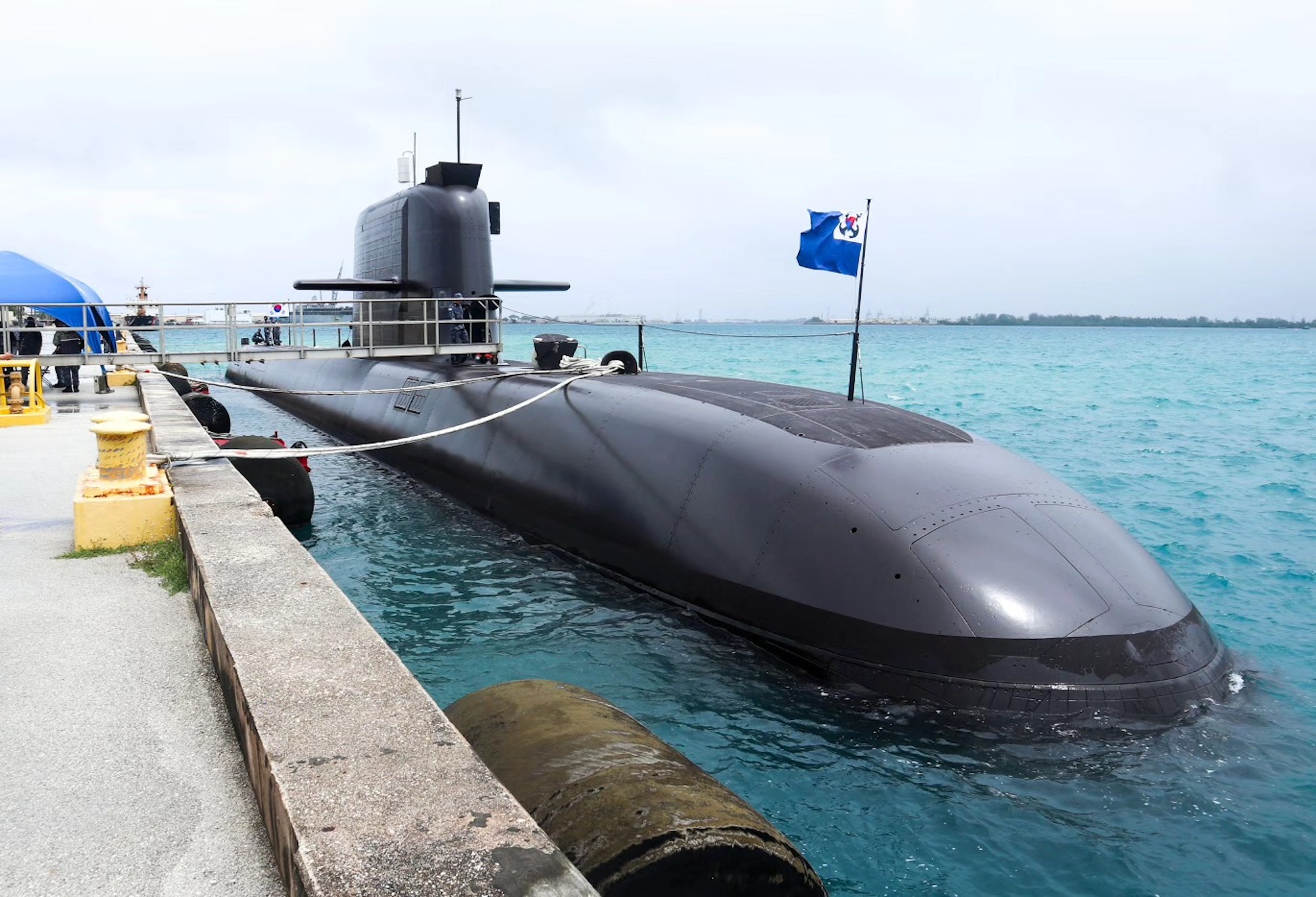
SOUTH Korea’s KSS-III 3,000 tonne diesel-electric attack submarine ROKS Dosan Ahn Chang-ho docked in Guam en route to Canada for joint drills. The submarine which departed South Korea on March 25 arrived at the US Naval Base Guam on April 8 for a logistical resupply.
The Dosan Ahn Chang-ho reportedly along with a Daegu-class frigate ROKS Daejeon are making a 14,000km voyage to Canada for anti-submarine warfare (ASW) exercises with the Royal Canadian Navy (RCN) set to take place from May 23 to June 2. Once completed, it would be the longest journey undertaken by a South Korean submarine and set to make history as the first Republic of Korea Navy (ROKN) submarine to cross the Pacific Ocean.
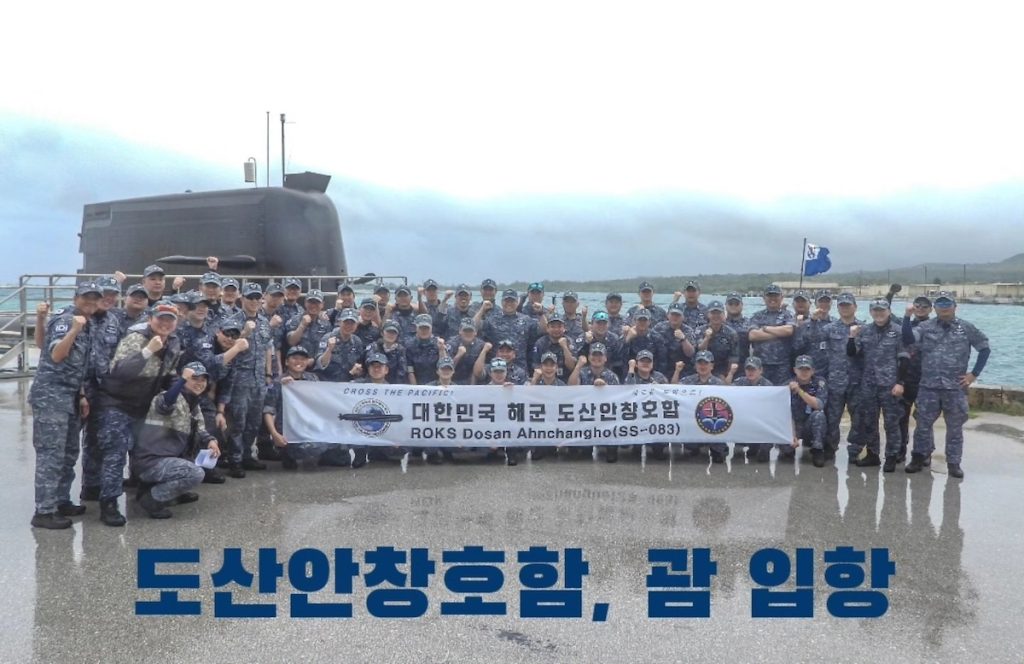
According to South Korean media reports, the submarine is expected to stop over in Hawaii for another replenishment stop where a pair of Canadian submariners will board the Dosan Ahn Chang-ho for the final portion of the journey from Hawaii to Canadian Forces Base Esquimalt, part of a programme to “develop skilled and knowledgeable sailors by exposing them to different operational environments, tactics, and techniques,” according to the RCN.
After the drills have concluded, the submarine will also participate in the US-led multinational Rim of the Pacific (RIMPAC) exercise before returning home. In December, Canadian submariners also joined South Korean submariners aboard the ROKS Ahn Mu, the Dosan Ahn Chang-ho‘s sister vessel during the month-long Silent Shark combined ASW exercise jointly held by South Korea and the United States near Guam.
The deployment comes at a crucial as a South Korean consortium comprising the government, ROKN together with defence firms Hanwha Ocean and HD Hyundai Heavy Industries (HD HHI) are competing with Germany’s TKMS to supply Canada with a dozen submarines in a US$40 billion contract. As part of efforts to win the project, relevant government ministries, including the defence, foreign and industrial ministries, as well as the ROKN, and defence firms Hanwha Ocean and HD HHI signed an official document last month confirming government support for the bid.
The Dosan Ahn Chang-ho is the same class of submarine that South Korea is pitching to Canada, with its journey to become a “driving force” for the Navy and South Korea’s arms industry, according to Defense Acquisition Program Administration (DAPA) chief Lee Yong-cheol.
“It will be a milestone in expanding cooperation with friendly nations, such as Canada and Britain, while reaffirming the status of our Navy and the potential of the South Korean arms industry. The chances are 50-50, and of course, I don’t know the answer. We have done our best and will wait until the result comes out. Based on conversations, their interest in (submarine) operation and maintenance was very high, and to ensure such capabilities, detailed requests were made on technology transfers. At least, this shows that Canada is seriously considering the possibility of partnering with South Korea, so this is not bad”, Lee said.
Under the Canadian Patrol Submarine Project (CPSP), Canada looks to procure as many as a dozen submarines for the Royal Canadian Navy (RCN) as one of the largest conventional submarine procurements in modern history with an aim to receive the first new vessel no later than 2035.
Hanwha Ocean and Babcock Canada signed a teaming agreement in September 2025, with a company statement stating, “To successfully enter service by 2035 and operate a fleet of up to twelve submarines from coast to coast to coast, significant programme investment and commitment will need to be made while the chosen submarine platform is being built. The opportunity to have Canada, the submarine builder, and an experienced Canadian submarine in-service support contractor working together through the build programme will ensure Canada is best prepared to sustain its future fleet and deliver operational availability when and where the RCN needs it.”
“This Teaming Agreement enables both leading marine organisations to combine their respective capabilities in shipbuilding and submarine in-service support to deliver a sovereign Canadian sustainment solution that will support Canada’s future fleet of submarines from build to decommissioning. Notably, Hanwha Ocean can deliver the first KSS-III Combat Patrol Submarine in just six years, followed by additional units at a pace of one per year. Assuming a contract award in 2026, four submarines can be delivered by 2035 – with the first delivered in 2032. This unmatched delivery schedule provides Canada with the fastest path to a new and greatly enhanced submarine capability.”
In October 2025, Hanwha Ocean launched its first 3,600-tonne KSS III Batch II submarine–the Jang Yeong-sil. Compared to the 3,000-tonne Batch-I class submarine that has been commissioned for active duty, the larger submarines have enhanced detection and strike capabilities. It is expected to have more vertical launch tubes for submarine-launched ballistic missiles (SLBM), in comparison to six known launch tubes in the 3,000-tonne Batch-Isubmarines that have been commissioned.
In a related development, TKMS and E3 Lithium signed a Teaming Agreement to establish a strategic framework for cooperation in support of Canada’s future submarine capabilities under the CPSP. The Teaming Agreement sets the stage for collaboration on research, technology transfer and investment initiatives of mutual interest. The cooperation aims to integrate Canadian critical minerals into the submarine supply chain, with potential benefits for both domestic industry and international export markets.–-shp/adj/dl (Pix:ROKN, TKMS)