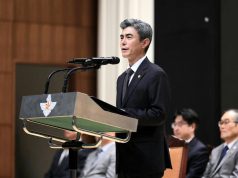
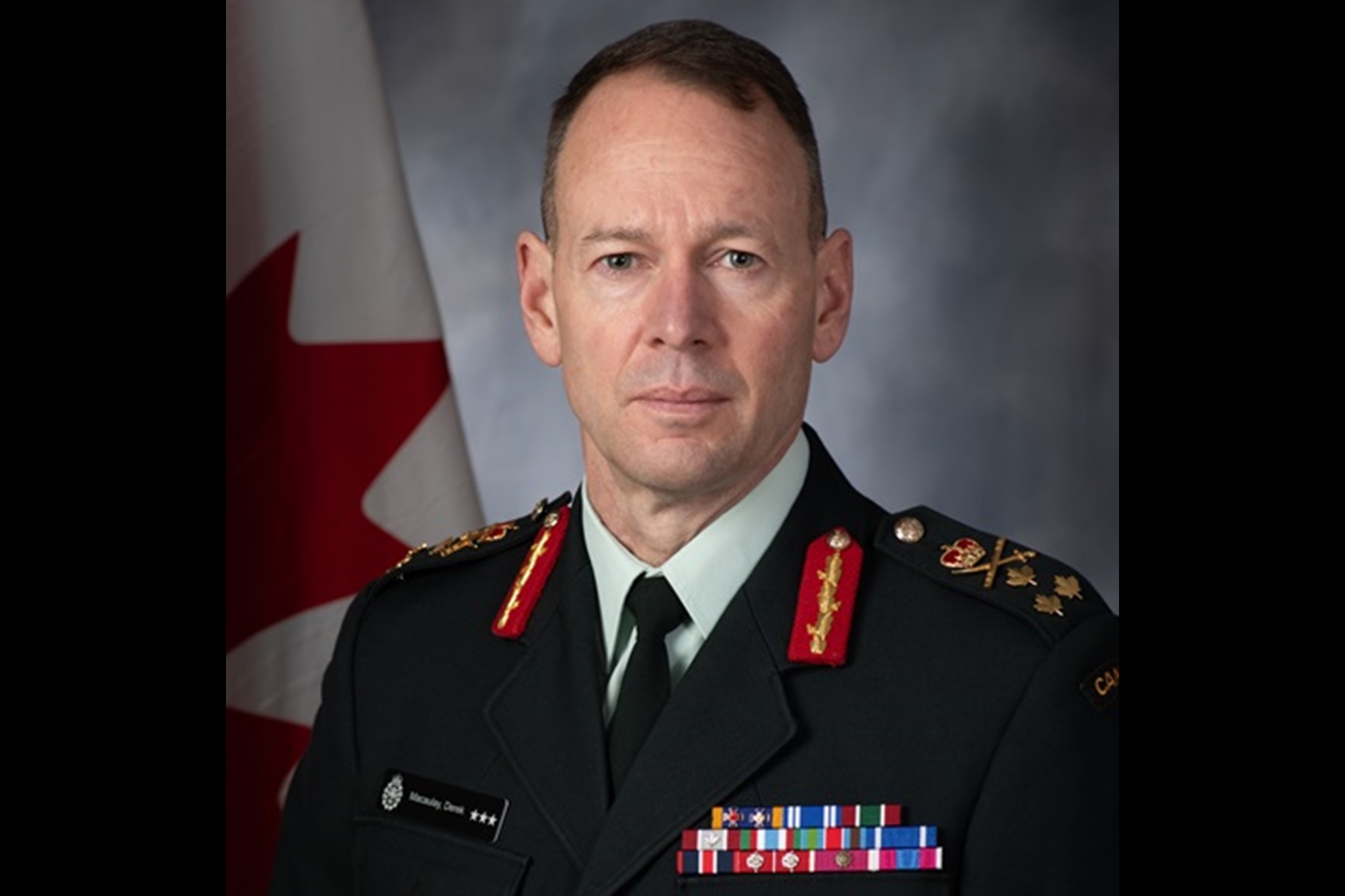
CANADA’S first Senior Military Representative-Indo-Pacific (SMR-IP) Lieutenant General Derek Macaulay speaks to Asian Defence Journal on the sidelines of the US Pacific Command’s (PACOM) International Military Law and Operations Conference (MILOPS 26) in Kuala Lumpur. This newly established position aims to support the Canadian Armed Forces’ (CAF) engagement across the Indo-Pacific region on behalf of Canada’s Chief of Defence Staff (CDS), General Jennie Carignan.
ADJ: Would you be able to tell us more about yourself and the new SMR-IP position?
SMR-IP: As you know, I’m the new SMR-IP, and I have served in the Armed Forces for around 36 years and have had a number of opportunities across my career. That includes an opportunity to serve alongside Malaysian forces back in Bosnia around 1994 while I was a young captain. So it is interesting that I finally made it to Malaysia after over 30 years, and I am really pleased to be in the region.
Prior to this assignment, I served as the Deputy Commander of the United Nations Command (UNC) for just over two years in South Korea. Before that, I was the Vice Director for Operations at the US Central Command (CENTCOM) in Tampa, Florida after I completed my tenure as Deputy Commander of the Canadian Army.
So after some varied experience, I’m glad to have this opportunity to be present in the region and really foster Canadian interests and priorities. As I mentioned earlier, my personal relationship with Malaysia spans back to 1994 but as you might know, the Canada-Malaysia relationship goes back much further than that. In fact, our relationship was founded with defence as sort of the foundational aspect back in 1957. That makes next year the 70th anniversary of diplomatic relations between our two countries, which I feel is perhaps rather underappreciated.
It is my hope that as we move into next year, that we will be able to celebrate that to ensure that our public is really aware of the connectedness between our two countries that are separated by such a great distance. Despite that distance, I think what’s really important to understand is that Canadians care about the Indo-Pacific because one-fifth of Canadians tie their heritage back to this region, and that is a significant part of our population which comes from the sixth of 13 major trading partners here in the Indo Pacific. And so I would offer to you that what happens in the Indo-Pacific matters to Canadians because Canadians care about the Indo Pacific. The respect for their mosaic that represents the Indo-Pacific, which I think sometimes is seen as a monolith, but the truth is far from that. I’ve certainly come to really respect just the diversity that is representative here in the Indo-Pacific. It is evident here in Malaysia even after spending just a few short days here, seeing the diversity of peoples, but also the inclusiveness of people being able to live with one another and respect one another, that I feel is a really powerful thing for Malaysia.
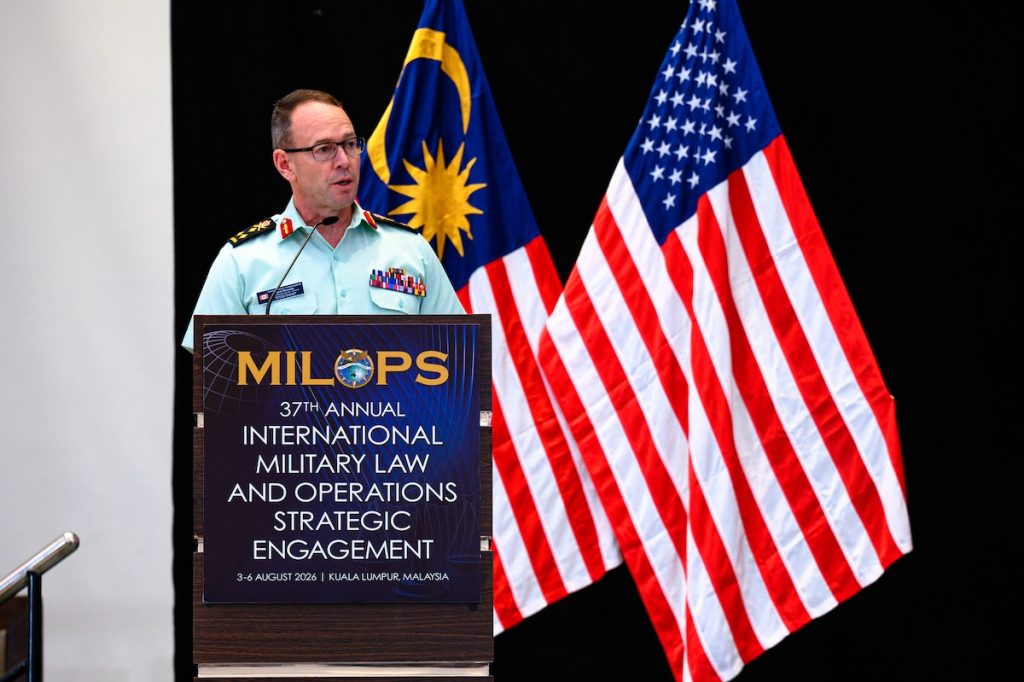
For Canada, respect for many different aspects in the Indo-Pacific is really, really important. Respect for international law, respect for UNCLOS, and respect for ASEAN centrality. Despite not being an ASEAN nation, Canada is very supportive and we are an observer in some aspects and we have been for a number of years. Aligned with many countries within this region, we are a supporter and we respect dialogue to resolve disputes. I believe that is what we see and I was certainly privileged to hear the defence minister of Malaysia, Khaled Nordin speak earlier this week about that, and those were really powerful, powerful words which I appreciated hearing as a Canadian.
That respect that we see from Canada towards the region was really one of the foundational reasons why Gen Carrignan came up with the idea to establish the position of SMR-IP. As the first non-US nation to have a three-star posting in the region specifically for strategic engagement with our partners, this is a powerful message because it really sends several signals. One is that it sends a signal of strength and the fact that we want to strengthen our partnerships. We’ve had good success since Canada launched its Indo-Pacific strategy in 2022, a strategy which had a number of different elements within it, including diplomatic, economic, and military aspects. All of those aspects experienced an increased and consistent presence of Canadian forces within the region.
The CDS wanted to strengthen those bonds and partnerships which is the ability to align the activities of our Armed Forces and ensure that our engagements not only meet CAF needs, but also the needs of our host country. It is really important to Canada to respect the needs of the individual countries, we are not looking to have a cookie-cutter solution. We want to look at each individual country as its own respectful sovereign nation and see what really fits with them as we look forward to working with them instead of telling our partners what to do from a Canadian perspective, that ultimately comes back to the last point of reinforcing what we’ve been doing. As I mentioned, I think we have been quite successful on a number of different fronts but we can be better and we can reinforce some of our efforts.
On reinforcing from a Malaysian perspective, it starts with reinforcing some of the training that we are currently doing from the perspective of our military training and cooperation programme, a programme which has existed for 60 years this year. It has since allowed us to train over 750 Malaysian Armed Forces (MAF) officers, whether in language training, or a professional military education, or even women, peace and security WPS) which is certainly a really important aspect in Canada as well and I feel the same from Malaysia, but it goes beyond that. It goes through the chemical, biological, radiological, nuclear (CBRN) threat mitigation through Exercise MANTIS which has really enabled us to partner with Malaysian forces. And I think that really exemplifies that harmonious relationship of doing things that are desired by the country. Personally I do not believe that is where it ends, I think the way forward certainly is one that has potential and great opportunity as a memorandum of understanding (MOU) continues to progress. Starting back in 2024, it has been successful in undergoing the various necessary steps. So it is a positive step and I think we are getting there, with great anticipation that a defence cooperation MOU would actually be signed in the coming year. It allows us to start, look at other opportunities to share and learn from one another.
Another point is our recently launched defence industrial strategy, which brings about another opportunity for us since Malaysia also kicked off its own defence industrial strategy. So our two nations are undertaking their first defence industrial strategies, this is a great opportunity for us to learn from one another. Our defence industrial strategy is based on build, partner, buy. The build part is within respective sovereign nations, the partner aspect is looking for trusted and reliable partners that we have had great relationships with throughout decades including Malaysia. We are looking at how we can partner with them not only to positively impact the defence industry here but also potentially our own defence industry. Now, we are starting to see that through Canadian industry being a part of defence exhibitions here in Malaysia, take the Defence Services Asia (DSA & NATSEC Asia 2026) exhibition in KL just recently in April, we are certainly looking forward to next year’s Langkawi International Maritime and Aerospace Exhibition (LIMA 2027). There is interest to see how we can do better and certainly great effort right now at the High Commission to explore how that takes place.
However, it is still something from a buy perspective in our defence industry that we are willing to look at those nations that have those capabilities and buying from them to meet our needs. Therefore, as we continue to grow, these can be things that Malaysia and Canada can look towards and explore through different mechanisms, which I think is a positive thing. These are all of course founded on the fact that 69 years ago (70 next year) that we came together as two nations which understood and respected one another. Now as middle powers, we are able to move forward in our own right for the interests of our respective countries, but also respecting the norms and the laws of others that surround us in this great region.
The future holds what we imagined and bound only by perhaps our minds. I believe the ability to continue to focus on a secure, prosperous, peaceful Indo-Pacific is something that Canada wants to do. Certainly from my perspective, I hope that as the senior military representative, I’m able to support that vision through a period of years, because the establishment of this position is about a reliable, trusted and continued partnership in which I think the region has seen Canada do, but we want to amplify it in this region to be seen as that partner that you can look towards when you’re looking for opportunity.
In the Malaysian defence minister’s speech at MILOPS, he urged major global powers with significant military capabilities to exercise their influence responsibly and consistently uphold international law. I took his comments to what we hold dear, which is a free and open, inclusive, rules based Indo-Pacific, that is really a foundation of what we believe in. My key role here is to represent the CDS and also provide advice on what we see. Hearing the minister’s comments, being able to be here in person allows me to then transmit that back to our leadership to have that important discussion. That also allows them to prepare for subsequent meetings as they are forthcoming. Gen Carrignan, together with PACOM will co-host the Chiefs of Defence Conference (CHODs) in Victoria at the end of this month in which Malaysia is of course a participant. Although unfortunately, I believe Malaysia’s Chief of Defence Force (CDF) General Malek Razak will not be able to attend.
ADJ: Could you give us an overview of Canada’s military presence in this region under Operation HORIZON?
SMR-IP: It is difficult to lay out exactly what exactly we’re doing because it changes over a period of 365 days. But first and foremost, over that period, we maintain a Royal Canadian Navy (RCN) ship’s presence somewhere in the Indo-Pacific throughout that period of time, something we have maintained since 2022, and that is quite significant. Sometimes we may even have more than one ship, with multiple ships of different
Capabilities. Also throughout that time period, we have had the ability to deploy air assets, surveillance assets in support of missions around Northeast Asia. We do, and are able to train with a number of nations through exercises which are on the periphery of Operation HORIZON. Additionally, we are doing cyber operations and special operations forces (SOF) training with some nations.
I think the real interesting thing about what we’ve been doing throughout this time is that our way is not like a cookie-cutter as I talked about. It is really specific to the needs from a training perspective, but we’re also trying to ensure that we are maintaining our priorities and that it is good for Canada. So Operation HORIZON has many functions and focuses on many regions. I think our ship is probably the best one that sees the entire region. The Canadian Army for example, not necessarily through Op HORIZON, has participated in Exercise Balikatan recently along with some other assets in the Philippines. But an even greater example of our increased presence would be Exercise Talisman Sabre in Australia which continues to increase that really key aspect of training which serves as a presence and an ability to do things in the region. So, Canada is really across the spectrum and continues to look for opportunities, and that includes space opportunities with our space division. But again, other things that we can continue to look for are really a menu of options.
ADJ: Can you explain some of the challenges Canada faces in this region?
SMR-IP: My position was created to address the challenges that are facing us, and it is my belief that part of what we need is to have greater literacy of what the Indo-Pacific is. As I touched on earlier, there are people, not just Canadians who view the Indo-Pacific as a monolith beast. But there is not one piece of the Indo-Pacific that is or can be exactly the same as the other. So the challenge is to ensure that we increase people’s literacy through communication and education.
Also, the fact that we want to continue to have strong partnerships and listen to our partners, I think that is the big key. And the challenge is that when you do not have a consistent presence in the region, it is difficult to have those good conversations. When your partners wants to speak and you are not there to listen, it’s hard to actually further understand. That in itself, when you look at the SMR-IP position, that is a key facet of focusing on that challenge. The ability to listen to our partners, hear their needs and align our interests. Without that, I think it’s a challenge to operate because as I mentioned before, the region is such a mosaic of different cultures and perspectives, you have everything from polar bears to penguins and everything in between.
ADJ: Can you tell us how Canada is looking to increase its presence or strengthen partnerships in the region?
SMR-IP: It really depends on which nation, because it is not just for us to decide, it is a relationship that has to be built. We may have our desires, but we have to of course synchronise those with the desires of our partner nation, and I think that’s really important. You cannot just say “well we want to do this”, that is not really the way to do business in the world because that would not be respecting your partners. What we are trying to do is attempt to do things that increase capacity and assist whichever nation in the Indo-Pacific in furthering their national interest while simultaneously furthering our national interests. So that is where those two come together.
Specifics really fall out of those until you can understand and have that discussion. You have to have respect, you have to have the dialogue before you can decide what might happen or what might be needed.
I think for Malaysia, here we’re seeing great success through some individual training as I mentioned whether in language training or WPS which I believe was well received in fact. This morning, a Malaysian brigadier general stopped by to thank me for the WPS training. So I felt that was interesting, really powerful for me because that was the thing he wanted to make sure I knew. That is part of the answer, when you can have a nation that thanks you for what they do, then you’ve been successful in providing what they wanted.
ADJ: Canada and Malaysia have a strong military relationship, particularly in the field of CBRN response via the annual Exercise MANTIS, does Canada or even Malaysia look to broaden the scope of MANTIS or continue as is?
SMR-IP: That is a great question, however I am not the best person to answer it because it comes under our operational command and also our special forces command. By the fact at how long it has been conducted, that tells that it is indeed a valued exercise, and an equally valued opportunity to engage with the Malaysian forces and ensure that we are learning from one another. But as far as the duration and how it may evolve, I would have to defer the question to them, but I am sure that we can find out what MANTIS may look like in the future.
ADJ: What is Canada’s overall strategy for deepening cooperation between defence industries across the region?
SMR-IP: To be frank, our strategy is the defence industrial strategy, to be quite frank. If you were to look at what Canada is doing through its actions, I think it will tell you how much emphasis our prime minister is placing on the defence industrial strategy.
For the nation, I think all nations are looking at some sovereign supply chains to ensure that disruption does not affect our population and that we are able to, as sovereign nations, support ourselves. The action that we are seeing through the defence industrial strategy for Canada really starts speaking to the importance of increasing our ability to work with other industries but also develop our own at the same time. If I was to look at some of the things that have occurred recently, I think they really speak to how and what we are doing.
For example, at the end of June in Japan, Canada launched its largest-ever trade mission to the region with over 180 companies, 50 of which were military firms. On top of that, the delegation was accompanied not just by our Minister of International Trade Maninder Sidhu, but also our Minister of National Defence David McGuinty, which marked the first time our defence minister has gone on a trade mission. That amplifies and signifies how we, as Canada, view the strategy. It is not just an economic strategy, but rather a whole-of-government initiative and how we are addressing the defence industrial strategy as a whole government. Part of my remit as the SMR-IP is to support that, so I will be looking for opportunities to support our Canadian companies and promote them to ensure that military leaders looking for capability are aware. I will also be looking to amplify that to host nation industries and bring them together with Canadian firms. It is really important because the strategy we see is not just purely economic and trade, it is a whole-of-government effort that is going to be required to meet the needs of Canada, but in some cases, as I said, to meet the needs of our partner nations as well. I don’t think any one nation can do this alone, and Canada certainly realises that partners are at the forefront of this part of the strategy. That’s why it’s that build, partner and buy approach, we cannot forget the partner aspect of it.
For Canada and Malaysia from a Canadian perspective, I think our defence strategy can nest quite well because the build, partner, buy elements, especially the partner aspect is where I think our industries will be able to come together and find ways to work together in innovation. I have to say I am not completely knowledgeable of the entire ecosystem of the defence industry, that is something I am continuing to learn but I am aware of several Canadian companies already operating here in Malaysia. BlackBerry is one, but there are more, and these companies are looking for opportunities because they see the ability to progress their own interests as well. That is something that can’t be taken for granted, and is progress that we can look forward to. Once you have some indication of success, I think the ability for other companies to look towards the opportunity is very positive because they can see that as a positive indicator of something that could transpire.