
Duncan Looi
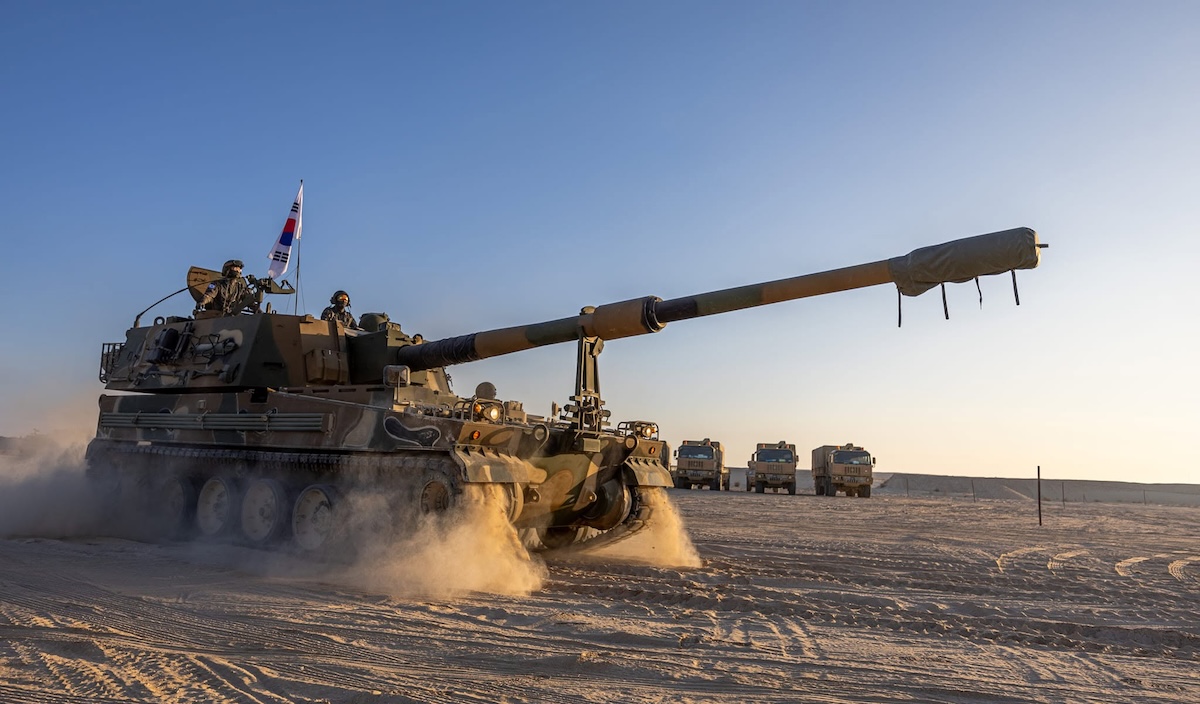
SOUTH Korea’s Hanwha Aerospace signed a deal with Spanish defence firm Indra Group to export 155mm K9 self-propelled howitzers (SPH) in a regulatory filing, with no contract value or delivery schedule disclosed due to confidentiality.
Hanwha said additional filings will be made public at a future date when conditions of disclosure are met. Payment terms were partly disclosed with Hanwha to receive 20% of the contract value as an initial payment following signature, plus a further 5% by December 31, securing a quarter of the total within the year though the company said the contract period and value may change as the programme proceeds.
The project is based on Hanwha’s K9 family of vehicles, from which Spain will design and manufacture its own hull with Indra having design authority where various national systems will be integrated to provide industrial capabilities and a proprietary family of vehicles. The platforms under development stand out for their high level of automation, offering a high indirect-fire rate at long range, excellent precision, and reduced crew requirements.
This follows a memorandum of understanding (MOU) signing earlier this March where both companies agreed to partner on the “development of state-of-the-art self-propelled artillery systems, tailored to the needs of the Spanish Armed Forces, and providing Spain with autonomous capacity and sovereignty for the design and manufacture of advanced tracked land platforms.”
According to Indra, the company will design and manufacture for the 128 units of a tracked artillery vehicles, 120 units of ammunition resupply vehicles, 11 units of command and control (C2) vehicles, and 21 units of recovery vehicles for the Spanish Armed Forces. Together, these assets form the tracked system defined in the Special Modernisation Programme jointly developed by Indra Group and EM&E Group.
Indra will manufacture the hulls of these vehicles in Spain and equip them with its mission system which governs vehicle operations; the 360º vision system, providing advanced situational awareness; the battlefield management system (BMS), which enables interoperability and coordination in real time with other platforms; and the communications systems. Indra will also design and manufacture the command post systems entirely, integrating its own technologies and equipping them with communications systems and NBC, and automatic fire and explosion Extinguishing System (AFES).
European NATO countries including Norway, Estonia, Romania, Poland, and Finland and have adopted the K9, but this deal marks the platform’s first entry into Western Europe, which would bring the number of countries operating the self-propelled howitzer to 11. Hanwha recently won a major contract from the US Army to deliver prototype wheeled K9 Mobile Howitzers (K9MH) for the Mobile Tactical Cannon (MTC) programme, with an agreement for the accelerated delivery of six prototype MTC systems, with an option for an additional 12.
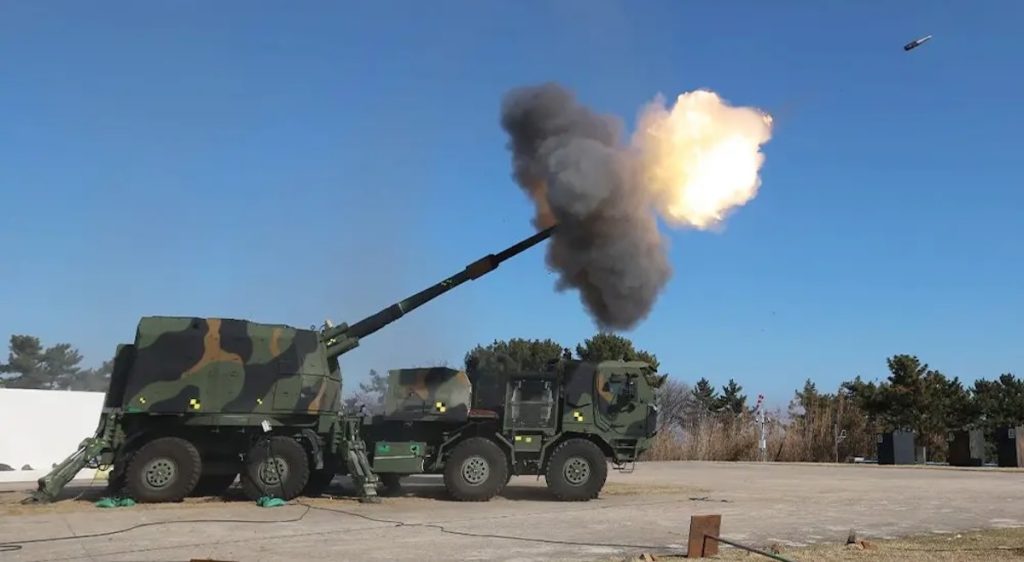
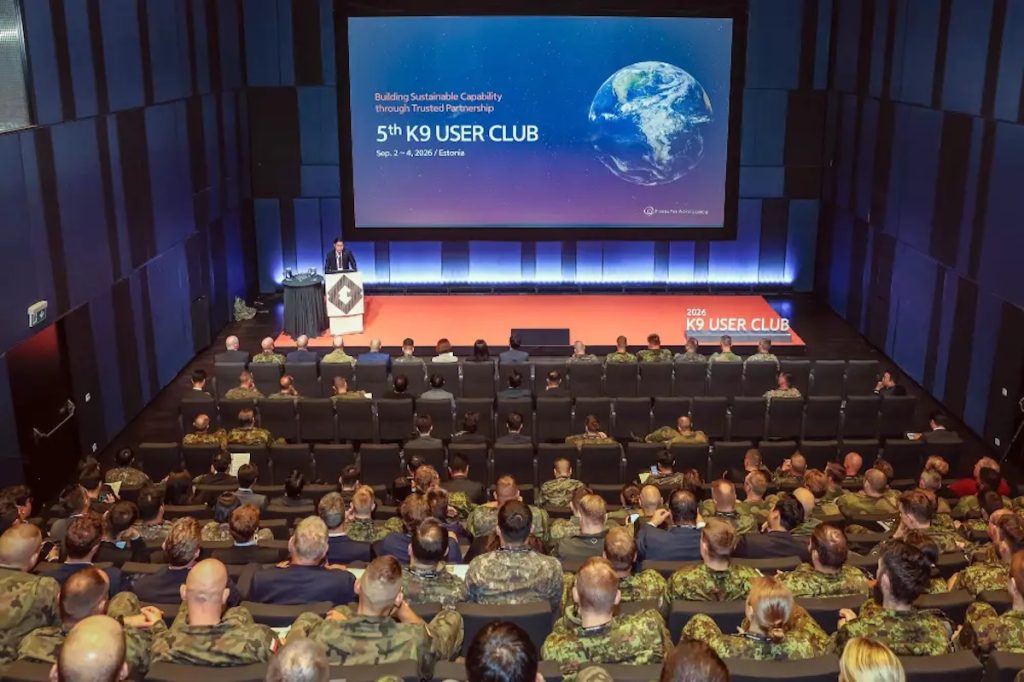
In a related development, Hanwha also unveiled its vision for the next evolution of the K9 SPH at this year’s K9 User Club in Estonia, bringing together over 200 military and industry representatives from seven K9 user nations South Korea, Estonia, Poland, Norway, Finland, Romania, and Australia alongside observer delegations from Spain and Sweden.
Hosted by the Estonian Defence Forces, the annual forum provides a platform for K9 operators to exchange operational experience, strengthen partnerships, and help shape the future of artillery capabilities. Building on the operational experience accumulated by K9 user nations, this year’s discussions focused on how artillery capabilities should evolve to address increasingly dynamic battlefield environments. Participants discussed operational lessons learned, maintenance best practices, ammunition interoperability, training, and future capability requirements while identifying opportunities for deeper collaboration among K9 operators.

“Among the key highlights of this year’s User Club is the next-generation K9 operating concept, which integrates fire-guidance drones directly into the artillery fire mission. Rather than focusing solely on improving the performance of the gun, the concept redefines how artillery units detect, engage, and assess targets by significantly shortening the sensor-to-shooter cycle”, a Hanwha release read.
Hanwha presented the concept employing a vertical takeoff and landing (VTOL) fire-guidance drone capable of detecting and tracking targets, generating target coordinates, and transmitting them directly to the fire-direction system for K9 fire missions. The drone would remain airborne over the target area throughout the engagement and support target acquisition before firing, observe impacts during the mission, and conduct battle damage assessment. The concept demonstrates how the K9 is evolving beyond a conventional self-propelled howitzer into a more connected, responsive, and networked battlefield system.
Hanwha outlined new wheeled artillery concepts incorporating advanced technologies such as the K9A2’s fully automated turret for greater operational mobility, deployment flexibility, and responsiveness. It enables more agile and flexible fire support while leveraging the platform’s mature technology base and operational experience.
The company’s total operation & maintenance management system (TOMMS) sustainment portal also drew significant attention from participating K9 operators as they explored ways to enhance fleet readiness and long-term sustainment. Designed to digitise spare parts procurement and logistics, TOMMS integrates requests for quotation, quotations, purchase orders, and delivery tracking into a single platform, providing greater visibility and efficiency throughout the sustainment process. It includes a digital catalog covering 700-800 frequently requested spare parts, enabling operators to identify required components more efficiently while improving procurement visibility.
Hanwha also plans to connect TOMMS with its spare parts warehouse in Poland to further strengthen support for European K9 operators. The initiative is expected to improve fleet readiness, maximise operational availability, and reduce life cycle support costs, supporting K9 operators throughout the system’s entire life cycle. The K9 User Club is hosted by participating user nations on a rotating basis, with Australia set to host the next K9 User Club in 2027.
On top of that, Hanwha is reportedly close to landing another deal for the export of 18 K239 Chunmoo multiple rocket launcher system (MRLS) to Croatia estimated to be valued at US$510M. If finalised, the deal would make Croatia the fourth European nation to procure the Chunmoo after Norway acquired it this February. –-shp/adj/dl (Pix:ROKA, HANWHA)