THE potential acquisition of BrahMos supersonic cruise missile by Malaysia has been marked as a key political and defence initiative following discussions between Malaysian Prime Minister Anwar Ibrahim and Indian Prime Minister Narendra Modi. While still in exploratory stages, integrating this advanced cruise missile system into the Royal Malaysian Air Force (RMAF) Sukhoi Su-30MKM aircraft will boost the Southeast Asian country’s long-range maritime defence and strike capabilities.
The move that will position the BrahMos system closer to formal deal was revealed in an interview with India’s NDTV on Sept 12, when Anwar said the potential acquisition of the BrahMos system was raised during his bilateral meeting with Modi on the sidelines of the BRICS Summit in New Delhi. He said that any procurement decision would ultimately be determined by Malaysia’s armed forces, based on its operational and technical requirements.
“We did discuss it, but normally my position is always to get the departments or agencies concerned, those having the expertise in the Air Force; they should then continue.
“They have had initial discussions, and I told Prime Minister Modi that I am very supportive of that because first, the relationship is built on trust and we want to cement it in all fields,” Anwar said in the interview.
Anwar, who is also Malaysia’s Finance Minister, said Malaysia recognised India’s growing capabilities in the defence sector. “India has a long history not only in the air force but also in military capability,” he added.
The BrahMos system is a long-range, ramjet-powered supersonic cruise missile jointly developed by India’s Defence Research and Development Organisation (DRDO) and Russia’s NPO Mashinostroyeniya through their joint venture, BrahMos Aerospace. The missile can be deployed from multiple platforms, including land-based mobile launchers, surface combat ships, submarines and fighter aircraft, giving operators flexibility in conducting precision strikes against maritime and land targets.
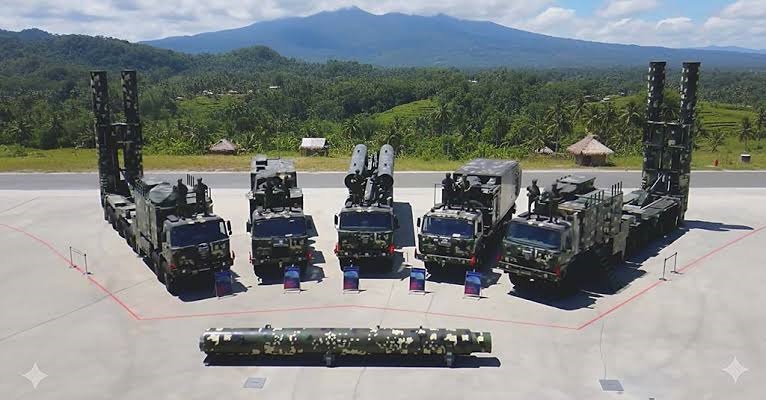
For India, BrahMos has become one of its flagship defence exports, supporting New Delhi’s drive to expand its international arms market footprint and strengthen partnerships with friendly nations especially in Southeast Asia.
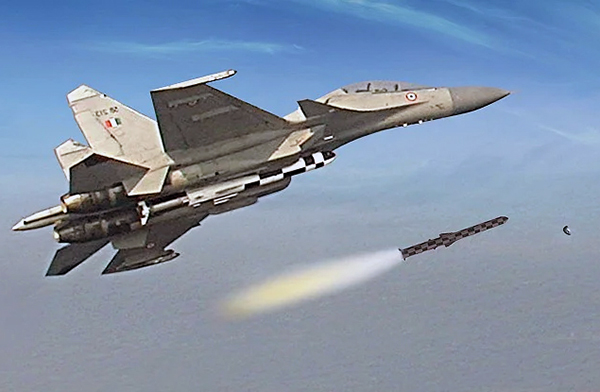
Analysts have said that arming Malaysia’s fleet of 18 Su-30MKMs would give Kuala Lumpur an unprecedented long-range strike capability and complicates any adversarial assets in contested regional waters. With sustained speeds of Mach 2.8 to 3.0, the air-launched BrahMos-A variant is a 2.5-tonne supersonic cruise missile with a strike range of between 300 to 400 kilometers.
The induction of such as missile would be a natural transition as the Malaysian aircraft are nearly the identical to the type operated by the Indian Air Force (IAF). There will be some modifications needed but it is possible that not all the RMAF aircraft will be fitted with the cruise missile, if the system is finally selected. It was reported that about 40 Sukhoi Su-30MKI fighter jets of the IAF have been armed with the supersonic air-launched variant as of mid-2026.
Analysts have also said that an additional procurement of a coastal launch variant would complete the sea-denial deterrent capability of this system for Malaysia. Because BarahMos Aerospace is an India-Russia joint venture, a successful sale will be seen by some as a move in defence-industrial reliance away from Western partners. It will also cement Kuala Lumpur to New Delhi’s expanding Indo-Pacific security architecture. However, it must be noted that it could be just another move by any self-respecting nation to get effective defence systems from whatever power it seems fit.
Philippines, a US treaty ally, has the Brahmos system in service and is mulling to procure more units. Another Southeast Asian nation, Indonesia. is close to a substantial buy of the system while it has also attracted the interest of Vietnam, a country India has very close ties with even during the US- Vietnam War period. Malaysia is not the only country turning to this capability to secure its littoral borders. The Philippines signed a US$375 million deal and received its first batches in 2024 and 2025. Possible additions to this batch are being considered.
Meanwhile, both Indonesia and Vietnam are in advanced stages of finalising deals for coastal and naval variants. A Malaysian purchase would create an overlapping ring of highly lethal supersonic anti-ship networks among major ASEAN littoral states.