

Duncan Looi
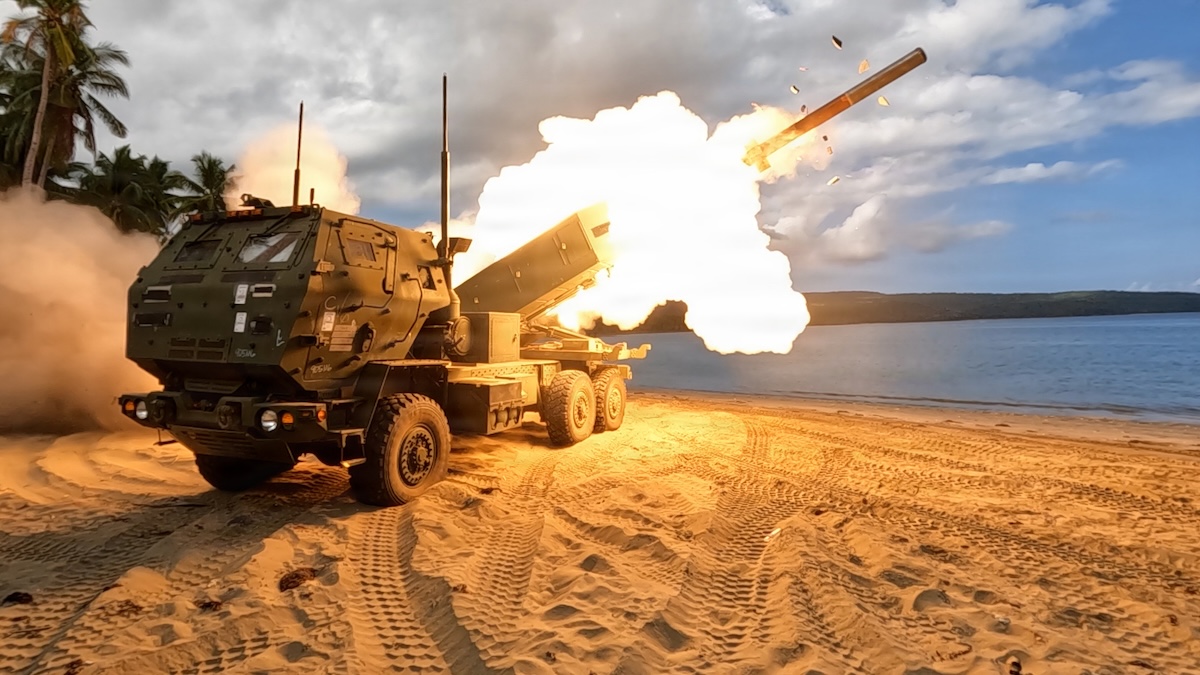
THAILAND is reportedly planning to spend up to US$123 million on M142 High Mobility Artillery Rocket System (HIMARS) multiple rocket launcher system (MLRS). This is according to the White House after US President Donald Trump announced over US$17 billion worth of deals and investments for US firms in Southeast Asia.
On the defence side, the statement said that Thailand plans to spend up to US$123M on the HIMARS. The Philippines and the US would pursue more than US$2B of US financing for Philippine defence procurements. It said that the US would provide US$400M to support military operations in the contested South China Sea.
Subic Grain would build a US$40M fuel depot at Subic Bay, while the Philippines will modernise Basco Airport to improve military access, disaster response and supply chains.
The HIMARS is a highly-mobile, precision-guided rocket artillery platform developed by Lockheed Martin Missiles and Fire Control. Mounted on 6×6 truck, it combines long-range, precision firepower with the greater mobility. It is also easily transportable by air via C-130.
However, Thailand has stated that the purchase of the HIMARS is far from finalised. The kingdom’s defence ministry insisted that the proposed acquisition is driven by national security requirements and unrelated to tariff negotiations with Washington.


The ministry’s spokesperson Rear Admiral Surasant Kongsiri said that the decisions on its procurement were based on strategic defence planning and operational readiness rather than trade considerations.
He also said that the possible deal remained at an early stage and would have to undergo several procedures before any agreement can be finalised, explaining that the proposal would also require US government approval, citing the kingdom’s previously unsuccessful attempt to procure the fifth-generation stealth F-35 Lightning II fighter also produced by Lockheed Martin.
The process was thoroughly complex before Washington declined Thailand’s request in 2023 due to training, technical and maintenance-related constraints. Besides that, the admiral said that detailed questions should be directed to the Royal Thai Army (RTA) instead. Should the deal be successful, it would make Thailand the second HIMARS operator in Southeast Asia after Singapore.
This April, Singapore received approval from the US Department of State for a possible Foreign Military Sale (FMS) to buy M30A2 Guided Multiple Launch Rocket System-Alternative Warhead (GMLRS-AW) pods and related equipment for an estimated total cost of US$83.14M.
A Defense Security Cooperation Agency (DSCA) release read, “The Government of Singapore has requested to buy forty-five (45) M30A2 guided multiple launch rocket system-alternative warhead pods. The following non-major defence equipment items will also be included: telemetry kits; engineering services; technical assistance; and other related elements of logistics and programme support.”
The M30A2 GMLRS-AW can be fired from the HIMARS, with 6 rockets per launch pod and 1 pod carried by each HIMARS. The M142 HIMARS is operated by the Singapore Army.
According to Lockheed Martin, “the Guided MLRS AW round was the first munition developed to service area targets without the effects of unexploded ordnance, complying with the US Department of Defense cluster munitions policy and international policies. The AW variant has a range exceeding 70km and delivers a 200lb class fragmenting warhead.”
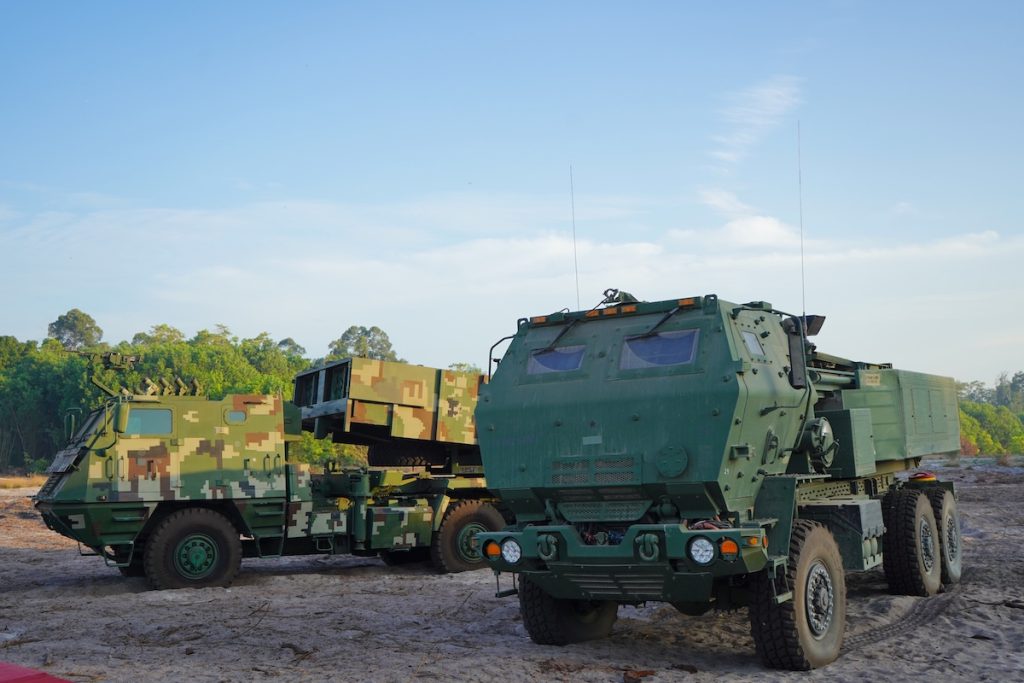
Another possible candidate for acquiring the HIMARS is Malaysia, which has pointed to a likely renewal of its long-range rocket artillery capabilities. The Malaysian Army currently operates the Brazilian-made ASTROS II (Artillery Saturation Rocket System) MLRS which have been in service since 2002, as Army chief General Azhan Othman previously stated that “given the pace of change in the modern battlespace, it is only prudent that the Army also begins considering the next stage of capability development, including newer systems that can meet future operational demands more effectively.”–-shp/adj/dl (Pix:DVIDS)