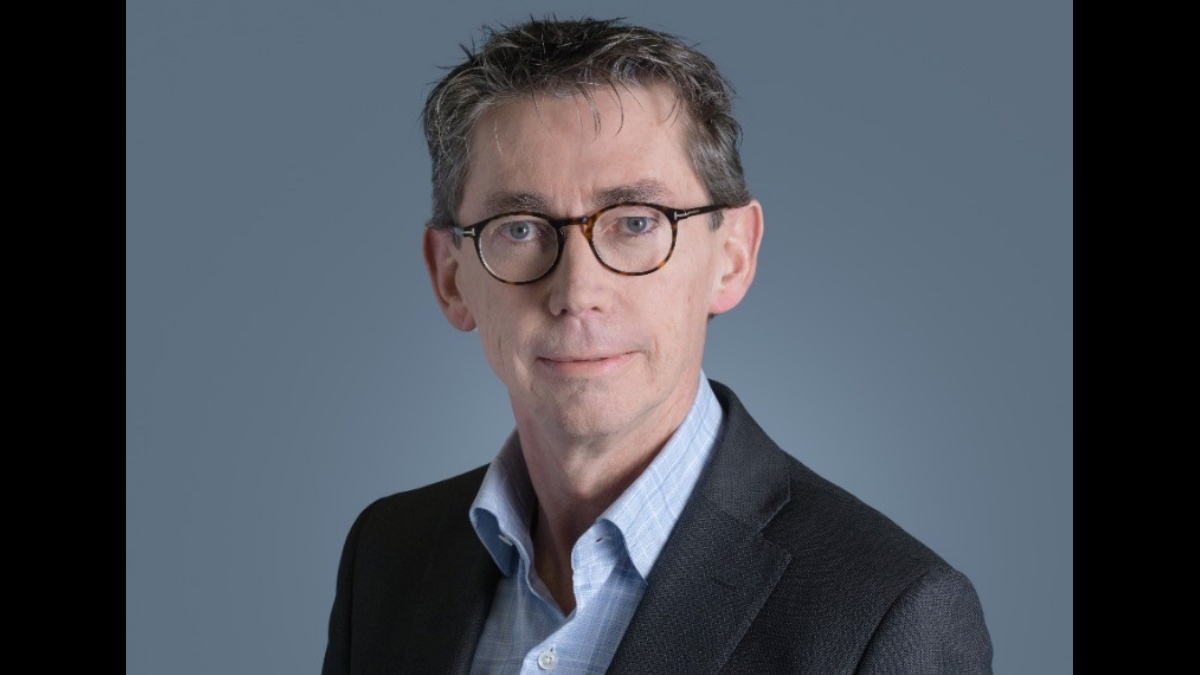
Herve Dammann, Executive Vice-President, Thales Land And Air Systems
THALES’ executive vice-president of Land and Air Systems Herve Dammann speaks to Asian Defence Journal during the recent Singapore Airshow 2026, about the firm’s strategic position across all vital domains and its position in Southeast Asia.
ADJ: With Thales’ major presence in Southeast Asia, can you tell us more on the latest aerial and land innovations that the company is showcasing to the industry?
HD: Our presence in Southeast Asia is over 3,000 personnel, where more than 2,000 are present in Singapore. We are really focused on all four aspects of our work, particularly the four domains of cyber and digital, space, defence, and avionics for civil aviation. Here in the region, we provide equipment and solutions to our customers including regional and national agencies to manage air space, defence procurement agencies and regional armed forces.
In Singapore, we co-innovate and work out opportunities in order to provide customers with solutions, products which are already adapted to their needs. The takeaway for me is that this region is booming in all those sectors. We are looking to be present in countries by transferring industrial know-how and technology or co-innovating and supporting our customers. This is one of our many different approaches to managing our global presence in Southeast Asia.
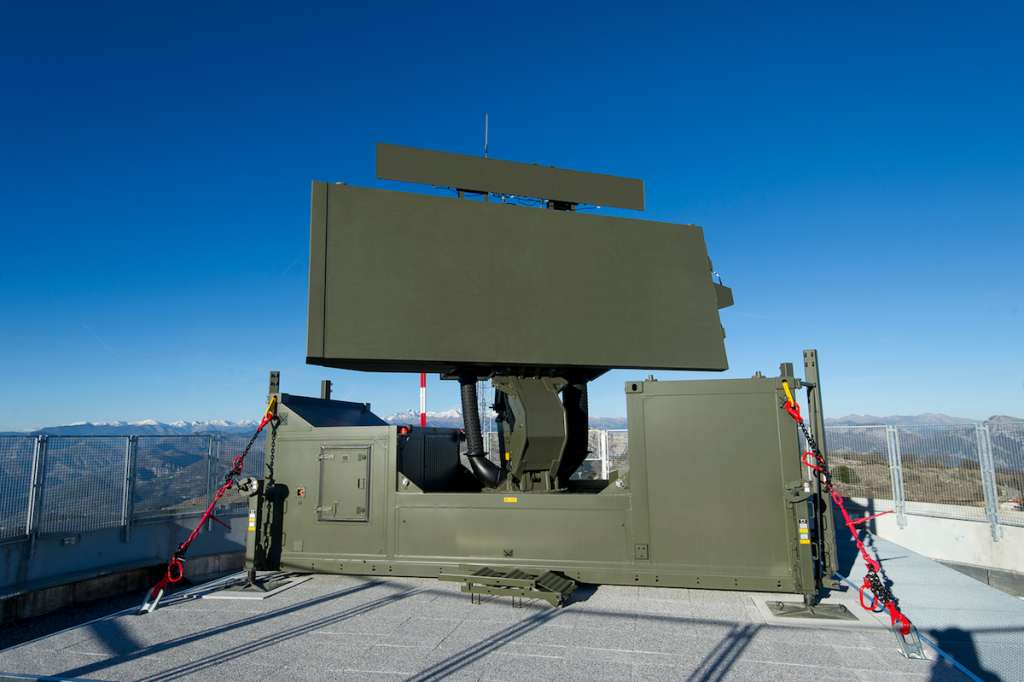
At the (recent) Singapore Airshow 2026, we highlighted our air surveillance and land systems, which included the Ground Master radar family that is already deployed across Southeast Asia. This included the GM400 Alpha, a long-range air surveillance radar selected by regional air forces to strengthen national airspace monitoring. It provides long-range detection, low-altitude coverage, and multi-target tracking, including for drones and cruise missiles. Our focus is on integrating it into national air defence architectures, rather than standalone radar deployments.
Next, our land systems consist of tactical communications and command-and-control systems used by land forces in the region. These systems support secure voice and data, interoperability with allied forces and operation in contested electromagnetic environments. We are looking at sensor integration and faster decision cycles rather than on new platforms.
ADJ: Unmanned systems are now beginning to be paired with new technology such as artificial intelligence (AI) and more; how has Thales remained ahead of the curve to ensure the best of both worlds can be found in the company’s line of products and solutions?
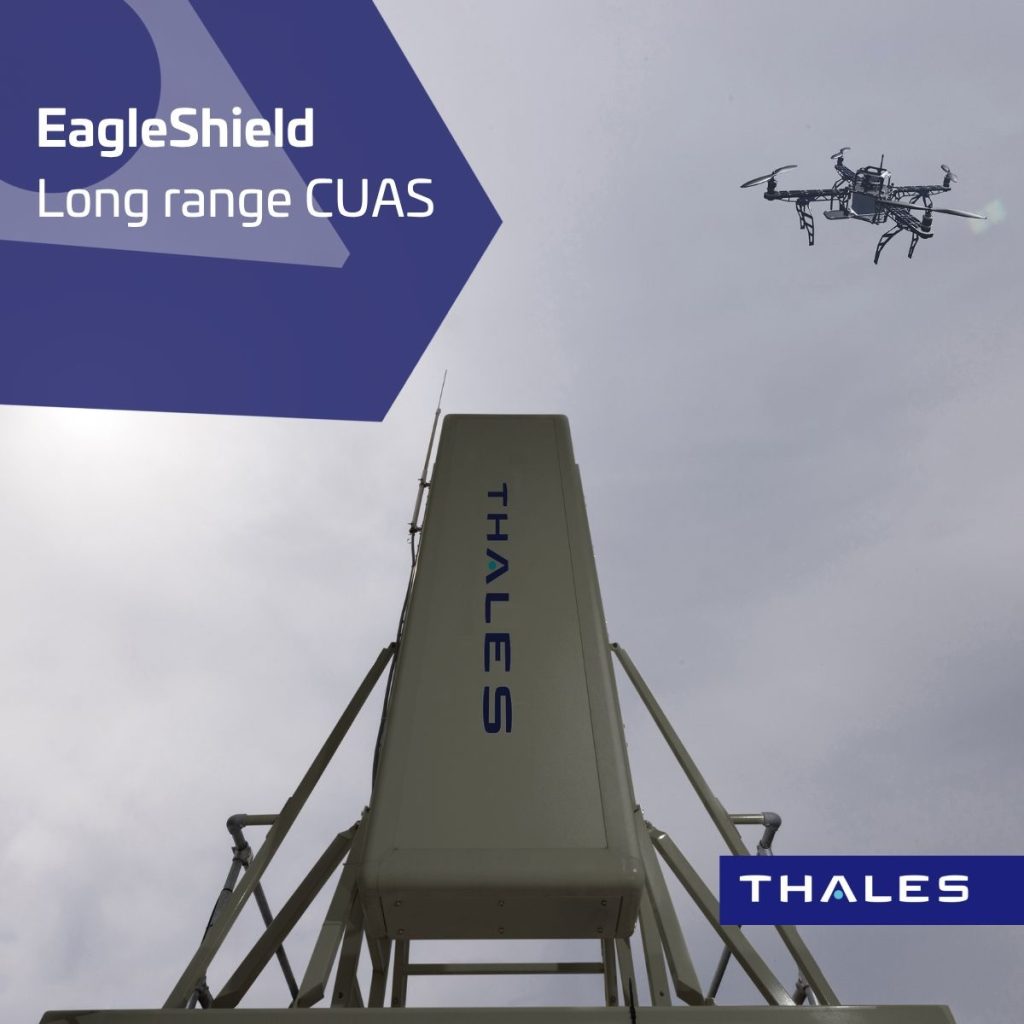
HD: What we do, in fact, is that we manage both the sword and the shield. For example, we offer a range of unmanned aerial systems (UAS) such as loitering munitions as the sword, but at the same time we also offer the exact solutions and countermeasures which can be said is the shield aspect. So we have some advantage in developing counter unmanned solutions which are very adapted to counter the very threats that public authorities or defence organisations may face.
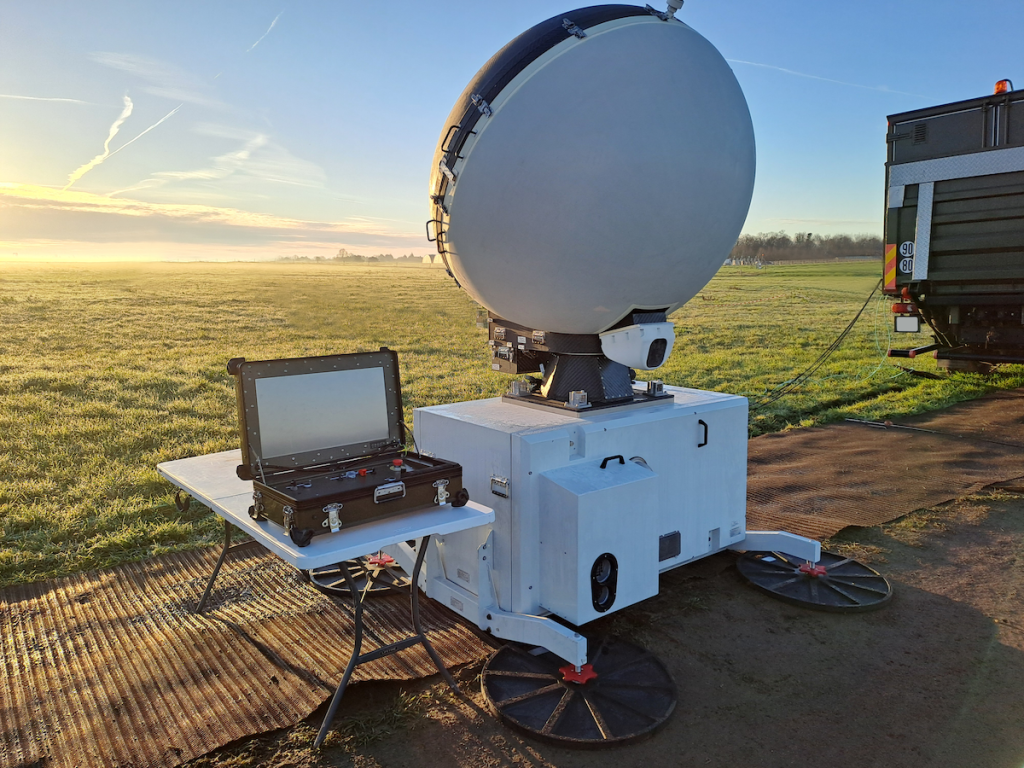
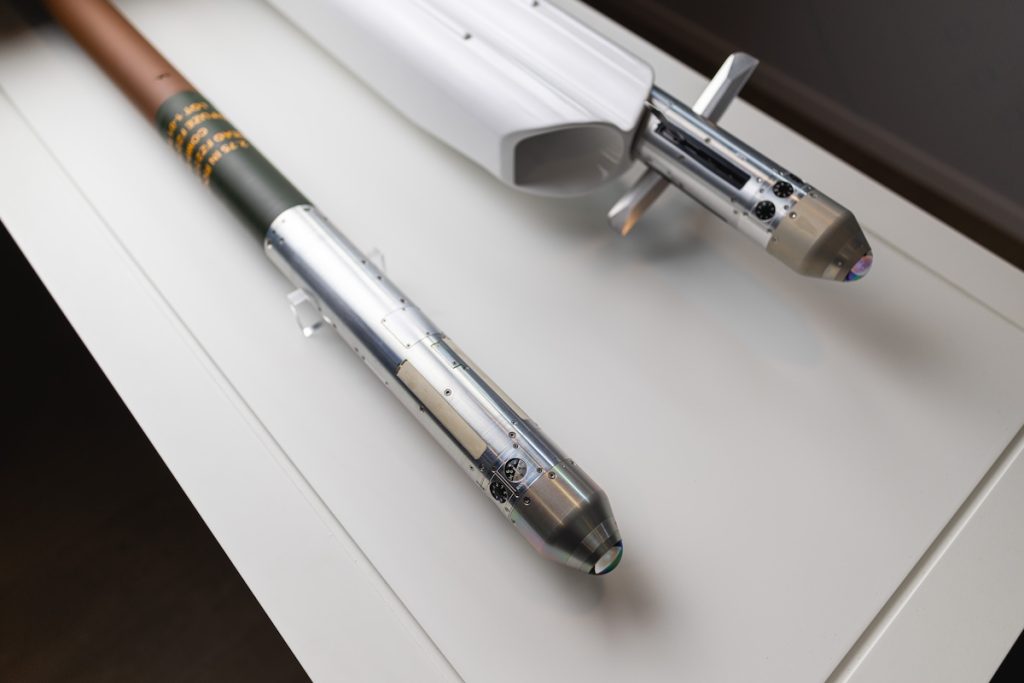
I would say that for counter-UAS, it is always a combination of three main pillars, which are the sensors, so you need to have the best sensors, a command and control (C2) element which orchestrates the various sensors that you need to collect data, to observe and detect, and to track as well. Moving on, we have effectors, which are vital to be adapted to the environments that they operate before those systems can effectively destroy the threats or at least neutralise them. For example, in urban, peaceful environments such as Singapore where large-scale public events are often held, measures have to be taken to neutralise any threats posed by unmanned systems but these measures cannot be the same as those taken on battlefields. Therefore, we have already been steadily providing a range of solutions for counter-UAS that are all built on the foundations of these three things–sensors, C2 and effectors. Throughout the battlefields, we are deploying in many countries our C-UAS systems which use kinetic effectors such as rockets and missiles to neutralise drones.
The second aspect, the massive growing use of AI everywhere in all these segments. For instance, AI in sensors can augment or increase the capacity and capability of the sensor’s performance. AI can be used to reduce the cognitive workload of C2 operators because there is a lot of data to manage. So, the use of AI is already another aspect of which we have been focusing our efforts on. In Thales, we have 800 experts – experts in AI specifically for defence and security application, but also a civil aviation application since AI is applied very much across the board. With AI, I believe one of its key points is to increase the performance of the system and adapt those systems to the specific needs of our customers.
We primarily apply AI at the sensor and system level to improve detection, classification and tracking performance. This includes reducing false alarms and managing high object volumes, particularly in C-UAS and complex operating environments. AI is now embedded in more than 30 Thales products already in service, with around 100 additional applications in development or integration across the portfolio spanning air, land, sea and cyber domains. In all cases, AI is used to support operator decision-making, with humans remaining in control of mission-critical actions. AI is deployed as decision support, not autonomous decision-making with operators still responsible for engagement decisions. Thales’ AI work is structured under cortAIx, which focuses on AI for mission-critical systems. Our Singapore-based cortAIx activity supports defence, public security and aviation use cases in the region.
ADJ: With strong expertise in the cyber domain, how has Thales responded to the growing demands of cyber defences and cyber security as digitalisation continues to ramp up?
HD: Thales designs defence systems that are cyber-secure by design, covering software, hardware, and communications links. We further strengthened our cyber capabilities through the acquisition of Imperva in 2023, expanding our portfolio across application security, data protection and threat mitigation. This is increasingly relevant as defence and mission-critical systems become more software-defined and networked. Our cyber and digital capabilities in Singapore support local and regional defence customers, including those operating in regulated and sensitive environments.
In Thales, we have been investing heavily in cybersecurity over the past few years, we have over 8,000 experts working in cybersecurity. So we specialise in managing cybersecurity for specific applications. We secure data for several applications including Application Programming Interface (API) and identity. What we are really looking at is to make sure that our customers have trust in the data they use and safeguard the identity biometrical systems to avoid intrusion, So our choice is specialised rather than all the activities in cybersecurity. Because cybersecurity is rightly a popular topic these days, but what does it really entail? So we are really focusing on those kinds of activities and I believe Thales is good at that.
And there are lots of applications in cybersecurity; of course most of the banking transactions across the world are secured by Thales, this includes even everyday transactions such as Paypal, Google Pay, Apple Pay and so on. So those are the civil applications of cybersecurity. But when it comes to the defence sector of cybersecurity, it is much more about survival. We contribute in that domain for several nations around the world by securing their critical assets and also partnering with those nations most of the time to provide infrastructure.
ADJ: Can you tell us more on Thales’ vision for Southeast Asia which represents a large market in the defence industry?
HD: Our vision globally is that this region is a very important market overall and will continue to be. Defence for us is going to go up, defence in terms of capability here in Southeast Asia will continue due to geopolitical tensions that the region is facing. Civil aviation too is going up too due to the increasing demands in air passenger travel, so there is a need to insert more flights into existing infrastructure. This represents a big challenge that we can tackle as Thales’ activities are found in the air aboard flights through avionics, on the ground through air traffic management systems, and in airports from the security aspect with biometrics and border surveillance. Thales is already at the core of that in civil aviation. Space capabilities, plus telecommunication and observation needs are also growing.
Every market for Thales’ four pillars is evidently growing and the way we want to address it is by developing our local activities through our presences such as that in Singapore with our over 2,000 personnel and more in Indonesia, Malaysia, Korea and Japan, among others. Even though we are already present in many countries, we want to further develop that footprint in order to better serve the needs of our customers across the region.
Our priority is supporting defence modernisation, particularly in air surveillance, secure communications, naval systems and the cyber domain. Regional customers are placing greater emphasis on local support, sustainment, and system resilience, to which we align our programmes accordingly.
ADJ: Thales’ presence across Southeast Asia is strong but looks to Singapore as its global/regional hub. How does Thales look to realise that vision?
HD: While it is historically true that we are much more present in Singapore, that does not mean that we are not planning to continue developing our activities in other countries. The overall environment in Singapore is very formulable for investments, where local authorities are supportive. So, there is already the foundation for cooperation, for collaboration, for innovation which is really important for Thales. So, when we find that kind of ecosystem in another country, that is certainly something of interest. Because again, we are not looking at being just a company, a provider of capability or product transfusion but really to invest or co-invest in developing long term solutions for the country, in the country. Our presence here is that we are fairly developed from every angle industry-wise.
At Thales Land and Air systems, we work on various activities for sensors, all radars except airborne radars but surface radars for surveillance, air defence and civil aviation. Effectors are any kind of kinetic effectors in the form of a missile, rockets, armaments, or any kind of non-kinetic effectors like directed energy weapons. Mission systems are everything you need to orchestrate those two pillars from the sensors to the effectors both in the civil and defence world.
The Singapore Defence Hub provides maintenance, engineering, and in-service support for defence systems. We run joint programmes with Singaporean agencies focused on AI, sensors and operational systems already in use. Aside from that, our Singapore-based teams support Southeast Asia customers directly, reducing reliance on offshore support and shortening response times.