Duncan Looi
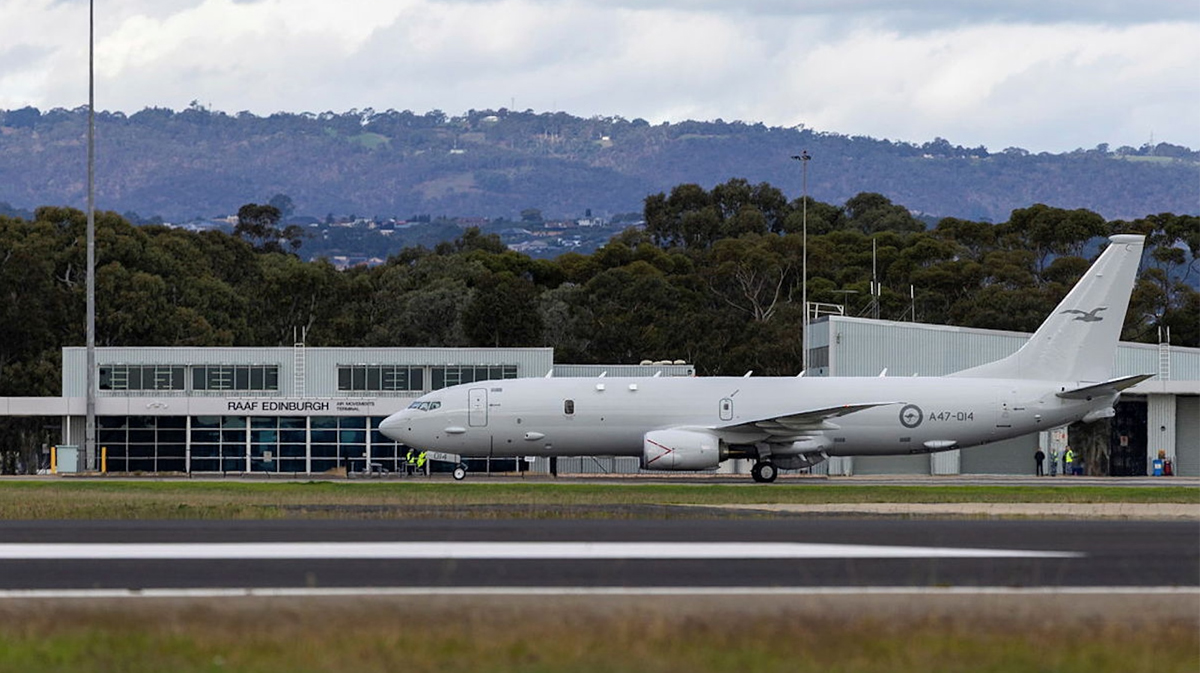
AUSTRALIA has completed its P-8A Poseidon fleet after the Royal Australian Air Force (RAAF) took delivery of its 14th and final P-8A maritime patrol aircraft (MPA).
The arrival marks a significant milestone in strengthening Australia’s ability to conduct anti‑submarine warfare (ASW), maritime strike, and intelligence, surveillance and reconnaissance (ISR) missions. The aircraft are to be operated by 11, 12 and 292 Squadrons from RAAF Base Edinburgh.
RAAF chief Air Marshal Stephen Chappell said, “The P‑8A Poseidon fleet is a critical capability that underpins our ability to maintain awareness of our maritime domain, and enhances Australia’s capacity to detect, deter and respond to threats across its maritime approaches. By integrating advanced sensors, communications, and strike capabilities, the P-8A Poseidon plays a vital role in supporting Australia’s deterrence-by-denial strategy. As outlined in the 2026 National Defence Strategy, this is achieved by delivering persistent intelligence, surveillance, and reconnaissance across Australia’s primary area of military interest.”
An Australian Department of Defence release read, “The P‑8A Poseidon programme reinforces Australia’s sovereign defence capability and supports jobs. It is underpinned by close collaboration with Australian defence industry, with Boeing Defence Australia and other local partners playing a crucial role in sustainment and future upgrades. This includes long-term maintenance and modification to enhance existing capabilities across the P-8A Poseidon fleet at the new Deep Maintenance and Modification Facility at RAAF Base Edinburgh.”
“Completion of the 14‑aircraft fleet enables higher availability, increased resilience and the ability to deliver sustained operations in support of Australia’s security and regional stability. To ensure the aircraft remains at the leading edge of maritime patrol and response operations, the capability will continue to evolve through planned future upgrades, including Increment Three Block Two modification, and deeper integration with allies and international partners.”
Based on the Boeing 737-800, the P-8A was designed for broad-area, maritime and littoral operations, as well as search and rescue (SAR), with highly potent long-range anti-submarine warfare (ASW) capabilities. It boasts a cutting edge range of sensors and radar systems onboard such as advanced sonobuoys and acoustic processing systems to conduct concurrent passive and active processing.
The P-8A can also tackle anti-surface warfare (ASuW) with its suite of synthetic aperture radar systems, electro-optical/infrared cameras, and communication systems, giving the Poseidons the capability of detecting and tracking targets while simultaneously scanning for other potential maritime threats. It can also carry lightweight torpedoes to engage submarines.
Aside from maritime patrol, the P-8A has been deployed for search and locate missions to detect surface vessels, make use of its communication systems to enable coordinated search and locate operations with other rescue assets and possibly deploy life-saving equipment such as life rafts and survival kits if equipped.
Nine countries currently operate the Poseidon, including Australia, Canada, Germany, India, New Zealand, Norway, South Korea, the United Kingdom and the US while Singapore recently ordered four units in 2025.–shp/adj/dl (Pix:AUS DOD)