Duncan Looi
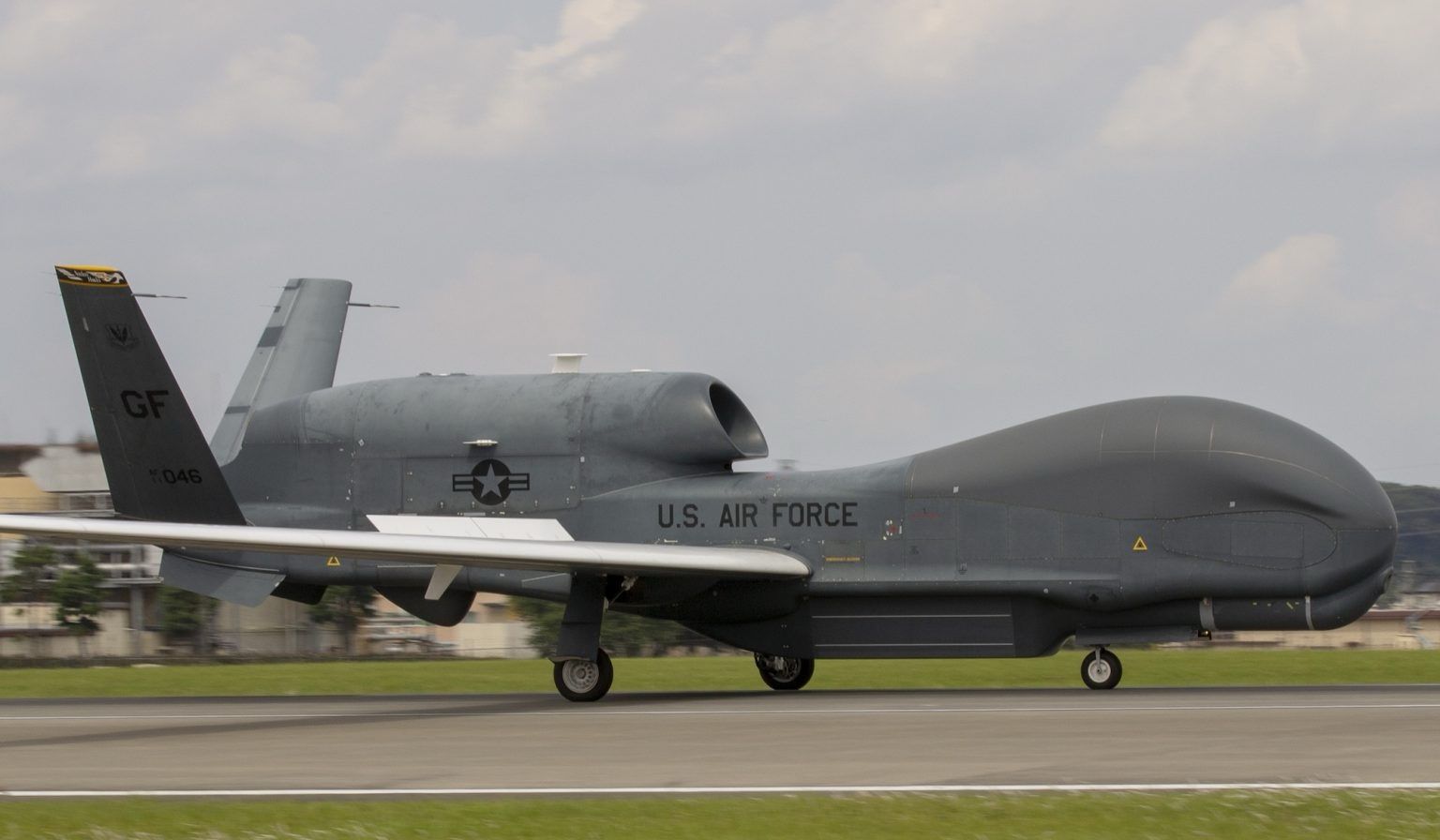
TOKYO is set to be home to a US Air Force (USAF) RQ-4 Global Hawk unmanned aerial vehicle (UAV), moving to Japan’s capital from Guam. According to Japan’s defence ministry, the USAF unit operating the surveillance UAV is to be relocating to Yokota Air Base from Andersen Air Force Base soon.
With that, three units of the Global Hawks and around 150 personnel of the 4th Reconnaissance Squadron will reportedly make the move in phases. The relocation is also intended to strengthen intelligence-gathering and surveillance activities around Japan by improving operational efficiency and rapid-response capabilities amid the current regional security environment. Yokota houses the headquarters of US Forces Japan (USFJ), as well as C-130J Super Hercules and C-12 Huron transport aircraft along with CV-22B Ospreys.
The Global Hawk serves as a high-altitude, long-endurance, remotely piloted and unarmed, aerial reconnaissance system. The aircraft is designed to provide persistent, day and night, high-resolution, all-weather imagery of large geographic areas with an array of integrated sensors and cameras. In addition to supporting intelligence, surveillance, and reconnaissance (ISR) requirements, the Global Hawk can be used for humanitarian assistance and disaster relief (HADR) operations. One of its most notable missions was in support of the HADR efforts after the 2011 earthquake and tsunami.
Flying continuously for 21 days, using long-range and infrared cameras, the Global Hawk provided commanders with more than 3,000 images of the disaster zone, including images of survivors in need of help, and the status of the Fukushima Nuclear Plant, which had been damaged by the tsunami and led to concerns of a radiation leak that would flood the already devastated region.–-shp/adj/dl (Pix:DVIDS)