
Duncan Looi
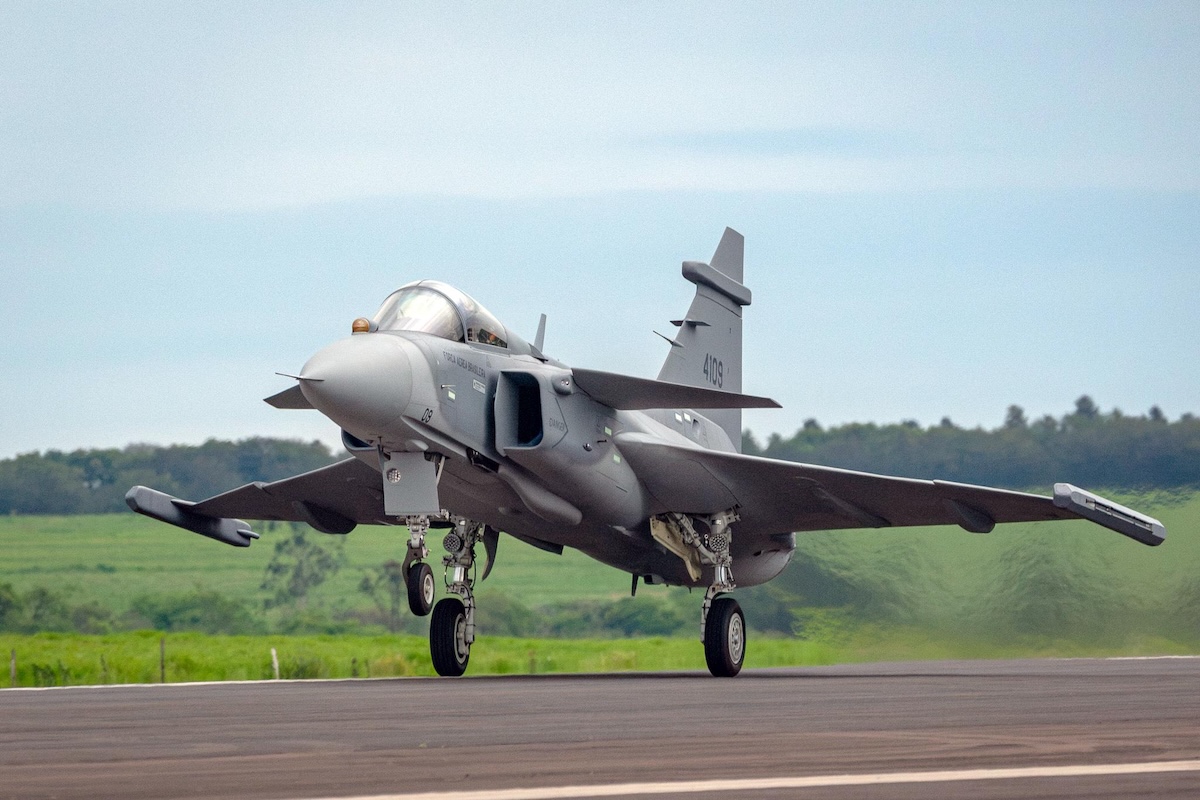
THE very first Saab JAS 39 Gripen E fighter jet produced by Embraer in Brazil has completed its maiden flight, taking off from Embraer’s industrial complex in Gaviao Peixoto, Sao Paulo on a mission to verify the performance of its main systems and validate its flight characteristics. Conducted by a Saab test pilot, the flight confirmed the aircraft’s expected performance and generated data for the continuation of the production flight-test and acceptance campaign ahead of its delivery.
Embraer played a key role in planning and executing the maiden flight, demonstrating matured capabilities developed through the Gripen Programme and the close cooperation among Embraer, Saab and the Brazilian Air Force. The milestone represents an important achievement for the Gripen Programme and for Brazil’s aerospace and defence industry, reflecting the Brazilian Air Force’s strategic decision to structure the programme around technology transfer, strong local industrial participation and the development of long-term national competencies. This approach has enabled the establishment of critical infrastructure, knowledge and industrial expertise in Brazil, which has evolved into an established capability to manufacture, integrate and test a next-generation fighter aircraft over the duration of over a decade, strengthening Brazil’s aerospace and defence industrial base.”
Officially unveiled on March 25 following final assembly by Embraer, the aircraft is the first of 15 units planned for production in Brazil under the current programme. Embraer’s facility is strategic due to it being the only Gripen production line outside of Sweden, forming an integral part of Saab’s global manufacturing and supply network. Following completion of the production flight-test and acceptance campaign, the aircraft will be prepared for delivery to the Brazilian Air Force and subsequently be transferred to Anapolis Air Base where it will join the First Air Defense Group (1st GDA), which currently operates the Gripen E.
A contract with the Brazilian Government signed in 2014 covers the development and production of 36 Gripen aircraft for the Brazilian Air Force comprising 28 single-seat Gripen E and eight two-seat Gripen, deliveries began in 2020 with ten aircraft being delivered to date. The programme includes an extensive technology transfer and industrial cooperation initiative involving Brazilian engineers, technicians and specialists working alongside Saab teams in areas ranging from development and engineering to manufacturing, integration and flight testing. This cooperation has progressively transformed transferred knowledge into permanent industrial capabilities established in Brazil.
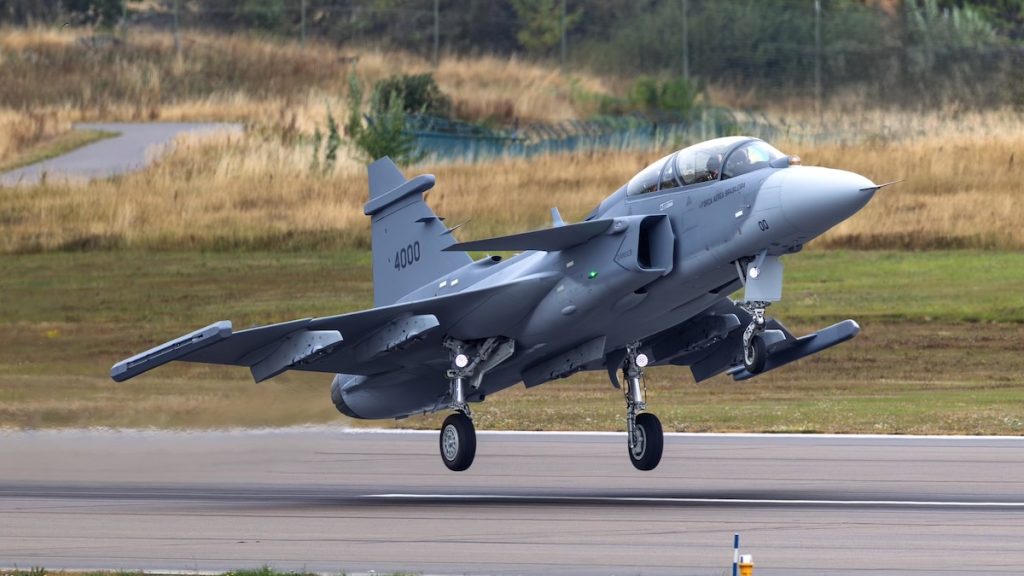
Before August ended, Saab completed the first flight of its Gripen F, remaining airborne for 40 minutes over the skies of Linkoping at the controls of the company’s chief test pilot Jakob Högberg and Brazilian Air Force test pilot Lieutenant Colonel Aviator Abdon de Rezende Vasconcelos. The inaugural sortie successfully verified the functionality of the aircraft core systems and its initial flight performance and moves into the airborne phase of its test campaign.
Following the initial production acceptance flights, the programme will move into a progressive envelope expansion phase, in which the aircraft full performance limits will be evaluated along with tactical capabilities and rear cockpit functions specific to the two-seat configuration. The Gripen F is the result of the strategic partnership between Brazil and Sweden, with more than 350 Brazilian engineers, technicians and pilots participating in training activities related to the development, production, flight testing and maintenance of the aircraft. As the launch customer, Brazil played an active role in the co-development of the two-seat variant, enabling direct industrial participation and long-term cooperation.
In July, Embraer and Saab signed an agreement establishing the framework to expand cooperation and continue advancing negotiations toward new contracts, covering the prospective production of twenty additional Gripen aircraft, with potential future expansion, assembled at the Gaviao Peixoto facility for domestic and international opportunities. The initiative would allow the Brazilian production capability to complement Saab’s final assembly line in Linkoping, Sweden, further strengthening the companies’ ability to respond to growing global demand for Gripen.
Saab has been consistently offering the Gripen E/F to the Philippines which has been looking for multirole fighters in addition to possibly offering their range of AWACS/AEW&C platforms. Brazil’s Embraer could also be in the mix as part of a wider package, with its KC-390 Millenium multi-mission aircraft successfully completing the certification flight test campaign for in-flight refuelling of Saab’s Gripen E. The Philippines had stated that the proposed programme would preferably proceed as a full package with AWACS and aerial tankers subject to funding. Aside from Saab, the Philippines was reportedly considering four other aircraft, including Lockheed Martin’s F-16V, Dassault’s Rafale, and the Eurofighter Typhoon from a BAE Systems, Leonardo and Airbus consortium.
In August 2025, Thailand signed a contract with Saab for three Gripen E and one Gripen F aircraft as well as associated equipment, support and training in addition to a long-term offset package to Thailand as part of the fighter acquisition plan. This will include significant transfer of defence technology and industrial cooperation with Thailand together with new investments across many sectors of the national economy. In May 2026, Thailand’s first Gripen E/F aircraft entered production, with a Royal Thai Air Force (RTAF) delegation visiting the facility and briefed on the Gripen E/F simulator and capability upgrades on the Saab 340 Airborne Early Warning (AEW) to the AEW&C (Control) configuration in the future. The RTAF marked its 15th anniversary of the earlier Gripen C/D’s and Saab 340 AEWC aircraft’s entry into service in July.
The Gripen E/Fs are likely to be equipped with MBDA’s Meteor Beyond Visual Range Air-to-Air Missile (BVRAAM) and accompanying systems. In the meantime, Saab’s offset policy offers the RTAF access to its tactical data link which would provide the air force with an advantageous edge in the future, with plans to further develop their own version of the data link called Link T reportedly already in the works. Furthermore, Saab’s offer reportedly also includes upgrades of the air force’s Saab 340 airborne early warning and control (AEW&C) aircraft without charge, upgrades that would typically cost an estimated US$146 million.
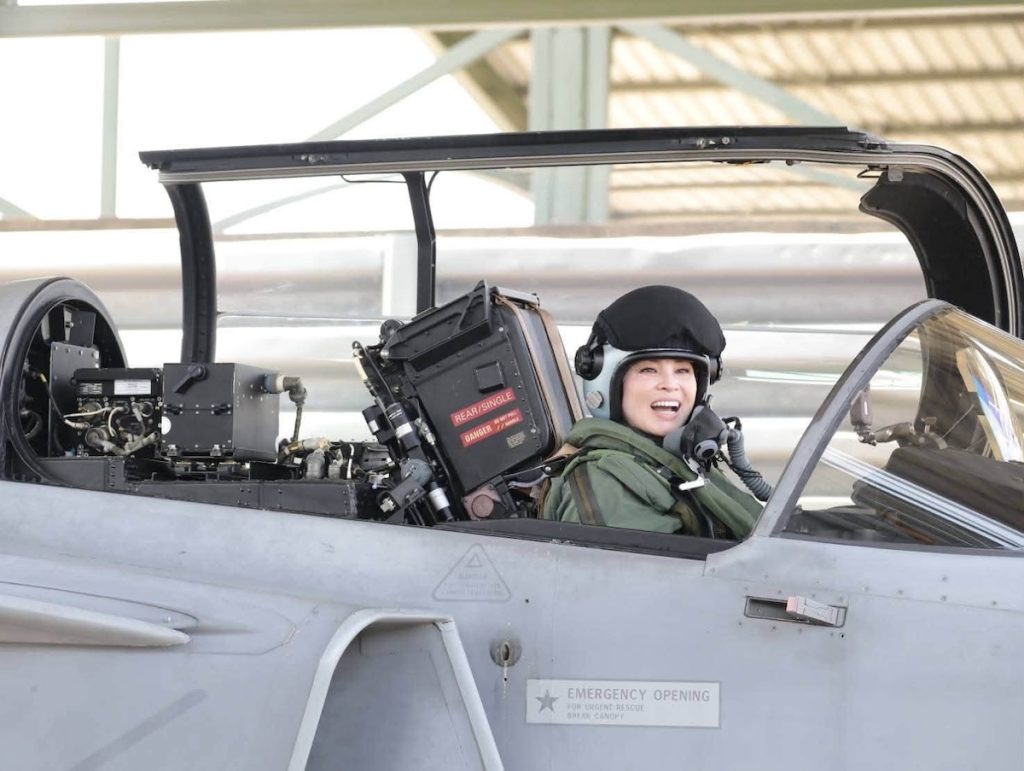
In a related development, Thailand’s Queen Suthida Bajrasudhabimalalakshana completed her first solo flight in a Gripen fighter jet, witnessed by the King–Maha Vajiralongkorn. According to the RTAF, the Queen has accumulated 10.13 hours in a Gripen-–shp/adj/dl (Pix:EMBRAER,SAAB,RTAF)