
Duncan Looi
THE Malaysia Coast Guard (MCG), also known as the Malaysian Maritime Enforcement Agency (MMEA) is continuing its journey towards further building its capacity. Among the latest capacity building measures the agency will take is to restart work on completing two new offshore patrol vessels (OPV) which have long been suspended.
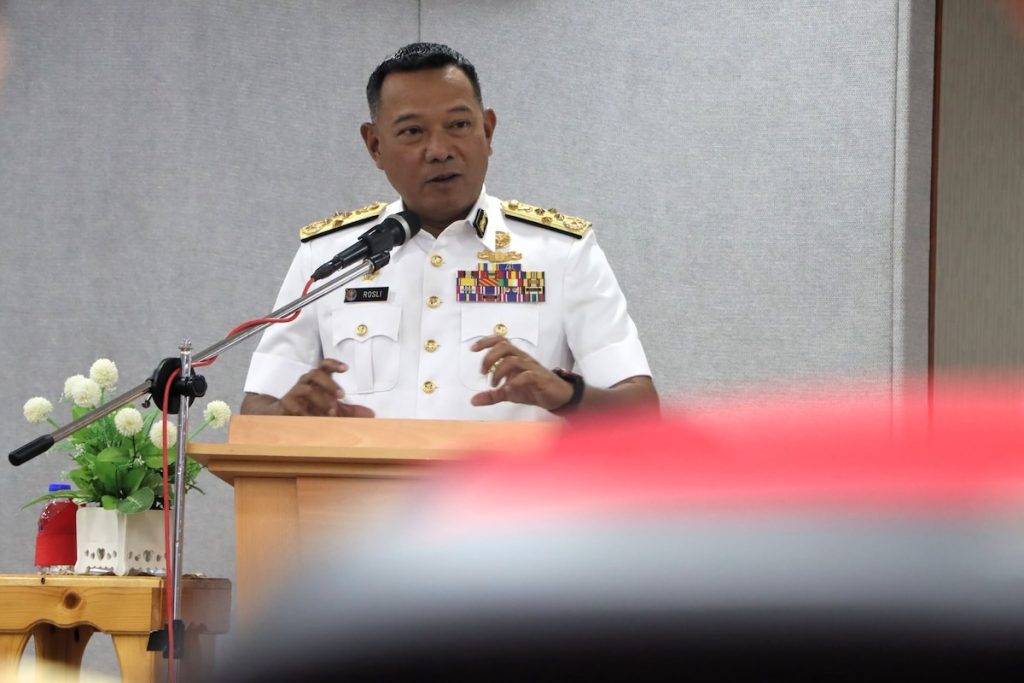
MCG director-general Admiral (Maritime) Mohd Rosli Abdullah said construction of the two new Tun Fatimah-class OPVs would be carried out by a new company in the state of Sarawak in East Malaysia.”The construction process is expected to take a maximum of 36 months to complete, as it includes the requirement to move the hulls from Klang to Sarawak,” the admiral said.
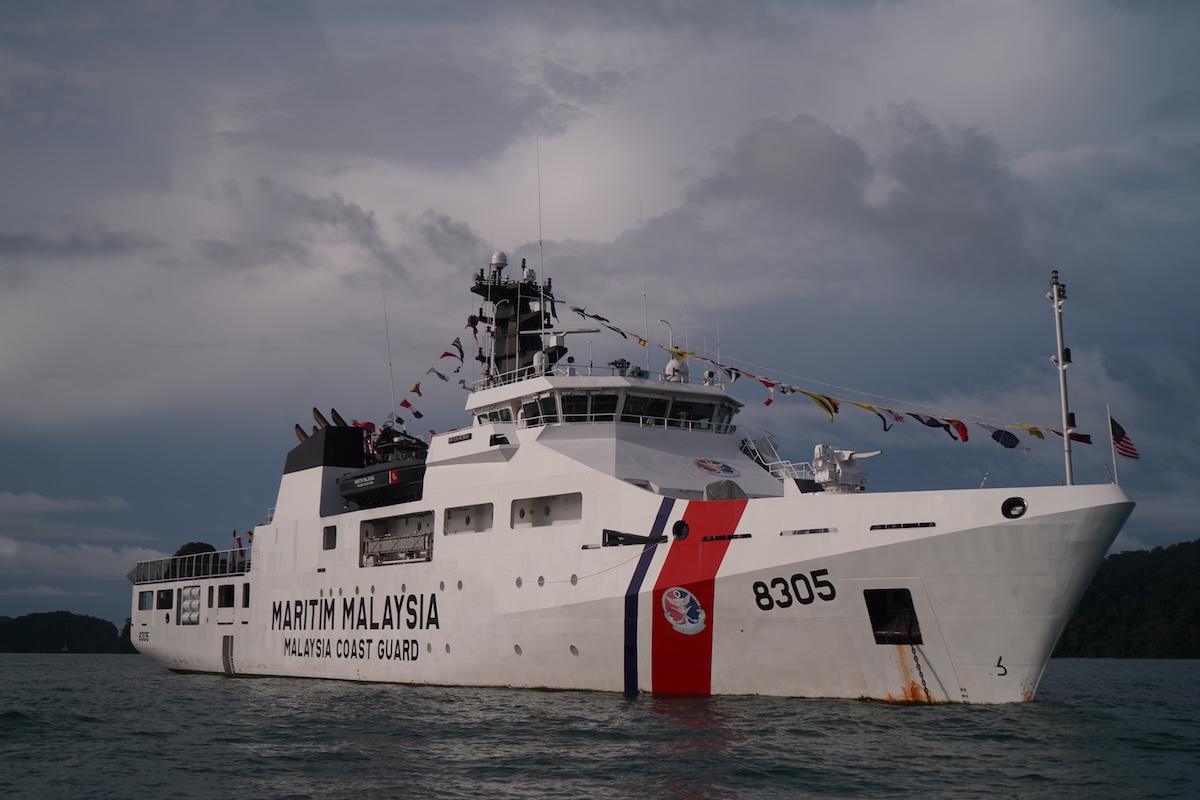
In a class of three vessels planned, the MCG took delivery of the class lead ship KM Tun Fatimah in January 2024 while the subsequent second and third ships were stalled, leading to the original, local shipbuilder THHE Destini being terminated at the end of the same year as all three OPVs were supposed to have been delivered in 2020. According to the director-general, the Home Ministry has also reportedly revised the completion costs for the remaining two vessels to US$78.6 million.
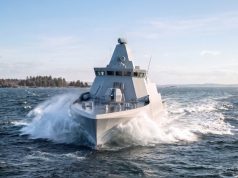
The class is based on Dutch shipbuilder Damen Group’s OPV 1800 design which can operate continuously at sea for 21 days without replenishing supplies and is capable of facilitating medium-sized helicopters, unmanned aerial vehicles (UAV), rigid-hull inflatable boats (RHIB) and a Fast Interceptor Craft. Armed with an ASELSAN Smash 30mm remote controlled weapon station (RCWS) and various light arms, the KM Tun Fatimah currently patrols Malaysian waters around the contentious South China Sea


Aside from that, Adm Rosli also added that the MCG has received approval for an allocation of US$267M for 16 projects in 2027 under the 13th Malaysia Plan’s (13MP) Second Rolling Plan The allocation encompasses infrastructure development, asset modernisation, enhancement of operational capabilities, as well as vessel and boat maintenance. “This development is a strategic step to ensure that MMEA assets and personnel remain capable, resilient and ready to face an increasingly complex maritime security threat landscape,” he continued. Around US$83.4M of that allocation is for constructing the Johor Malaysian Maritime Complex.
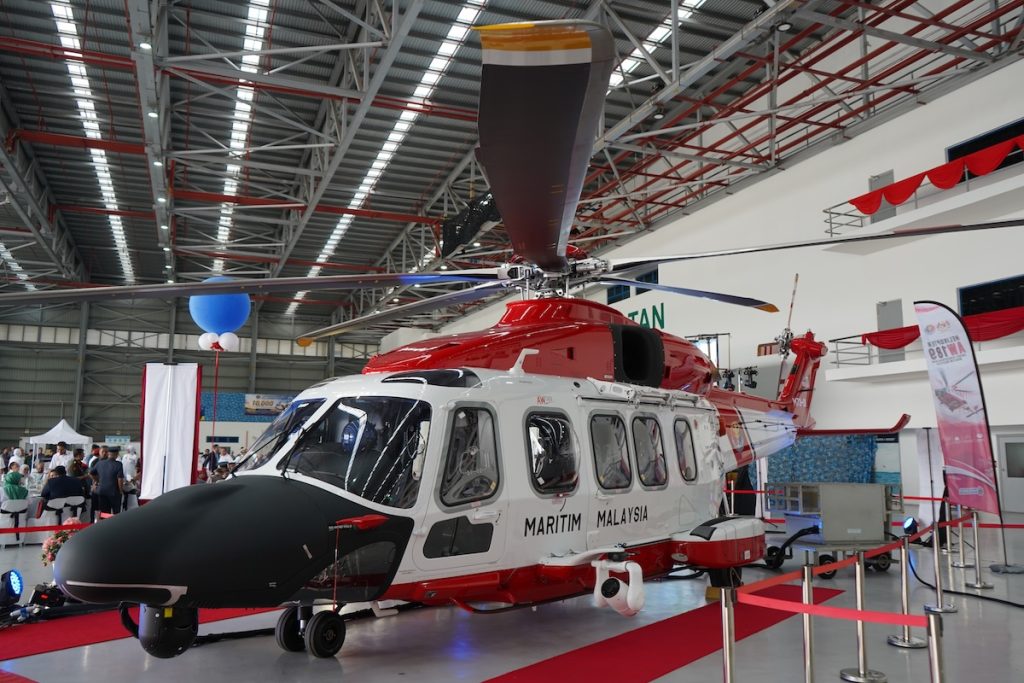
For the next year, the service will continue modernising its overall capabilities, including its rotary-wing capabilities as the second to fourth Leonardo AW189 helicopters are expected to be commissioned into service by the end of this year if all goes according to plan. The first AW189 was officially received in mid-August and would will enhance the MCG’s capabilities in aerial surveillance, enforcement, search and rescue (SAR), medical evacuations (MEDEVAC) and special operations, enabling faster and more effective responses. It is the first of four ordered in a 2024 US$129 million deal with the Italian aerospace giant.
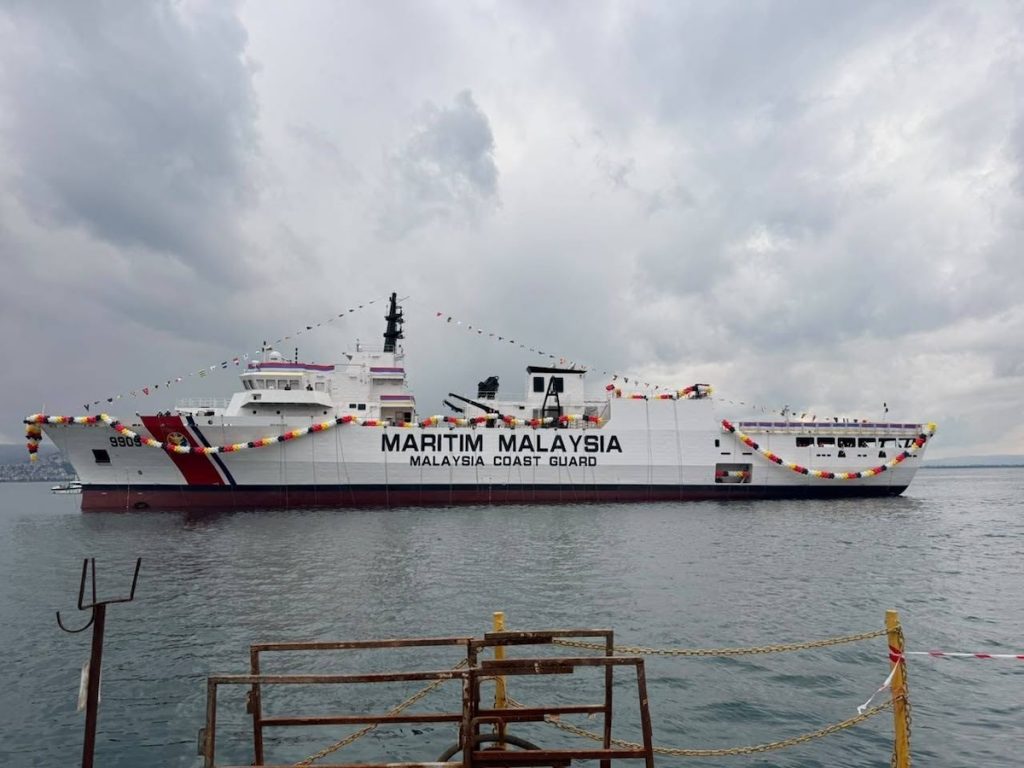
Early last month, the MCG’s first Multi Purpose Mission Ship (MPMS) was launched at Desan Shipyard’s Istanbul shipyard. According to the Malaysian Home Ministry, the vessel will be ready for its journey back to Malaysia by the end of January 2027. Desan was awarded a US$68.8 million contract for 1 MPMS by the MCG in 2025, with the acquisition being a strategic step in strengthening security of Malaysian waters besides reflecting the close relationship between Malaysia and Turkiye. Earlier this year in April, Desan was awarded another contract a second MPMS valued at US$83.75M. The second MPMS is expected to be completed in early 2028, with its keel being laid before June ended.
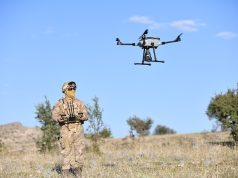
Overall progress on the programme reached 85% and 34.05% on each vessel, with the first MPMS expected to take part in the upcoming Langkawi International Maritime and Aerospace Exhibition (LIMA) in April 2027 from Apr 20-24.The 99-metre-long vessels are designed as “mother ships” for extended deployment periods of up to 30 days, with helicopter landing facilities, increased crew capacity and improved endurance at sea. It carries a crew of 70 and embark around 30 more personnel in addition to fast interceptor craft and unmanned aerial vehicles (UAV). Once in service, the two MPMS will be the largest vessels in MCG service and serve a wide range of roles.
In July, the MCG commissioned the former US Coast Guard Cutter Steadfast as the KM Bendahara. The now-Bendahara was retired from USCG service in February 2024 before being handed over to the MCG last September. Its induction into service was expected to strengthen its operational capabilities, particularly in the waters off Sabah and the South China Sea. Then in September, a Home Ministry and MCG delegation visited the US to assess the possible transfer of another USCG Cutter to the MCG–the ex-USCGC Valiant. The MCG looked to assess the vessel’s seaworthiness and costs to refurbish it before it can be recommissioned.
In a separate development, the MMEA announced that its Bombardier CL-415MP amphibious aircraft had recorded 10,000 flight hours since entering service in January 2009. Operated to support maritime surveillance, SAR operations, aerial firefighting and humanitarian assistance, the aircraft has taken part in various operations throughout the years. In the coming years, the MCG may look towards replacing the CL-415MP with a dedicated maritime surveillance aircraft (MSA) to better enhance its maritime domain awareness (MDA) capacity. Between January 1 and October 31, the MCG conducted 173,633 inspections and 38,712 searches and carried out 180 SAR operations involving 1,000 victims.-–shp/adj/dl (Pix:ADJ,MCG)