

EDGE Multi-Domain Border, Counter-UAS Ecosystem For SEA
AT the DSA & NATSEC Asia 2026 exhibitions, EDGE is presenting a multi-layered border security and counter-unmanned aerial system (C-UAS) ecosystem tailored to the complex operational realities of Southeast Asia. For regional armed forces and security agencies operating along vast stretches of land and coastal borders, the challenge is defined by a convergence of asymmetric threats across air, land and sea.
Southeast Asia’s geography alone creates a uniquely demanding security landscape, with thousands of kilometres of porous land borders, dense jungle terrain and vast archipelagic waters complicating surveillance and enforcement. Maritime zones are particularly vulnerable to illegal fishing, smuggling, piracy and grey-zone activities conducted by non-state actors. Meanwhile, rapid urbanisation and the proliferation of commercial drone technologies have introduced a new layer of vulnerability in national airspace.
Unmanned aerial systems (UAS), ranging from hobbyist drones to weaponised platforms, are increasingly used for reconnaissance, smuggling and potential attacks on critical infrastructure. These threats are often low-cost, difficult to detect, and capable of coordinated operations, shifting requirements from isolated capabilities to a fully integrated ecosystem that can detect, classify, track and neutralise threats across all domains in real time. EDGE’s response is an ecosystem-of-systems approach, integrating sensors, command-and-control (C2), effectors and autonomous platforms into a unified operational architecture.
Air domain: Countering the proliferation of unmanned threats
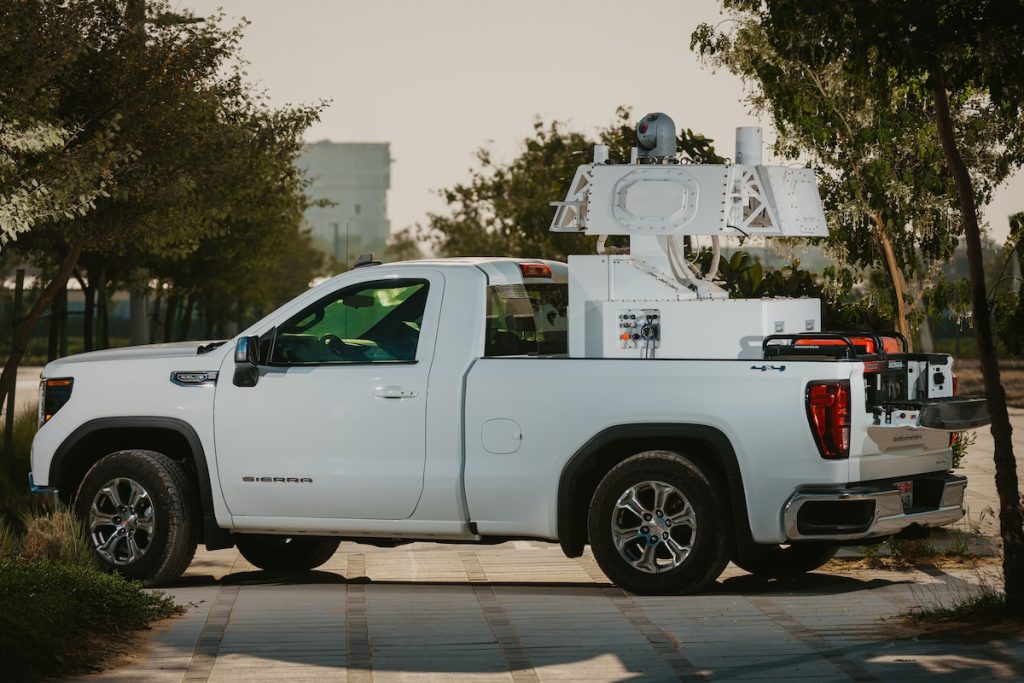
At the core of EDGE’s C-UAS offering is a layered air defence architecture designed to address the full spectrum of aerial threats, from small commercial drones to more advanced, high-speed targets. The SKYSHIELD-QD (Quick Deployment) solution provides a highly mobile counter-UAS capability, enabling rapid deployment to protect critical infrastructure, borders or temporary high value sites. Mounted on a vehicle, it combines radar, electro-optical/infrared (EO/IR) sensors and electronic warfare capabilities to detect, identify, and neutralise drones through jamming and spoofing. With the ability to disrupt GNSS signals and C2 links, SKYSHIELD-QD protects a designated area at up to 10 kilometres.
Complementing this is the REACH-S medium-altitude long-endurance (MALE) unmanned aerial vehicle (UAV), which provides persistent intelligence, surveillance and reconnaissance (ISR) coverage. With up to 24 hours of endurance and a 200km operational range, REACH-S enables continuous monitoring of border regions and maritime zones, significantly extending situational awareness beyond line-of-sight limitations. Detection and tracking are further enhanced by advanced radar systems such as TAWAQ-S, a ground-based 3D surveillance radar, delivering persistent monitoring of airspace and coastal areas, with high update rates and automated classification of aerial objects, including UAVs.
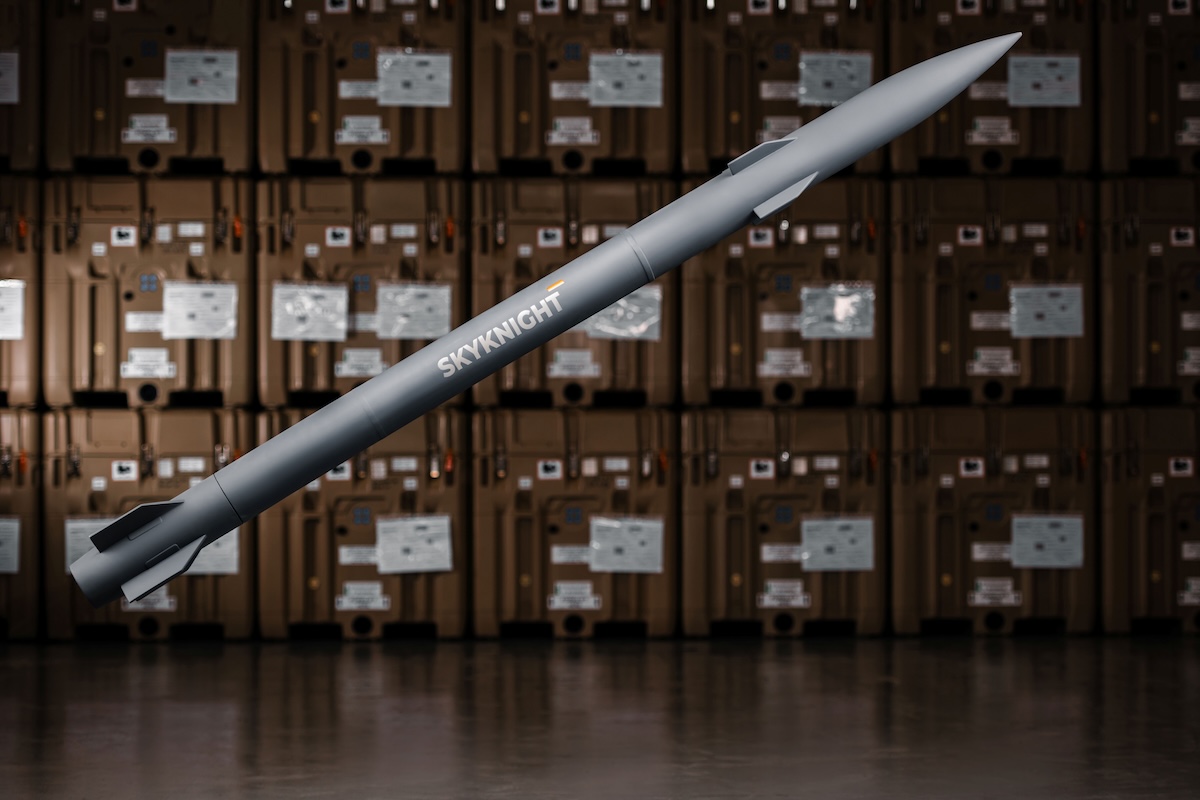
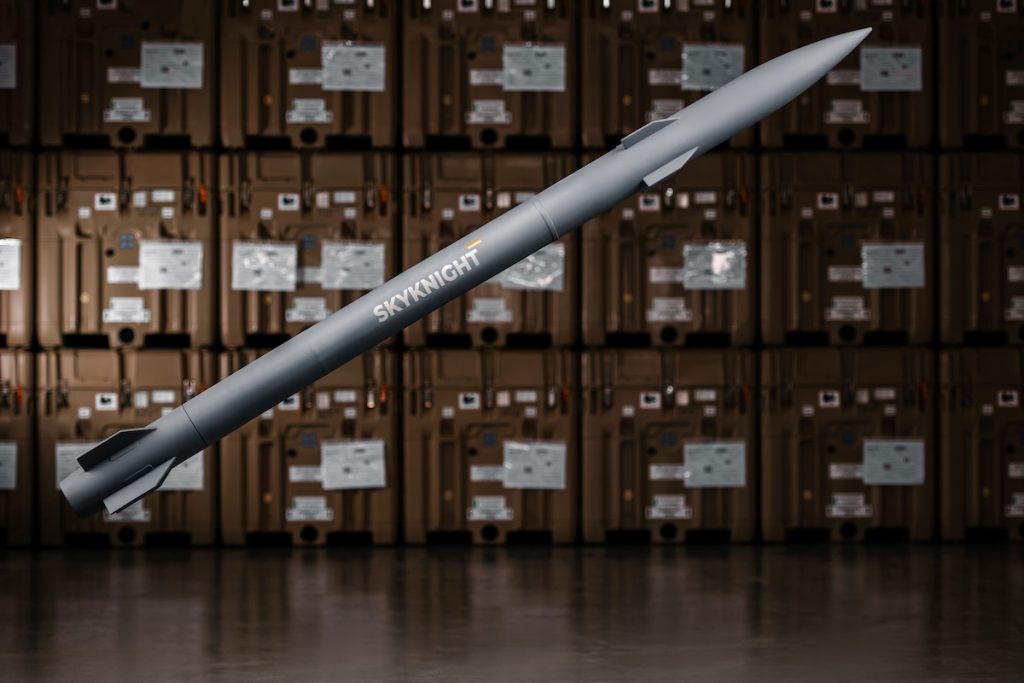
For kinetic engagement, the SKYKNIGHT inner-layer air defence missile system offers a robust solution against both conventional and asymmetric threats. Capable of intercepting UAVs, precision-guided munitions and other aerial threats at ranges of up to 10km, it provides a critical last line of defence for both fixed and mobile assets. Together, these systems form a layered C-UAS and air defence architecture that is capable of addressing both current and emerging aerial threats through detection, tracking, disruption and neutralisation.
Land domain: Persistent border security, tactical mobility
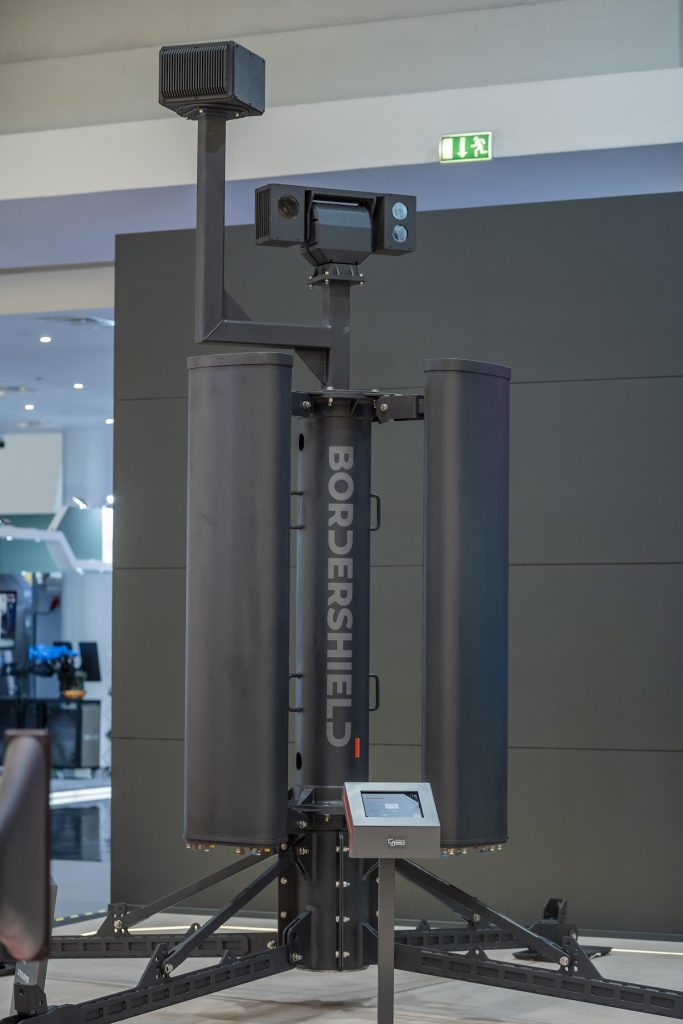
On land, the challenge is persistent surveillance and rapid response across difficult terrain, often with limited infrastructure. EDGE addresses this through the integration of advanced sensor networks, AI-driven command systems and highly mobile platforms. At the centre of this capability is BORDERSHIELD, a next-generation autonomous border control system that fuses sensors, AI and C2 into a single operational framework. Powered by the NEXUS C2 system, BORDERSHIELD enables continuous detection, classification and tracking of intrusions, while also supporting autonomous responses using integrated assets, including UAVs and ground vehicles. The system’s ability to integrate radar, thermal imaging, cellular interception and seismic sensors provides a multi-layered detection capability. Its AI-driven rule engine allows operators to define zones, automate responses and maintain comprehensive situational awareness across vast border areas.

Mobility and survivability are provided by AJBAN MK II, a 4×4 protected tactical vehicle designed for multi-role missions. Featuring a V-hull for mine-blast protection and full-time four-wheel drive, it offers reliable performance in rugged environments, making it ideal for border patrol, rapid response and convoy protection.
Systems such as the TAWAQ-S radar and REACH-S UAV further enhance land-domain coverage by extending surveillance capabilities into remote or inaccessible regions. The integration of these systems into a unified C2 architecture ensures that data from multiple sources is fused into a coherent operational picture.
Maritime domain: Securing littoral and archipelagic waters
In the maritime domain, Southeast Asia’s security challenges are defined by vast coastlines, congested sea lanes and the need for rapid interception of fast-moving threats. EDGE addresses these requirements through platforms such as the 160 Inshore Tactical and Engagement Platform (ITEP). With an endurance of up to 12 hours and speeds above 45 knots, the 160 ITEP enables rapid response and interception in coastal waters, while maintaining high manoeuvrability and mission flexibility for a wide range of patrol missions. These crewed platforms are complemented by the 120 Unmanned Surface Vessel (USV), which can conduct ISR, patrol and potentially interdiction missions without risking personnel. When integrated with airborne ISR assets like REACH-S and radar systems such as TAWAQ-S, maritime forces gain a comprehensive, layered surveillance and response capability.
Integrated ecosystem for modern threats
What distinguishes EDGE’s offering at DSA & NATSEC Asia 2026 is the integration of all these capabilities into a unified ecosystem. Through advanced C2 systems, AI-driven analytics and interoperable architectures, EDGE enables operators to move from reactive to proactive security postures. In a region where threats are increasingly multi-domain, decentralised and technologically enabled, this ecosystem-of-systems approach provides a decisive advantage. By combining persistent surveillance, rapid response and layered defence across air, land and sea, EDGE is positioning itself as a key partner for Southeast Asia’s evolving security requirements. As regional forces continue to modernise, the ability to integrate and synchronise capabilities across domains will be critical. EDGE’s comprehensive border and C-UAS ecosystem represents a forward-looking solution – one designed to meet today’s challenges while anticipating those of tomorrow.