THE Pakistan Navy is the maritime warfare branch of the Pakistan Armed Forces, responsible for defending Pakistan’s more than 1,000km of coastline and monitoring the strategic Arabian Sea. It was established in August 1947 following the independence from Britain.
The primary role of the Pakistan Navy is to defend Pakistan’s sea frontiers from any external enemy attack. In addition to its strategic military role, the Navy has mobilised its assets to conduct humanitarian rescue operations as well as participating in multinational task forces mandated by the United Nations to counter seaborne terrorism and piracy off the coasts.
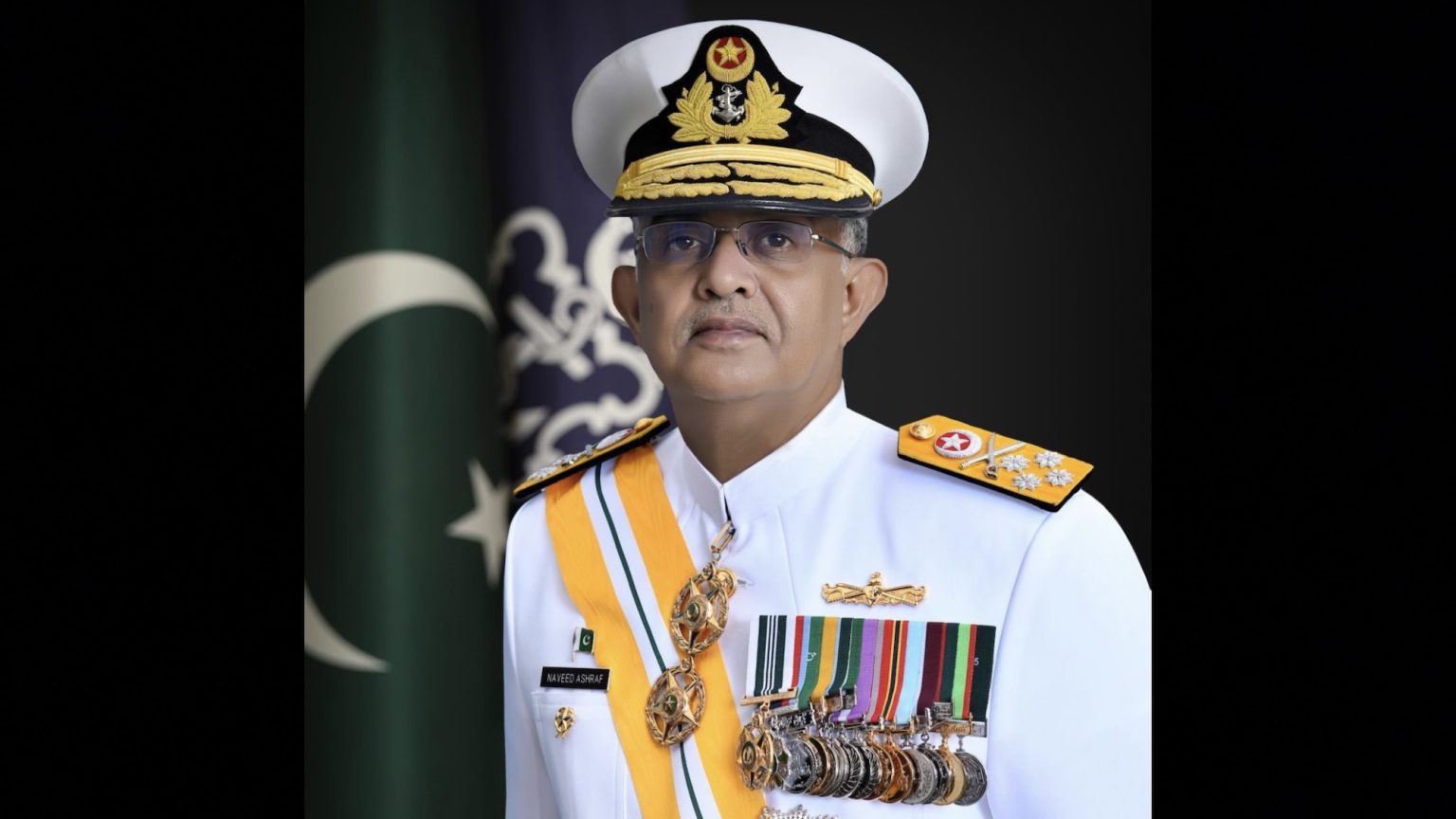
Admiral Naveed Ashraf assumed command on Oct 7, 2023, serving as the 23rd naval chief, and is a highly decorated officer known for his command and staff experience across various destroyer squadrons and the Pakistan Naval Academy.
In this interview he briefs Asian Defence Journal on the rapid modernisation to bolster regional deterrence and protect vital sea lanes. This includes the induction of new assets such as surface combat vessels of various types, submarines and long range maritime patrol aircraft to expand maritime surveillance across the northern Indian Ocean.
ADJ: What role does the Pakistan Navy play in safeguarding national security and protecting the country’s maritime interests?
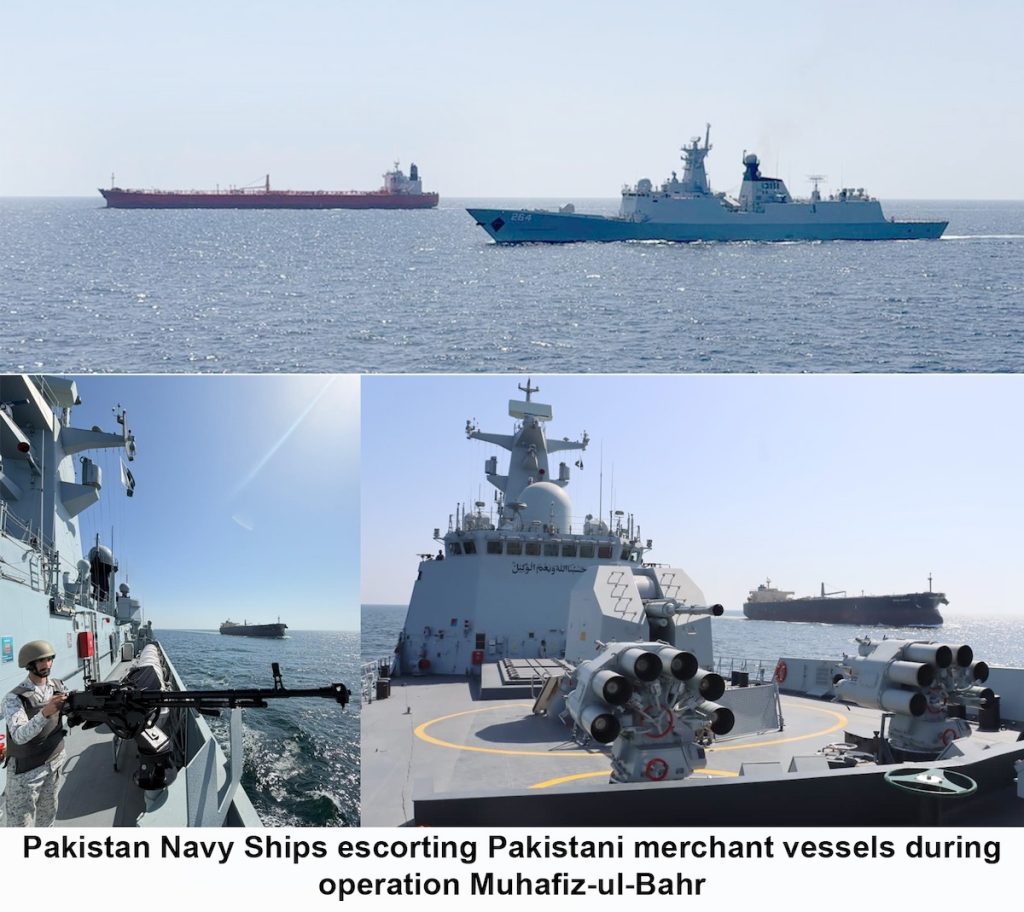
CNS: Pakistan Navy is entrusted with the defence of our sea frontiers and safeguarding maritime interests of Pakistan. Ninety-five percent of our trade by volume and 100% of our oil imports are transported through the sea. Pakistan Navy plays a pivotal role in ensuring that our maritime trade is unimpeded and protected, both against traditional and non-traditional threats. In the backdrop of the recent US-Israel-Iran conflict and the disruption to global supply chains, Pakistan Navy launched “Operation Muhafiz-ul-Bahr” to ensure flow of national energy supplies and security of Sea Lines of Communication (SLOCs). Pakistan Navy conducted escort operations in close coordination with Pakistan National Shipping Corporation and controlled movement of merchant vessels to ensure their safe and secure transit.
Pakistan, as an important and responsible littoral state of the Indian Ocean Region also contributes positively and effectively towards collaborative maritime security in the region to ensure free flow of maritime trade through the most important sea lines of communications transiting through the Arabian Sea and the Indian Ocean.
ADJ: How important is freedom of navigation for Pakistan’s own economic security, especially in the context of energy routes and trade corridors?
CNS: Freedom of navigation is vital to Pakistan’s economic security. The country relies heavily on seaborne trade and a significant share of its energy imports, particularly oil and liquified natural gas travel through the Arabian Sea and critical choke-points such as the Strait of Hormuz. Any disruption in these sea lines of communication directly affects overall economic stability. For this reason, Pakistan strongly supports secure and uninterrupted maritime traffic in the Indian Ocean region.
We believe that ensuring open sea lanes is not only about global norms but also about safeguarding export markets, import flows and the credibility of emerging trade corridors in a competitive Indo-Pacific environment.
ADJ: What role does Pakistan envision for itself in shaping a stable, rules-based maritime order in the Indo-Pacific?
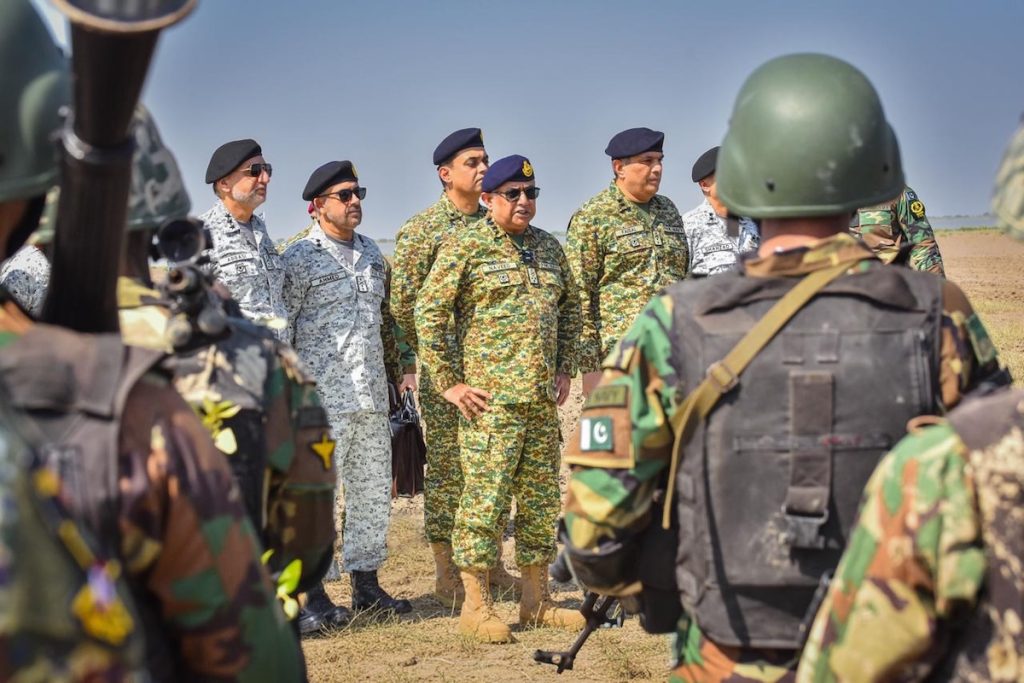
CNS: Pakistan envisions a role for itself as a responsible maritime stakeholder that supports peace, stability, secure sea lines of communication and adheres to international maritime law in the Indo-Pacific. As a littoral state of the Arabian Sea, it sees protection of trade routes and energy flows as central to both national and regional stability.
Pakistan continues to play an important role in collaborative maritime security initiatives like CTF-150 and 151. Our contributions as part of CMF are well acknowledged. In October last year, Pakistan Navy as part of CTF-151 conducted a counter-narcotics operation wherein our ships apprehended the largest ever cache of narcotics in the history of CMF, amounting to approximately US$1 billion.
This testifies our resolve towards ensuring maritime security in the region and contributing in the global fight against narcotics to save our future generations.
Further, in the efforts towards collaborative maritime security, we conduct the AMAN series of exercises every alternate year with its motto: “Together For Peace”. The last AMAN exercise was held in February 2025 with the maiden AMAN Dialogue, which saw participation of around 60 countries from across the globe. The growing number of participation in AMAN reflects the trust reposed by the international community in Pakistan Navy’s role in promoting regional maritime security.
These achievements and initiatives are the practical ways to strengthen a rules-based order without any notion of bloc politics. It also emphasises respect for sovereignty, non-interference and peaceful dispute resolution as the guiding principles of maritime governance.
ADJ: In an era of increasing submarine deployments by regional navies, how can smaller Indian Ocean states avoid being drawn into great power rivalry?
CNS: As submarine deployments increase across the Indian Ocean, driven largely by competition among major powers, smaller states can reduce the risk of entanglement by adopting balanced engagement. They can also invest in maritime domain awareness (MDA) and transparent legal frameworks grounded in international maritime law. Strengthening regional institutions for rapid information sharing and collaborative maritime security can pave the way for collective stability.
ADJ: Naval warfare has evolved significantly, especially in the undersea domain. How does the Pakistan Navy view these changes and how are they shaping its strategic outlook?
CNS: Advanced submarines, better sensors, unmanned underwater systems and integration of Al are transforming the undersea battle space into a more contested, complex and technology driven domain. These shifts demand proportionate investments in undersea capabilities. The Pakistan Navy is therefore according due priority to this domain of warfare.
ADJ: How is Pakistan Navy leveraging emerging technologies like Al and unmanned systems to enhance operational effectiveness?
CNS: Technology is having an increasingly profound impact on the character of warfare. The emerging technologies like Al and unmanned systems are re- shaping the way in which wars will be fought. Pakistan Navy strives to remain abreast with technological advancements. We are investing in Al and unmanned systems to accrue quick decision-making and create greater flexibility in response options in any given operational situation.
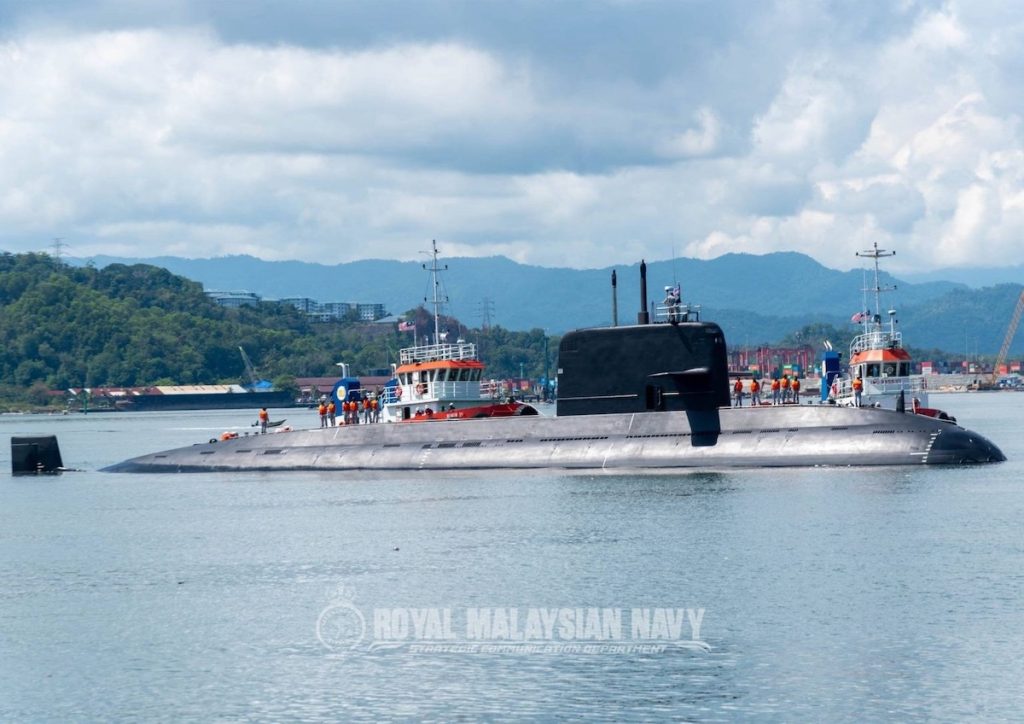
ADJ: What does the commissioning of the first HANGOR Class submarine signify for Pakistan Navy’s long-term maritime vision?
CNS: Submarine force is central to the Pakistan Navy’s Vision-2030 Roadmap and will play a crucial role in strengthening deterrence at sea and safeguarding Pakistan’s maritime interests. Commissioning of the first HANGOR Class S/M is a transformative step towards realising our vision to have a modern and numerically robust submarine fleet capable of operating effectively in the Arabian Sea and the Indian Ocean. It signifies a shift towards a modern, versatile and dependable force structure ready to meet emerging challenges.
ADJ: A central objective of the HANGOR Class Submarine Programme was to transform Pakistan into a submarine-building nation. To what extent has the Transfer of Technology (TOT) arrangement with China enabled this ambition?
CNS: The objective to become a submarine building nation started with Agosta 90 B Project wherein AIP fitted submarines were constructed in Pakistan Navy Dockyard. The aim of the HANGOR Project is to consolidate submarine building expertise achieved during the Agosta Project. For the HANGOR Project, construction yard was shifted from naval yard to commercial shipyard, Karachi Shipyard & Engineering Works (KS & EW) with the premise, not to limit the construction of submarines within the project, but to cater for future plans as well.
I may mention that independent submarine design and construction remains a cornerstone of our indigenous ship building policy. The current Transfer of Technology (TOT) arrangement with China has played a pivotal role in transforming our indigenous submarine building capacity. Through ToT, Pakistan will gain expertise in advanced submarine design, construction techniques, systems integration and quality control processes enabling KS & EW to bolster its capabilities in building and outfitting of submarines.
Pakistan is gradually reducing reliance on foreign suppliers and building a self-sustaining industrial base. Overall, the ToT has significantly advanced Pakistan’s ambition of becoming a submarine-building nation, enhancing both national defence capabilities and long-term technological self-reliance.
ADJ: Four submarines are being built at KS & EW under a ToT arrangement. How significant is this for Pakistan’s indigenous shipbuilding capability?
CNS: Building of submarines at KS & EW will significantly enhance our indigenous shipbuilding capabilities. The ToT arrangement with China is a step towards realising Pakistan’s goal of becoming a submarine-building nation which was conceived with the indigenous construction of Agosta 90B submarines. Importantly, submarine construction has been shifted from naval yard to commercial shipyard with the aim not to limit the construction of submarines as per the existing contract but to cater for similar requirements in future as well. While full independent submarine design and construction remains a future milestone, the current ToT program is a major step towards Pakistan’s long-term goal of self-reliance in undersea warfare platforms.
ADJ: Referring to operation Muhafiz-ul-Bahr currently focussing on securing national sea lines of communication rather than direct deployment in the Strait of Hormuz, under what conditions would Pakistan consider expanding its operational footprint into the Strait itself, especially if disruptions escalate further?
CNS: Operation Muhafiz-ul-Bahr is more than securing National Sea Lines of Communication; the sustained presence of Pakistan Navy in the region is equally assuring for the National and international shipping for any support and assistance. Fighting fire onboard MV GOLD AUTUMN and the rescue of its 18 crew members on Apr 8 is the manifestation of the same. There have been other incidents where the Pakistan Navy was the first responder in providing assistance to international shipping in the region.
Here, I would like to mention that maritime security encompasses a broader scope beyond mere deployment of naval forces; diplomacy also supports maritime security. While our naval forces will continue to do whatever is required to assure National and international seafarers, the efforts of the Government of Pakistan as the principal mediator to find a peaceful solution continue in parallel.
ADJ: In a highly polarised environment marked by US-Iran tensions and ongoing maritime threats, how does the Pakistan Navy balance safeguarding national energy lifelines with maintaining strategic neutrality and avoiding entanglement in great-power conflict dynamics?
CNS: Pakistan Navy operations are conducted as per Government policies and directions.
ADJ: With evolving threats such as naval mines, missile risks and hybrid maritime warfare in the Strait of Hormuz, what capability enhancements or doctrinal shifts is the Pakistan Navy prioritising to ensure resilience and rapid response in a prolonged regional crisis?
CNS: Pakistan Navy is fully cognisant of the evolving character of war with the emergence of new technologies, as being witnessed during recent conflicts. Our development strategy is adaptive to these changes and fully incorporates the emerging technologies. Our doctrine and tactics are also in sync with new capabilities to avoid any lag between the two.
ADJ: Would you like to share a closing message with our readers?
CNS: I believe that the prevalent geopolitical environment is volatile, uncertain, complex and ambiguous, characterised by realignment of interests. Our maritime security is linked to the maritime environment in the Indian Ocean, which is rapidly transforming. I feel that the magnitude and diversity of threats and challenges in our region are such that no country has the wherewithal to tackle them alone.
Collaborative maritime security has thus become an imperative for ensuring maritime security in the region. Our key focus is to keep the maritime environment safe against all kinds of threats and effectively contribute towards safety and security of vital sea lanes. I believe that enhanced naval cooperation with other navies will help to ensure maritime security in the Arabian Sea and the vital adjoining regions.