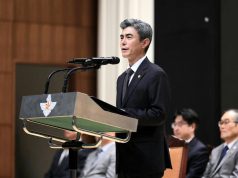
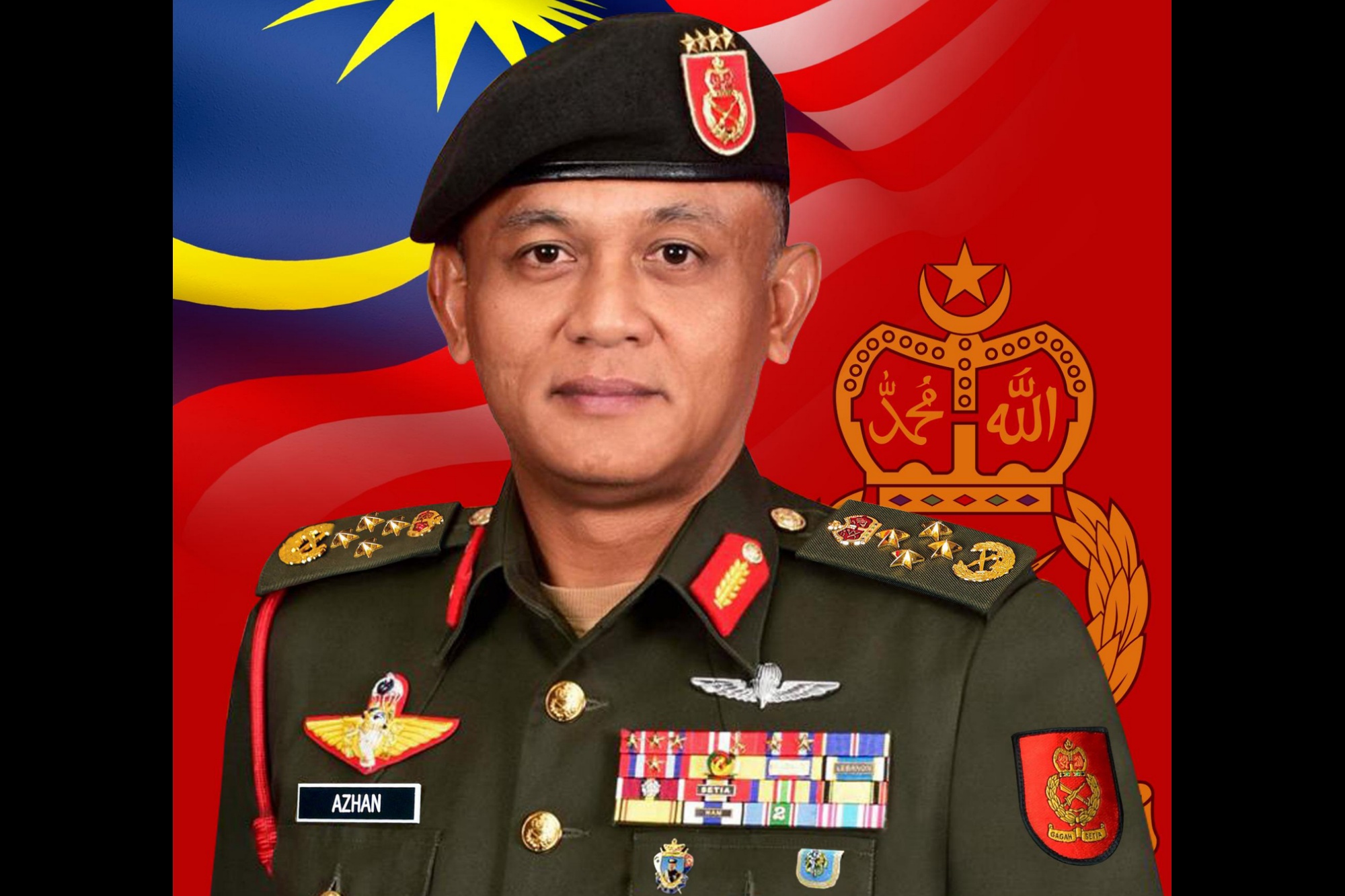
SPEAKING to Asian Defence Journal shortly before DSA & NATSEC Asia 2026, recently appointed Malaysian Army Chief General Azhan Othman details plans to continue modernising the force.
ADJ: General, what are some of the challenges facing the Army at this point in time?
CoA: The Malaysian Army is currently navigating an increasingly complex security environment, where evolving multi-domain threats demand continuous adaptation in both capability and doctrine. At the same time, we must balance the imperative to modernise our force with the need to sustain a high level of operational readiness.
A key consideration is our responsibility to operate effectively across two distinct theatres Peninsular Malaysia and East Malaysia as outlined in the Defence White Paper. This requires careful prioritisation of resources, force posture, and capability development to ensure we remain responsive, agile, and credible in safeguarding national interests.
ADJ: Can you brief us on the Army’s counter-unmanned strategy as the government specifies new procurements for very short-range air defences (VSHORAD) and short-range air defences (SHORAD) which fall under the Army’s purview?
CoA: The Army recognises that the proliferation of unmanned aerial systems (UAS), including loitering munitions and low-cost drones, has significantly impacted today’s operational environment. As such, the Army’s counter-unmanned strategy is being developed as part of a layered and integrated national air defence system, designed to address evolving aerial threats in a comprehensive and coordinated manner.
Within this framework, the Army plays a key role in the Very Short-Range Air Defence (VSHORAD) and Short-Range Air Defence (SHORAD) domains, which fall under its purview. Current capability development focuses on enhancing detection and early warning, particularly against low, slow and small targets, alongside soft-kill electronic warfare counter measures and hard-kill VSHORAD and SHORAD systems to counter a wide spectrum of aerial threats.
These capabilities are being developed to ensure seamless integration with the broader national and joint-force air defence architecture, thereby contributing to a credible and responsive system that safeguards both deployed forces and key national assets.
ADJ: Main battle tanks (MBT) have long been a mainstay of land forces with debates on its relevance; is the Army looking to refresh the capabilities of the Polish-origin PT-91M Pendekar MBTs or possibly replacements in the near future?
CoA: The PT-91M Pendekar remains a key asset within the Army’s force structure, providing protected firepower, mobility and shock effect in support of combined arms operations. While the character of warfare is evolving, the Army’s view is that main battle tanks remain relevant when employed as part of an integrated combined arms system, rather than in isolation.
Having been inducted in 2007, the PT-91M is approaching an important point in its service life cycle. At present, the platform continues to operate effectively and remains capable of meeting current operational requirements. However, the Army also recognises the need to ensure that this capability remains credible and relevant in the years ahead.
For that reason, the current focus is on studying modernisation and a Life Extension Programme to sustain and enhance the fleet in a cost-effective manner. This would allow the Army to retain a viable armoured capability while improving key areas as required. As for full replacement, that remains a longer-term consideration that would depend on future operational requirements, technological developments and resource availability.
ADJ: Overwhelming, mobile long-range firepower is essential for modern armies, can you update us on the Army’s highly-anticipated self-propelled howitzer (SPH) programme?
CoA: The 155mm Self-Propelled Howitzer capability remains an important priority for the Army because it will strengthen our firepower, mobility and responsiveness on the battlefield. It will significantly improve our ability to support manoeuvre operations with timely, accurate and mobile fires, while also marking an important step in modernising the Army’s artillery capability.
The Ministry of Defence selected KNDS’ 155mm CAESAR SPH recently, becoming the 15th customer of the platform by procuring 18 units. KNDS and its Malaysian industrial partner Advanced Defence Systems (ADS) formalised the order for 18 units of the CAESAR, a deal which includes the grant of a licence for technology transfer and assembly of the platforms in Malaysia.
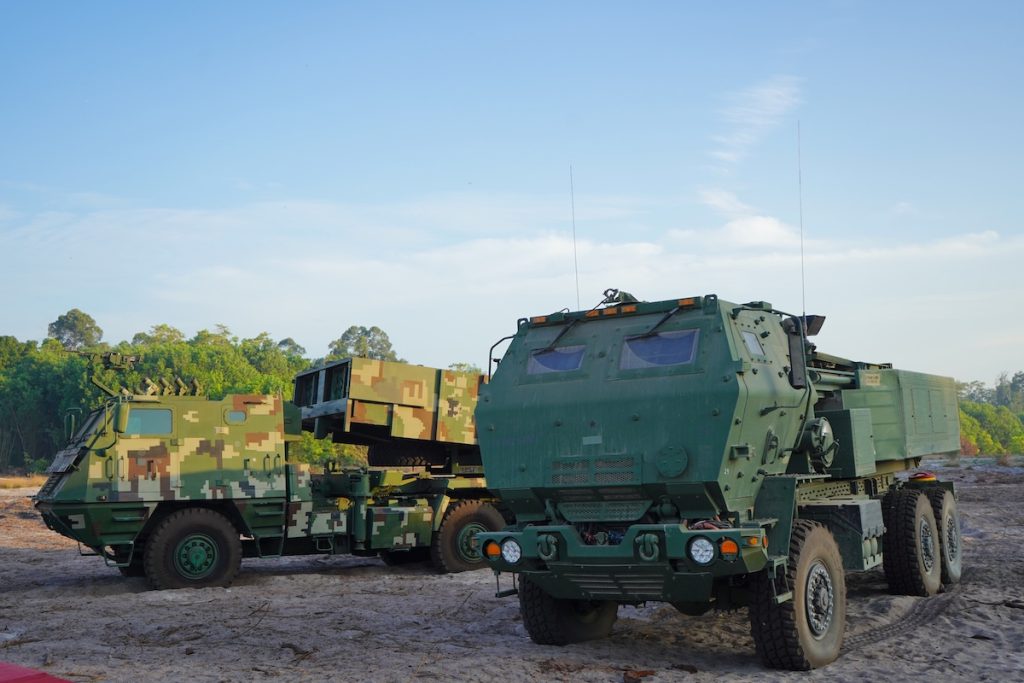
ADJ: Does the Army’s have further requirements in rocket artillery as a force multiplier with the recent joint live-firing of the Army’s ASTROS (Artillery Saturation Rocket System) II multiple launch rocket system with the M142 HIMARS (High Mobility Artillery Rocket System)?
CoA: The recent live-firing involving ASTROS II alongside HIMARS clearly demonstrated the continuing importance of long-range fires in today’s operational environment. Capabilities of this nature remain important force multipliers because they give the Army the ability to deliver deep, responsive effects at extended ranges, while also strengthening deterrence and supporting joint and combined operations.
In that context, the Army recognises the importance of planning ahead to ensure that its rocket artillery capability remains credible and relevant in the longer term. ASTROS II has served the Army well since its induction in 2002 and continues to provide an important capability today. However, given the pace of change in the modern battlespace, it is only prudent that the Army also begins considering the next stage of capability development, including newer systems that can meet future operational demands more effectively.
ADJ: The Army’s Aviation Wing has been in need of medium and heavy lift helicopters since the retirement of the Sikorsky S-61 Nuri helicopters, can you elaborate on the planned leasing programme or other options to improve the Aviation Wing’s capabilities?
CoA: The Army recognises the need to strengthen its lift capability following the retirement of the Nuri fleet, particularly in the medium lift category, which remains essential for tactical mobility, rapid deployment, resupply and support to inter-agency operations, including Humanitarian Assistance and Disaster Relief. While heavy lift remains relevant in the longer term, our more immediate priority is to restore and build medium lift capacity in a phased and operationally driven manner.
In that regard, the Army is expecting the delivery of four such helicopters from 2027, and that will mark an important step in rebuilding the Aviation Wing’s lift capability. At the same time, leasing remains a practical near-term approach to help restore critical capacity more quickly while supporting operational readiness. Over the longer term, the Army remains committed to developing a more complete and sustainable utility helicopter capability to meet a wider spectrum of operational requirements.
ADJ: Also on the topic, are there solid plans for the Army to acquire more potent dedicated attack helicopters as such platforms continue to be of relevance?
CoA: Dedicated attack helicopters remain highly relevant in modern warfare, particularly for precision strike, close air support, armed reconnaissance and responsive battlefield effects in support of land operations. In that regard, the Army continues to recognise the importance of developing a more potent dedicated attack helicopter capability as part of its longer-term force development planning.
In the meantime, the Army is maximising the use of its existing MD530G fleet within its current operational role, while also using the platform as an important lead-in capability for pilot development, tactical training and the gradual buildup of operational experience. This approach allows the Army to sustain readiness today while preparing the foundation for a more advanced attack aviation capability in the future.
ADJ: As battlefield tactics continue evolving day by day in real-world conflicts, how does the Army keep up and learn from these examples?
CoA: The Malaysian Army adopts an adaptive approach by continuously analysing lessons from real-world conflicts and translating those lessons into doctrine, training and capability development. In this regard, the Army Lessons Learned Centre in Port Dickson works closely with the Army Training and Doctrine Command to study emerging operational trends and adapt relevant lessons to our own operational context.
At the same time, we actively engage with international partners through bilateral and multilateral exercises, professional courses and subject matter expert exchanges. These platforms give us valuable exposure to evolving battlefield practices, enable the sharing of best practices, and strengthen interoperability, so that our troops remain relevant, responsive and better prepared for contemporary conflict environments.
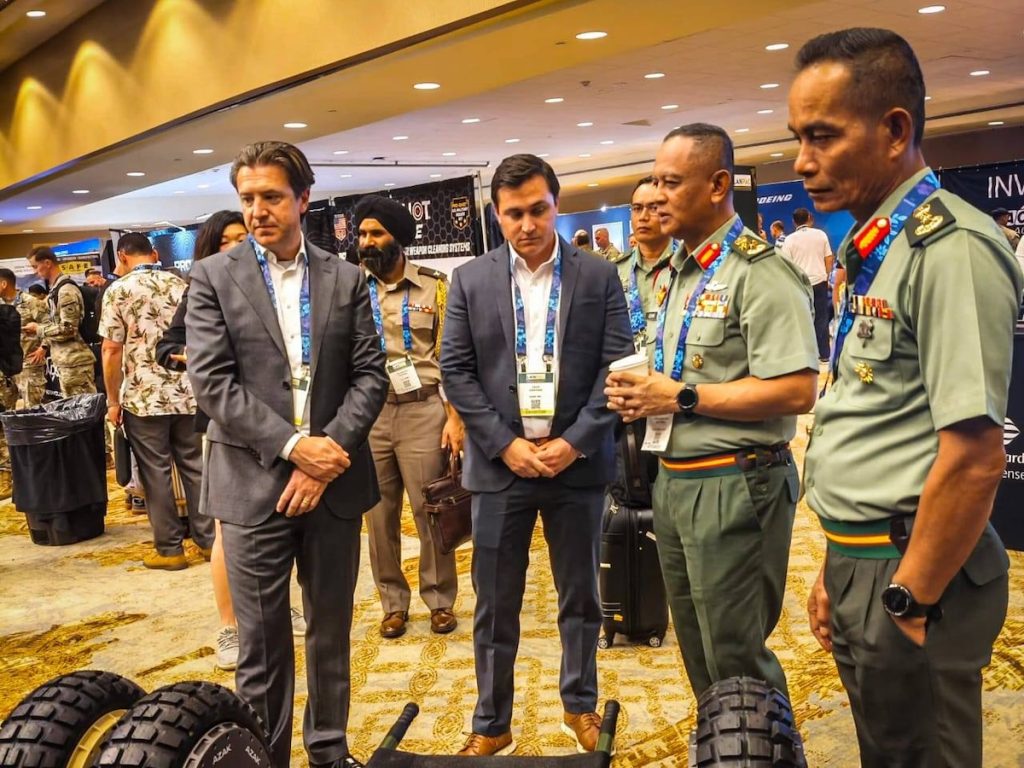
ADJ: Can you share with us the upcoming bilateral and multilateral engagements for the Army?
CoA: The Malaysian Army remains actively engaged in a wide range of bilateral and multilateral exercises, professional exchanges, and planning platforms, particularly within ASEAN and with key strategic partners.
Among our key upcoming engagements are Exercise Keris Strike with US Army Pacific (USARPAC) and the Australian Army, Exercise Aman Youyi with the People’s Liberation Army (PLA) , Exercise Land THAMAL with the Royal Thai Army (RTA), Exercise Land MALPHI with the Philippine Army, as well as Exercise MALBRU Setia and Mertak Bersatu with the Royal Brunei Land Force (RBLF), and Exercise MALINDO DARSASA with the Indonesian Army (TNI-AD).
These engagements are designed to enhance interoperability, strengthen mutual understanding and build collective readiness, ensuring the Malaysian Army remains relevant and capable in addressing shared regional security challenges.
ADJ: What efforts are the Army taking in enhancing its regional and global partnerships?
CoA: The Malaysian Army continues to strengthen its regional and global partnerships through structured engagements, professional exchanges and capacity-building initiatives. The aim is not only to deepen cooperation, but also to improve interoperability and contribute to collective security.
At the same time, we are expanding cooperation by establishing Letters of Intent for Army Staff Talks with new partners, particularly within ASEAN such as Timor-Leste and Laos, while also broadening engagement with global partners including Germany and other key military stakeholders.
These efforts reflect our commitment to an outward-looking approach that builds trust, promotes knowledge exchange, and enhances our ability to operate effectively with international partners.