Critical Communication Solutions By Airbus
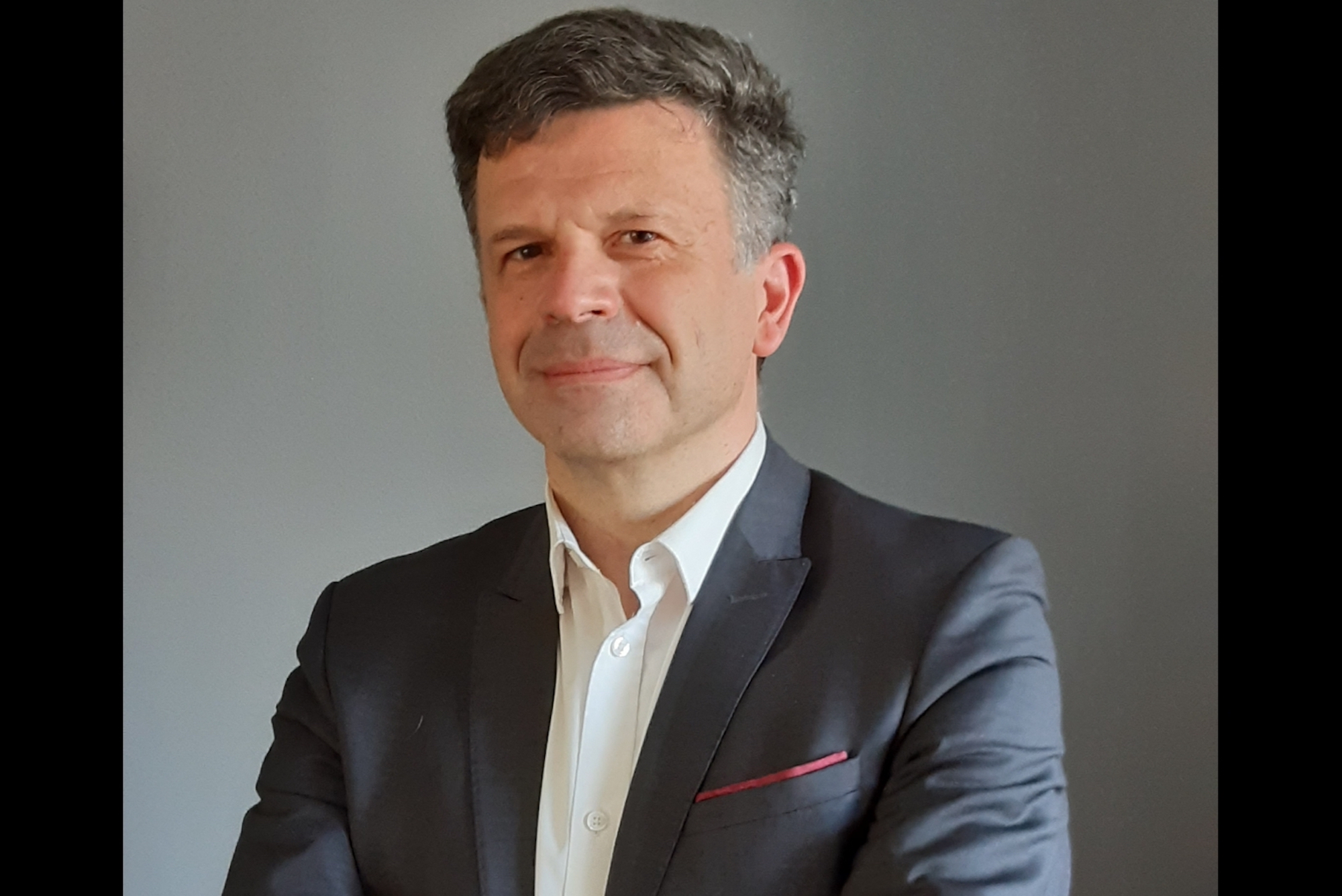
AIRBUS Defence and Space Head of Asia-Pacific Sales and Programme Delivery for Public Safety and Security Alain Ruinet speaks to Asian Defence Journal on the company’s lesser known role in strengthening communications to realise the unseen coordination that keeps major events and national operations running safely behind the scenes, supported by technologies proven in large-scale deployments around the world.
ADJ: Large scale events take place daily across the globe, sometimes even simultaneously in one city, these pose significant security challenges for event organisers and security agencies. Can you tell us more about Airbus Defence and Space’s role during such events?
AR: During large-scale events, mission-critical communications are key to public safety and private security organisations. In any place across the world, these end users can benefit from our collaboration solutions, whether they are based on traditional narrowband (professional radios over an Airbus TETRA or Tetrapol network) or next-generation broadband (smartphones over 4G/5G with the Agnet application by Airbus) technologies, and the associated professional services. This way, they always stay connected to handle both day-to-day security operations and emergencies, even in remote or congested areas.
ADJ: Can you share with us some challenges that the company looks to tackle and how the company aims to do so via its range of proven products and solutions?
AR: Mission-critical organisations’ communication needs are evolving: voice is no longer enough. Those who protect us also need to share multimedia data to carry out their missions more effectively, meaning transitioning from narrowband to broadband. With our solutions, services and experiences, we are looking to support organisations in this digital transformation, which is not only an IT topic but also a complex change management process. We have the capabilities to be an end-to-end system integrator on the same model as our role in France’s Réseau Radio du Futur (RRF – radio network of the future), the first secure, resilient and nationwide broadband communication network in Europe for domestic security and emergency rescue forces.
ADJ: Can you enlighten us on which recent events around the globe where Airbus Defence and Space was instrumental in securing the events behind the scenes?
AR: Our solutions and services contributed to securing five Summer and Winter Olympic Games over the past 20 years, including in Beijing in 2008 and 2022. We also successfully answered the communication and collaboration needs of security organisations during the Eurovision song contest, in 2025 in Switzerland and in 2024 in Sweden, the UEFA EURO 2024 of football in Germany and the 2023 Abu Dhabi F1 Grand Prix.
ADJ: What are some of the latest innovations in technology that Airbus Defence and Space have incorporated into its current portfolio to better equip stakeholders including emergency services, law enforcement, security and event organisers for a smooth, coordinated response to any problems that may occur?
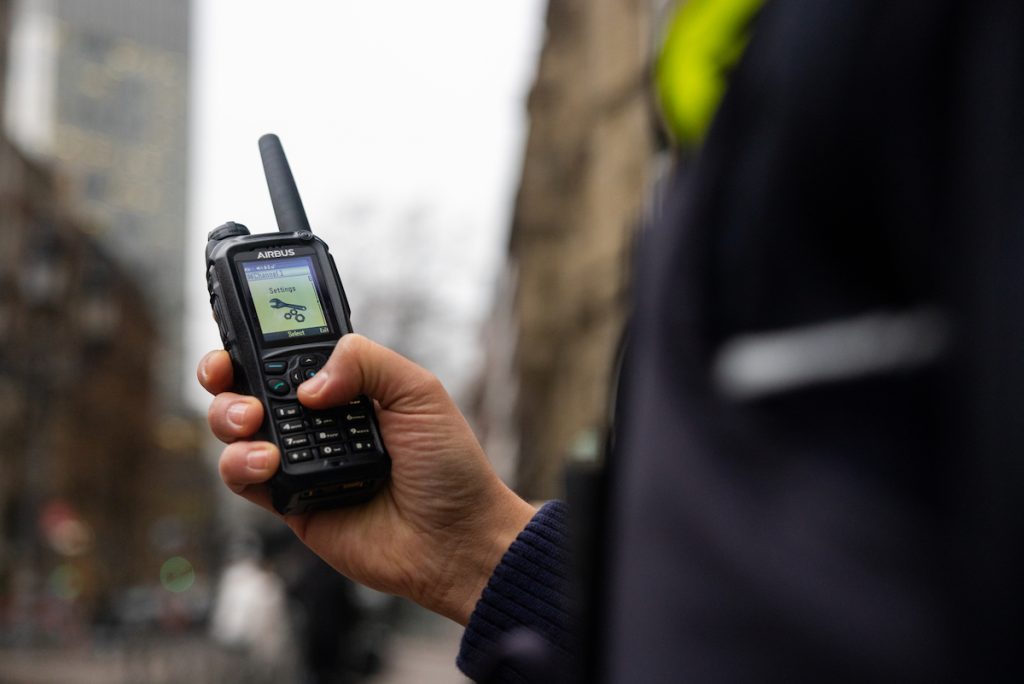
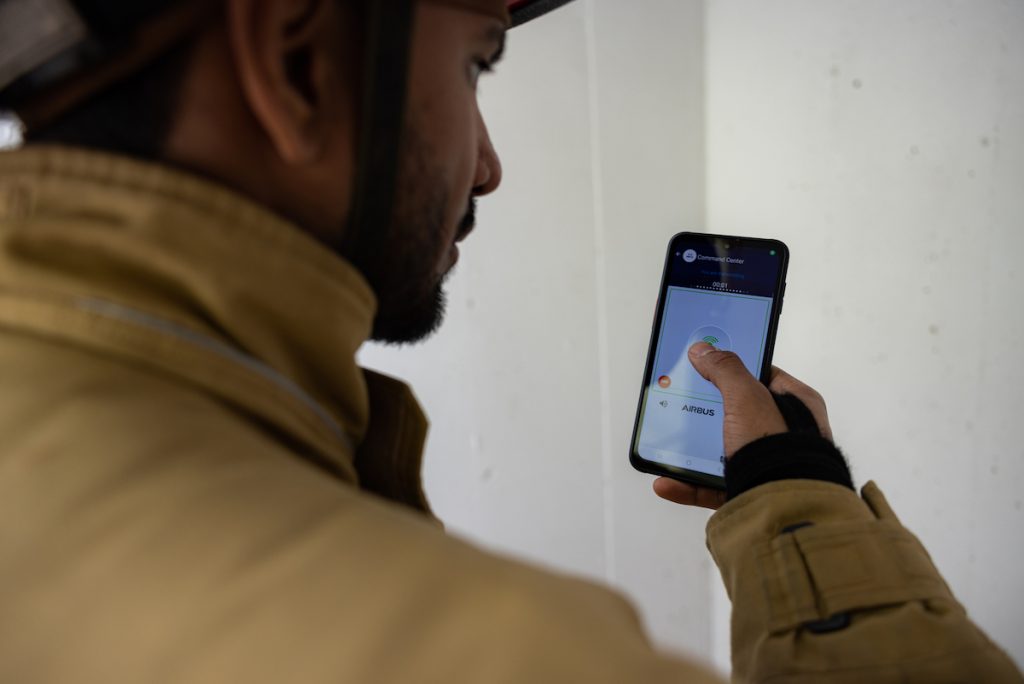
AR: We have recently launched Agnet Direct, a multi-mode solution that allows mission-critical applications (MCX) users to stay connected to team members even when 4G/5G networks are not available. The solution has been developed by Airbus and field-proven as part of RRF. In detail, Agnet Direct includes a smartphone with the Agnet mobile application, an accessory (a smart remote speaker microphone – RSM) connected to the smartphone via Bluetooth or cable, and offers four modes, to be chosen and activated before any operation, depending on the environment’s complexity: network mode, direct mode, dual mode, gateway mode. Being easy-to-use and reliable, Agnet Direct thus ensures network resilience, off-network coverage, and local incident scene communications for end users. The direct mode is specifically essential in scenarios such as natural disasters, major fires, underground rescues, wildland firefighting, tactical operations and network outages/overloads.
ADJ: Communication is key especially when involving multiple organisations, agencies and teams in securing large-scale public events or responding to major crisis/crises. What does the company look to offer the Asia-Pacific region which faces a boom in continuously urbanising cities that aim to be “smart cities” in an increasingly digital world?
AR: In urban areas and smart cities, large commercial 4G/5G infrastructures already exist. While our Agnet offer makes the best use of those infrastructures with a minimum investment, it brings seamless, resilient, cybersecured and interoperable capabilities for the highly demanding mission-critical users who need to coordinate with each other. We’ve recently signed a Memorandum of Understanding (MoU) with Omnitronics to explore collaboration in the development of interoperable critical communication gateways to facilitate the transition from narrowband to broadband for end users. This collaboration aims to create seamless integration and enhanced communication capabilities for mission-critical environments. With interoperable gateways, it will be easier for end users to migrate from narrowband to broadband in the field.
ADJ: Digital security, and the security of critical infrastructure is very often interlinked between the private sector, law enforcement and military organisations, can you tell us more on Airbus Defence and Space’s role on these matters if any?
AR: Transitioning from narrowband, often with proprietary networks, to broadband over public 4G/5G brings new challenges, including those related to cybersecurity, which is at the heart of our approach. It is integrated from the very design phase of our solutions. As part of a major group facing complex security challenges, we benefit from internal expertise and technologies, directly integrated into our solution portfolio. This allows us to offer robust solutions, including communication protection against interception or attacks, advanced security protocols, threat detection systems and rigorous identity and access management. This approach is complemented by regular update processes, cybersecurity awareness programmes and support in obtaining the certifications necessary for large-scale deployment. The goal is clear: to guarantee our customers a secure, interoperable digital environment tailored to today’s operational requirements.
ADJ: Natural disasters in the region are common, with agencies and nations working together to manage the crisis/crises at hand as well as coordinate swift relief efforts, can you tell us more on how the company contributes to the prevention and preparation, response, recovery and post evaluation capabilities of its clients?
AR: Our resilient solutions and 24/7 support contribute to the response to natural disasters, especially when commercial networks and other critical infrastructure fail. For instance, during the 2024 floods in Valencia, Spain, the Airbus TETRA and Tetrapol networks worked, allowing public safety and military organisations to successfully coordinate with each other as part of disaster relief operations. The same year, we also supported our customers in Mayotte and Dubai, which unfortunately faced natural disasters as well. Airbus is the one-stop shop to deliver critical communication solutions for disaster management, such as transportable mobile radio networks, satellite communication deployable nodes, including, in the near future, direct 5G Non-Terrestrial Networks (NTN) capabilities.