
Malaysia Scraps Kuwaiti Hornet Deal
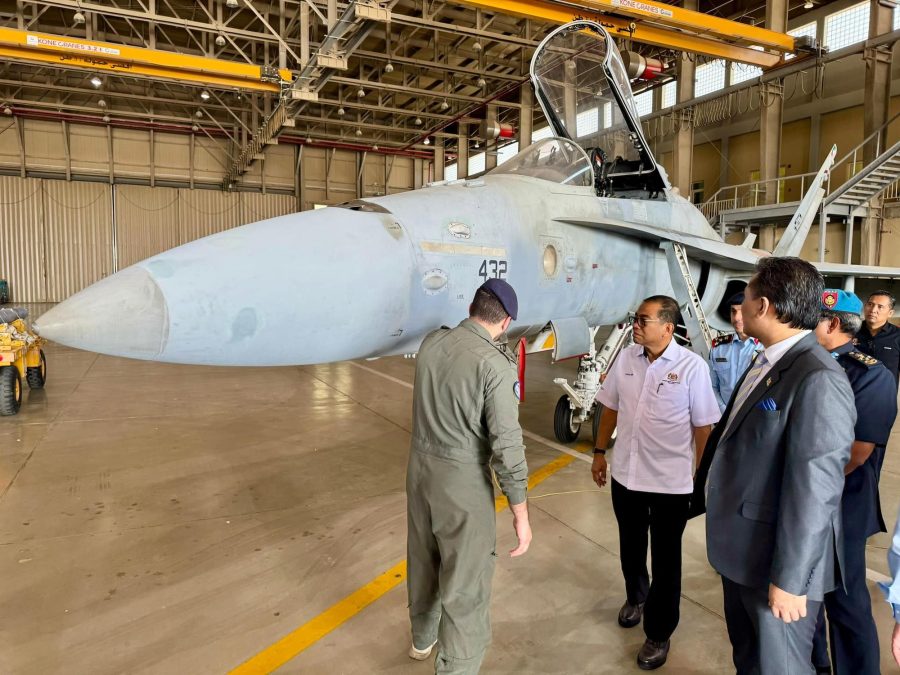
MALAYSIA’S government has cancelled plans to acquire the Kuwait Air Force’s (KAF) fleet of inactive F/A-18C/D Hornet fighter jets to be transferred to the Royal Malaysian Air Force (RMAF).
The deputy defence minister Adly Zahari said the decision had been reached during a Cabinet meeting on February 6 following a comprehensive technical assessment conducted by an RMAF evaluation team dispatched to Kuwait late last year.
“The meeting decided that the plan would not proceed after considering the results of the technical evaluation on the F/A-18 Hornet aircraft carried out by the RMAF team between November 11-27, 2025,” he said in Parliament.
He said that the evaluation found that acquiring the Hornets would expose the RMAF to long-term risks and logistical challenges. Among the key concerns identified were the projected delivery timeline, delays to the aircraft’s operational start date, and the absence of guaranteed continuity in maintenance and support arrangements beyond Malaysia’s control.
Malaysia’s bid for as many as 27 F/A-18C single seaters and 6 twin-seater F/A-18Ds operated by the gulf state started as early as 2017 before fizzling out and it was revived in 2024. The deal received congressional greenlight from the US in line with the Arms Export Control Act in June 2025 but was contingent on Kuwait’s receipt of its brand-new F/A-18E/F Super Hornets from Boeing. Additionally, the aircraft would have required upgrades that would have taken as little as 3 years to receive them.
Following the cancellation, Adly said that the country’s airspace readiness would face increasing pressure as existing assets continue to age. One RMAF F/A-18D Hornet was lost in a crash on August 21 2025, leaving the RMAF with a diminished fighter force and one of the leading ASEAN nations which did not invest in new dedicated fighter aircraft in recent years.
Additionally, the service’s Russian-made Sukhoi Su-30 MKM fighter have long been known to face difficulties particularly in the maintenance and logistics aspect. Most recently, the country mulled dispatching its Su-30MKMs to India for maintenance, repair and overhaul (MRO) due to servicing difficulties in Russia due to international sanctions. Malaysia’s foreign minister Mohamad Hasan said that the matter was discussed during Indian prime minister Narendra Modi’s recent visit to Malaysia as both air forces operate the Su-30.
Saying, “We discussed how we can send (the jets) and establish relationships, especially in terms of MRO, because India has a lot of Sukhoi assets and the country can manufacture spare parts. We are having problems sending spare parts or maintaining Sukhoi fighter jet engines in Russia. We can send them, but we cannot pay because Russia is under sanctions by the US, and we cannot pay through SWIFT (Society for Worldwide Interbank Financial Telecommunication) or normal payment channels. Now, India is allowing us to send and restore (spare parts) or carry out MRO on these Sukhoi fighter jet engines in India.” According to the foreign minister, Malaysia together with India and Vietnam, which all operate Sukhoi jets, will form an informal group to explore cooperation in logistics, spare parts and technical support.
In order to mitigate the capability deficit, the Ministry of Defence is now reassessing the procurement schedule for the new multi-role combat aircraft (MRCA). The RMAF’s long-delayed and highly anticipated MRCA programme was the planned replacement of its retired Russian Mikoyan Gurevich MiG-29 fighters, with the programme closest to fruition between 2011 and 2018 before being shelved indefinitely.
“We are aware that the MRCA programme is included under the 14th Malaysia Plan (14MP). However, after the Cabinet’s decision on the Hornets, the RMAF will study whether the MRCA acquisition should be brought forward to the 13th Malaysia Plan (13MP),” the deputy minister elaborated.
Adding that if the study confirms an urgent operational requirement, the procurement process for the next-generation combat assets would be expedited through the appropriate application procedures under the government’s upcoming rolling budget plan.
The decision for the MRCA would likely hinge on the upcoming 19th Defence Services Asia and the 4th International Exhibition on National Security for Asia (DSA & NATSEC Asia 2026) scheduled from April 20-23 at the Malaysia International Trade and Exhibition Centre (MITEC) in Kuala Lumpur.
The upcoming event is expected to feature over 1,400 companies from more than 60 countries, with 20 national pavilions already confirmed. Major players such as Turkiye, France, the UK, Italy, South Korea, China, Australia, and the US will return – many expanding their presence to reflect deeper engagement in ASEAN markets.
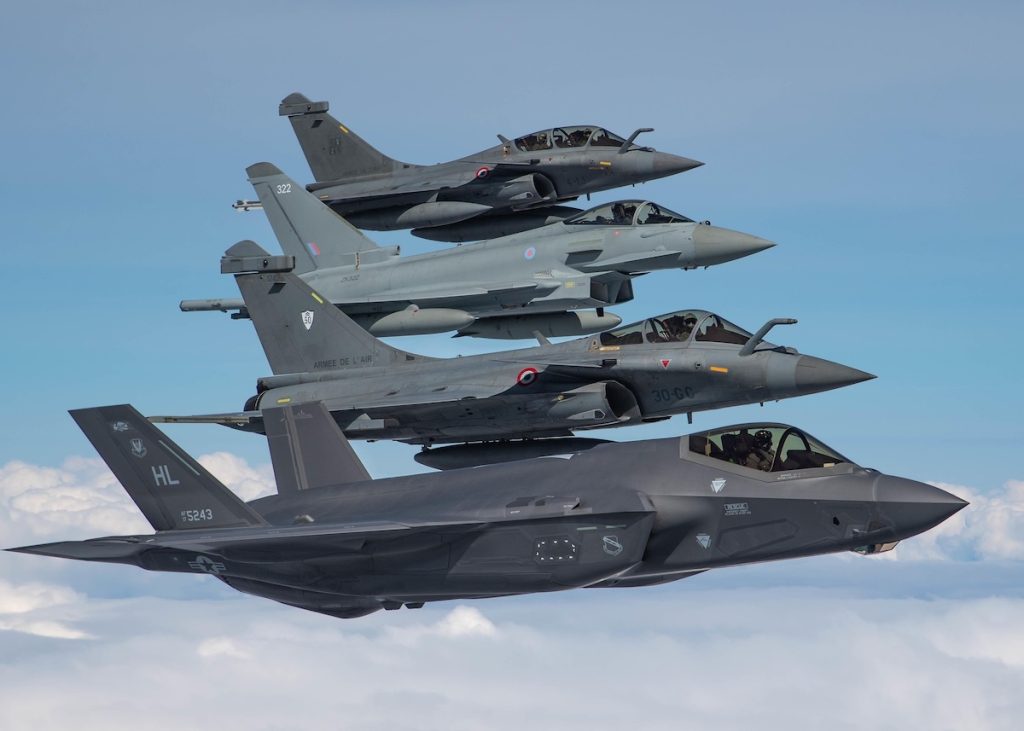
Fighter aircraft manufacturers will likely step up their efforts to provide the RMAF with all-new fighter capabilities. Candidates of the MRCA programme could include the Eurofighter consortium’s Typhoon, Dassault’s ever popular Rafale, the Saab Gripen, Korea Aerospace Industries’ (KAI) KF-21, Turkish Aerospace Industries’ (TUSAS) Kaan while other jets from the US, China or Russia could also be in the mix. Boeing’s F/A-18E/F Super Hornet had been a viable candidate for the RMAF but its production line has likely shuttered. Lockheed Martin had previously stated its readiness to offer Malaysia the F-35 Lightning II.-shp/adj/dl (Pix:DVIDS)