

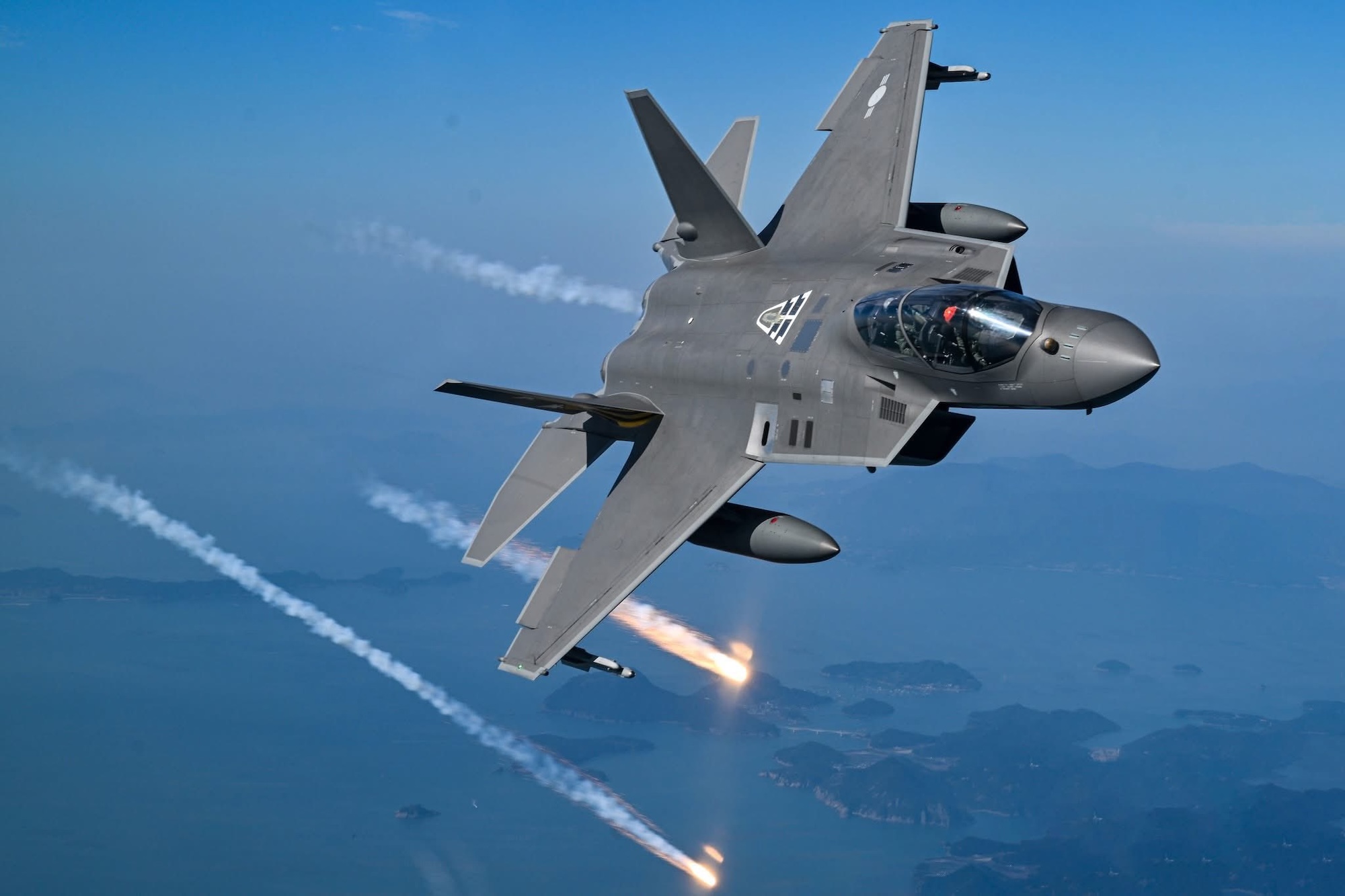
KAI Rolls Out First Mass Production KF-21
KOREA Aerospace Industries (KAI) has rolled out its first mass-produced KF-21 fighter aircraft off the assembly line, marking the culmination of its 25-year indigenous development programme and new era for the South Korean defence industry.
The launch ceremony was held at KAI headquarters in Sacheon and officiated by the country’s president Lee Jae Myung. Development of the 4.5 generation KF-21, dubbed the Boramae was led by KAI for more than 25 years in partnership with other stakeholders such as the Republic of Korea Air Force (ROKAF), Agency for Defense Development (ADD), Hanwha Aerospace and Hanwha Systems among them.
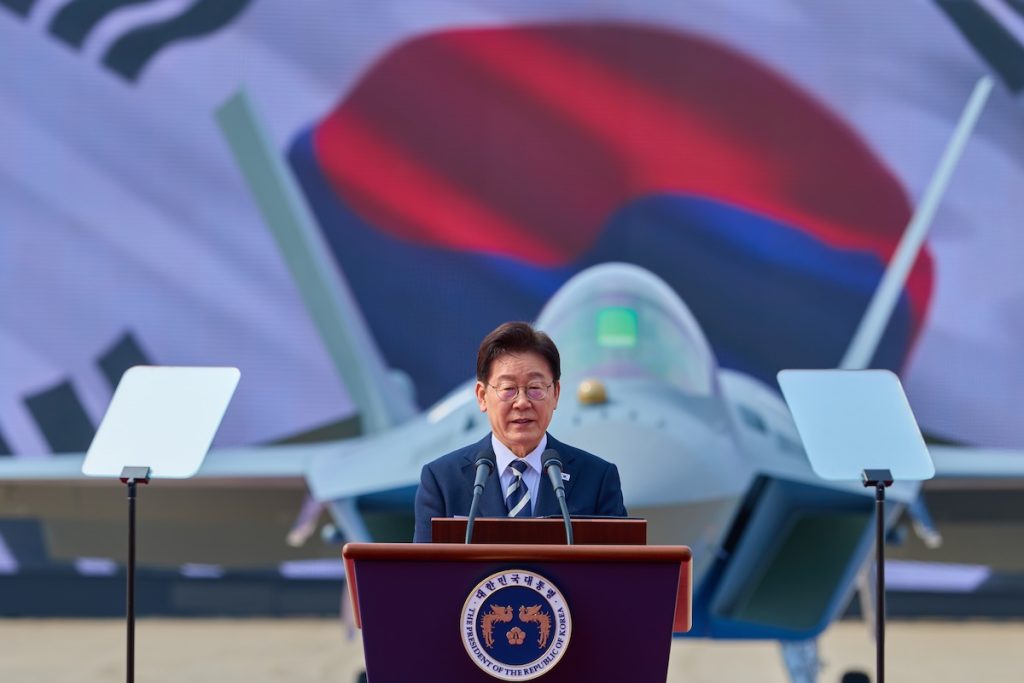
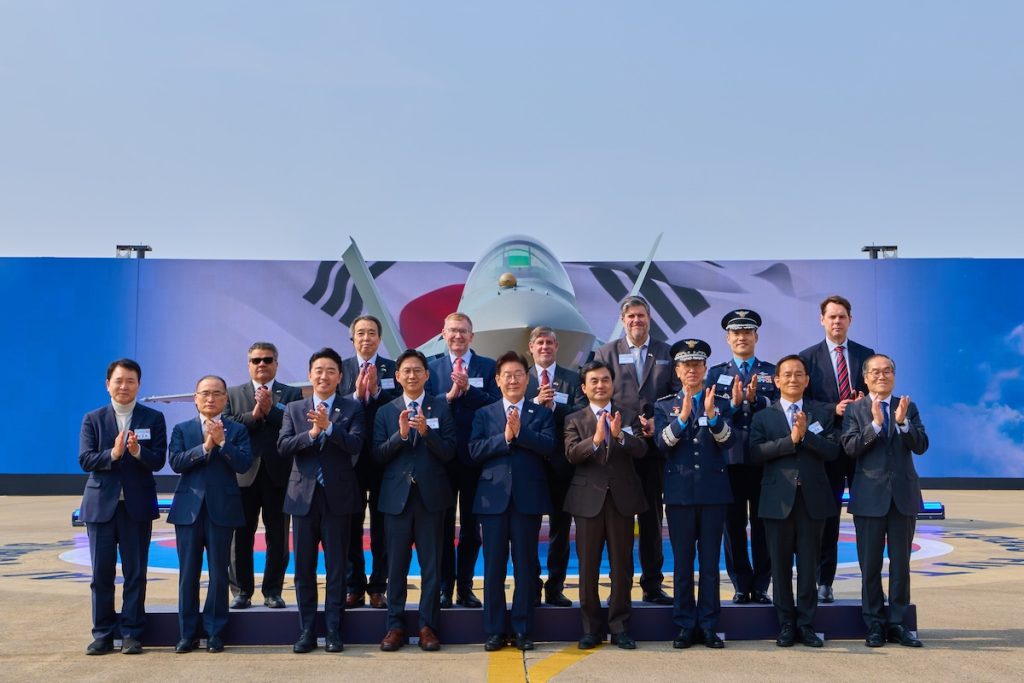
“South Korea has finally secured weapons to protect peace with its own technology not only on land and sea but also in the air. The KF-21 fighter jets, designed with our own technology and built with our own hands, are finally being rolled out. This fighter jet embodies the fervent aspirations for self-reliant defence that we have dreamed of for more than half a century. The government will leverage this success as a solid foundation for advancing Korea into one of the top four defence-industrial nations”, the president said in his speech.
“We will share not only our world-class weapons systems but also our technology and development experience with partner countries,” he said, before concluding that the government will advance Korea as “a contributor to world peace and prosperity”, he added.
Last December, BAE Systems received a US$11 million contract from Korea Aerospace Industries (KAI) to integrate the AN/APX-127(V)1 Combined Interrogator Transponder (CIT) on their KF-21 fighter aircraft. The latest Identification Friend or Foe (IFF) system enables enhanced decision-making capabilities to distinguish between allied forces and potential threats in contested scenarios.
With the same form factor, the AN/APX-127(V)1 is a drop-in replacement for the AN/APX-126(V) CIT currently fielded on the KF-21. It is Mark XIIB IFF certified with Mode S and Mode 5 for secure and encrypted data exchange. The upgraded system enhances situational awareness for warfighters with additional receive channels for passive acquisition of Mode 5 Level 2 and Automatic Dependent Surveillance – Broadcast In to detect and identify friendly aircraft in complex and dynamic environments.
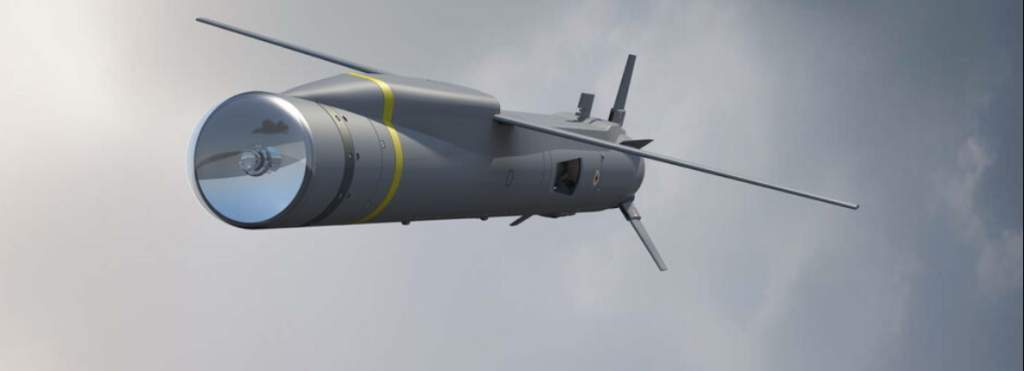
In addition, KAI has also partnered with missile giants MBDA and Diehl Defence to increase the KF-21’s lethality. In October 2025, KAI and MBDA signed the SPEAR Missile Integration Cooperation memorandum of understanding (MOU) to enhance the KF-21’s Sustainable Air-to-Ground Armament Expansion. The agreement is aimed at expanding the integration of the SPEAR next generation air launched Surface Attack Weapon onto the export‑configuration KF‑21 which already carries MBDA’s METEOR long‑range air‑to‑air missile (AAM), adding the SPEAR missile would considerably enhance its air‑to‑ground lethality. Both KAI and MBDA have expressed a commitment to further expand armament integration and strengthen joint efforts to promote the KF‑21 and its associated weapons package in international markets.
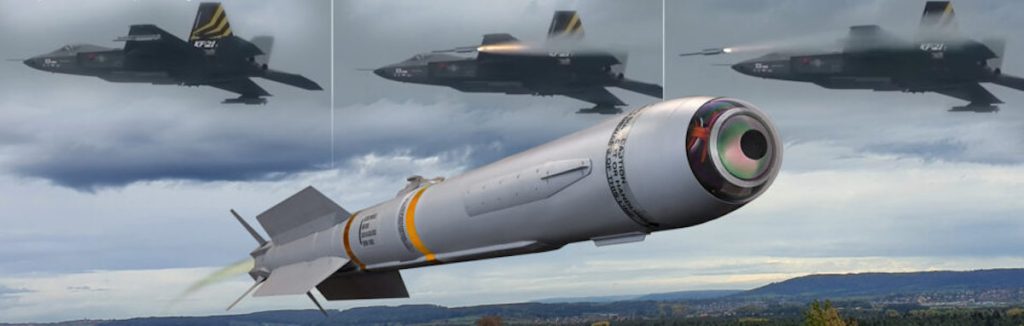
Additionally, KAI and Diehl Defence marked the completion of Diehl’s IRIS-T short range missile integration with the KF-21. In May 2024, the IRIS-T was launched for the first time from the KF-21, The missile was designated by the onboard active electronically scanned array (AESA) radar, and successfully engaged the target drone. The successful live firing demonstrates the technical feasibility and commitment to integrating the missile into KAI’s combat fleet, with the FA-50 integration following closely behind.
The KF-21 has long been speculated to be prime candidates for Southeast Asia’s air power modernisation, among them being the Philippines, Indonesia, and Malaysia. Earlier in December 2025, local media also reported on KAI’s talks with the Department of National Defense (DND) and Philippine Air Force (PAF) on the possible acquisition of the KF-21. The Philippine government and KAI had also been exploring the prospects of setting up a maintenance, repair and overhaul (MRO) facility for PAF aircraft either at Basa or Clark Air Base but added that the idea would be most cost-effective if the PAF operates enough KAI aircraft. In June, KAI landed a US$700 million deal from the Philippines for 12 additional FA-50PH light attack fighters, building on their initial batch of 12 FA-50s in 2014.
This month, South Korean media reported that KAI is likely on the verge of exporting 16 KF-21s to Indonesia, a deal that if realised would mark the KF-21’s first export sale. The reports stated that the deal would likely be signed during the Indonesian president, Prabowo Subianto’s state visit to South Korea from March 31-April 2. The reports added that the final contract could be finalised by the first half of the year.
Indonesia, is a partner alongside South Korea in the project, initially agreeing to shoulder 20% of the project cost through June 2026 in return for transfers of technology among other conditions. However, Indonesia had not been able to fulfil its payment commitments and looked to reduce its commitments. Indonesian engineers working on the KF-21 programme were investigated in February 2024 for allegedly stealing technologies related to the jet.
The engineers who had been sent to work alongside KAI were accused of storing data on the aircraft’s development on a memory drive, according to South Korea’s arms procurement agency, the Defense Acquisition Program Administration (DAPA). Then in June 2025, both countries agreed to reduce Indonesia’s contribution to the programme to just US$400 million, around a third of the original commitment.
Malaysia is also among those said to be considering the KF-21 for new fighter jet procurements. The Royal Malaysian Air Force (RMAF) has been in need of new fighter aircraft since the retirement of its Russian MiG-29 fleet around 2017 and eventual diminishing availability of its current fighter fleet comprising American F/A-18D Hornets and Russian Su-30MKMs. Furthermore, their need for new fighters is underscored by the cancellation of plans to acquire Kuwait’s fleet of inactive F/A-18C/D Hornets.
Following the cancellation, the country’s deputy defence minister Adly Zahari said that the country’s airspace readiness would face increasing pressure as existing assets continue to age. One RMAF F/A-18D Hornet was lost in a crash last August, leaving the RMAF with an even more diminished fighter force. In order to mitigate the capability deficit, the Ministry of Defence is now reassessing the procurement schedule for the new multi-role combat aircraft (MRCA).
The RMAF’s long-delayed and highly anticipated MRCA programme was the planned replacement of their MiG-29s with the programme closest to fruition between 2011 and 2018 before being shelved indefinitely. If the study confirms an urgent operational requirement, the procurement process for the next-generation combat assets would be expedited through the appropriate application procedures under the government’s upcoming rolling budget plan.
The decision for the MRCA could possibly hinge on the upcoming 19th Defence Services Asia and the 4th International Exhibition on National Security for Asia (DSA & NATSEC Asia 2026) scheduled from April 20-23 at the Malaysia International Trade and Exhibition Centre (MITEC) in Kuala Lumpur.
Another possibility for the RMAF’s fighter gap is the procurement of a second batch of FA-50Ms consisting of an additional 18 units. Malaysia also ordered an initial batch of 18 FA-50M light fighters in 2023 with RMAF pilots and engineers already beginning training in South Korea on operating the platform. As of July 2025, the project reached 69% completion and is progressing slightly ahead of schedule for an October 2026 completion date. The FA-50M variant would be equipped with state-of-the-art active electronically scanned array (AESA) radar and sniper advanced targeting pod as well as an in-flight refuelling system. It will replace the BAE Hawk 108/208 aircraft in the light strike role and complement the F/A-18Ds as well as Su-30MKMs by delivering precision–guided munitions and stand-off weapons.-shp/adj/dl (Pix:ROKAF, X)