
Malaysia Rips Into Norway And Double Standards In International Law
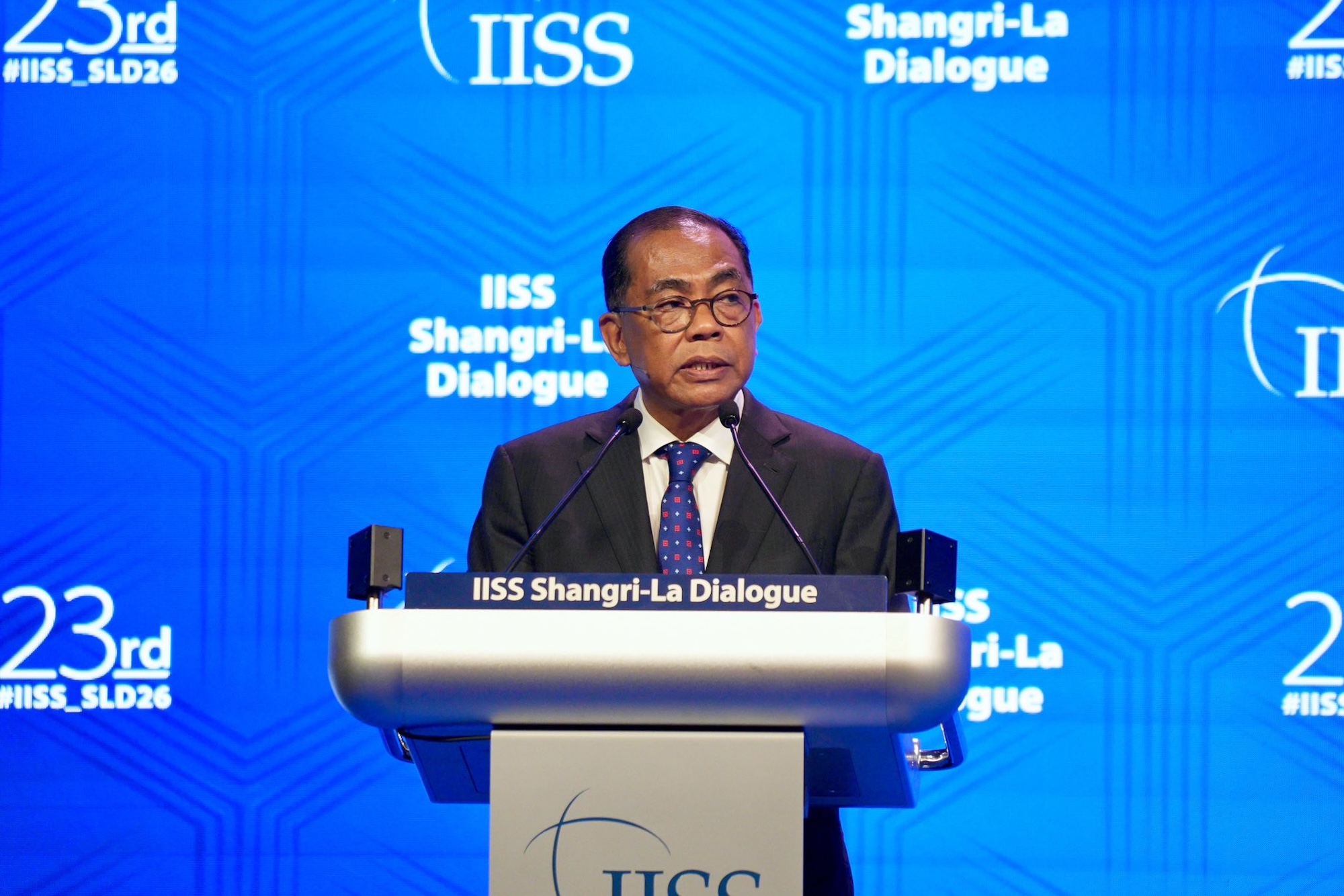
MALAYSIA’S defence minister Khaled Nordin ripped into Norway amidst the Naval Strike Missile (NSM) debacle which has created “more than just a bilateral contract dispute” and the growing practice of double standards in the enforcement of international law. Speaking at the International Institute for Strategic Studies (IISS) Shangri-La Dialogue’s plenary session in Singapore, the minister said that nations were told for decades to believe in international law, multilateralism, contractual obligations, and the sanctity of agreements.
“We were told that rules matter. Commitments matter. And international norms would apply equally to all nations, regardless of size or power. But today, treaties, humanitarian principles, and international commitments are being disregarded and selectively interpreted whenever these do not align with geopolitical interests. As a result, trust is no longer universal. It is becoming conditional, selective, and increasingly transactional,” he continued.
“That is why Malaysia deeply regrets Norway’s decision to cancel the export of the NSM system intended for Malaysia. Norway’s action has created more than just a bilateral contract dispute. It raises a deeply troubling question about whether international agreements and strategic partnerships can still be trusted at all. If even a nation – regarded as a proponent of the rules-based order, well known for awarding the Nobel Peace Prize – could abandon commitments without consequence, then I am afraid international relations are no longer governed by principles. They are governed by their own personal will and whims. And that is an extremely dangerous trajectory for the international system, especially if it involves big powers.”
Continuing, the minister added that international law is often treated as something that exists only on paper – observed strictly by countries of the Global Majority, but selectively interpreted by stronger powers whenever convenient. “When developing nations violate agreements, they face condemnation and pressure. But when powerful countries or their allies do the same, the international response becomes conspicuously muted. The silence surrounding Norway’s unilateral decision was particularly revealing. No serious concern was raised about the integrity of contracts or accountability. This deafening silence sends a dangerous message, that some countries are simply above scrutiny.
Furthermore, he highlighted ASEAN’s indispensable role in regional peace despite mounting pressure from growing geopolitical rivalries, geo-economic fragmentation, technological competition, and strategic coercion. With countries in the region being pressured to pick sides directly or indirectly and recalibrate long-standing strategic positions according to the interests of larger powers.
“ASEAN was never built upon coercion. ASEAN was never built upon dominance. And ASEAN was never built upon transactional politics. ASEAN was built upon dialogue, consensus, mutual respect, and collective responsibility for regional stability. So, let me say this very clearly: the moment ASEAN Centrality is compromised, regionalism in Southeast Asia will cease to be meaningful and purposeful.And that would be extremely damaging, not only for Southeast Asia, but also the wider Asia-Pacific region,” Khaled continued.
Citing Canada’s prime minister, Khaled reiterated the need for middle powers to come together and restore rationality, predicability, and balance to international affairs. “Here in Southeast Asia, ASEAN has demonstrated how smaller, middle-power nations can cooperate through active engagements and mutual respect, anchored firmly in ASEAN Centrality. External powers engaging with this region must respect ASEAN’s norms, strategic sensitivities, and regional mechanisms – not bypass them.”
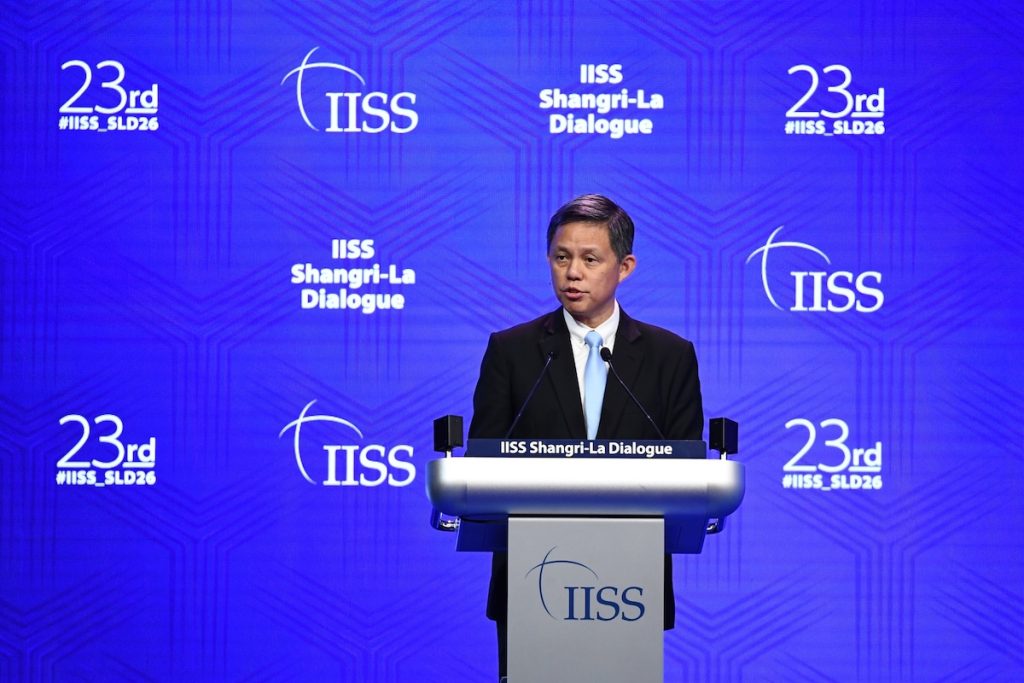
Khaled’s Singaporean counterpart, Chan Chun Sing said that conferences such as the Dialogue allow countries to understand each other’s actions and can reduce the chances of misunderstanding as well as miscalculation. “The kind of outcome that we can get from the Shangri-La Dialogue is – again you may not see this – but where countries bilaterally, or perhaps in small groupings, have issues with another party, they are able to talk about it behind closed doors. And sometimes when nothing happens on the surface, it is a mark for success, because some of those issues have been better managed or resolved.”
Adding on about ASEAN, he said that ASEAN “must be very clear in our perspective. Where are those challenges today, and where are those challenges tomorrow? We have to deal with not only today’s challenges, we have to deal with tomorrow’s challenges.”–-shp/adj/dl (Pix:SG/MY MINDEF)