THE proliferation of low-cost unmanned aerial vehicles has fundamentally altered the threat calculus for armed forces worldwide. From coordinated swarm attacks on airbases to single FPV drones disabling armoured vehicles, the challenge is no longer theoretical. Traditional RF jamming increasingly falls short against drones operating on unconventional frequency bands, autonomous navigation logic or fiber-optic control links that are immune to electromagnetic interference altogether. What the modern battlefield demands is a counter-UAV capability that does not merely disrupt a signal but physically disables the threat itself. ASELSAN’s EJDERHA AD/200 is built to answer precisely that requirement.
Fundamentally different approach
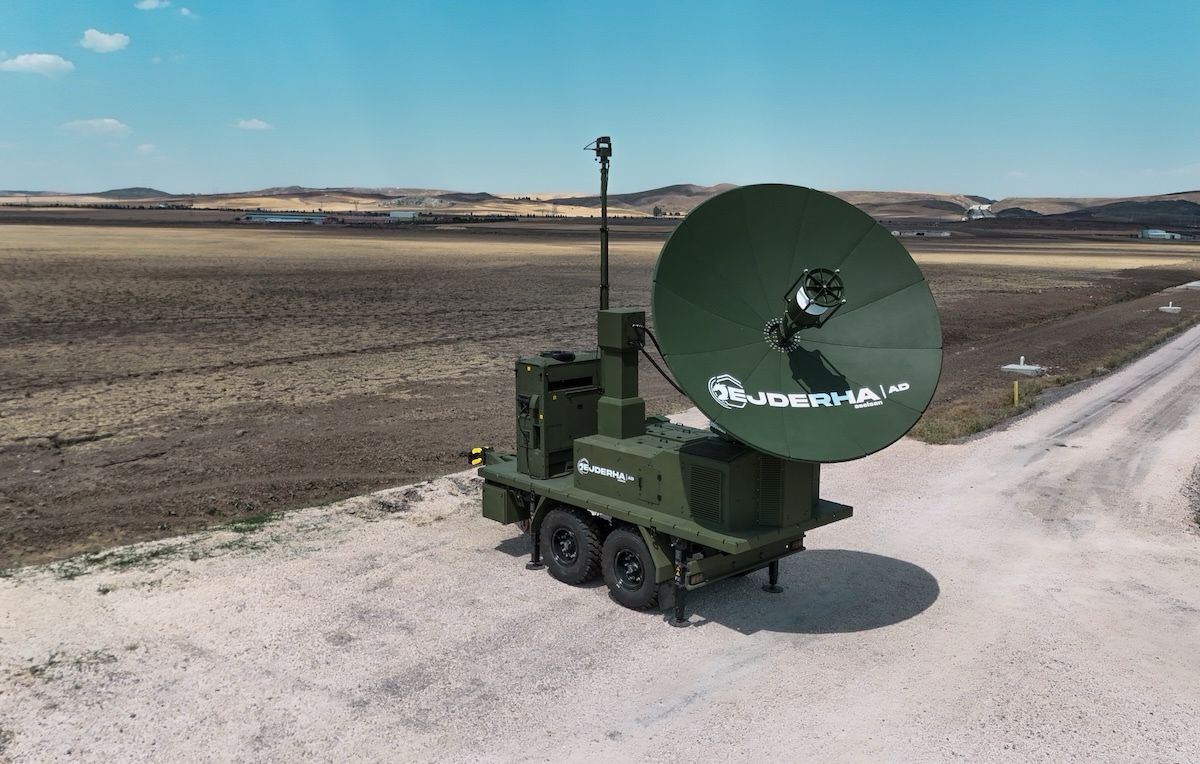
The EJDERHA AD/200 is a High-Power Electromagnetic (HPEM) counter-UAV system that neutralises mini and micro UAVs by generating narrow-band, high-power electromagnetic waves directed at the target. Unlike conventional RF jammers, which attempt to sever the communication link between a drone and its operator, EJDERHA attacks the threat at the hardware level. The directed energy damages or destroys the electronic circuits within the target’s navigation, communication and flight control systems simultaneously, resulting in permanent failure, forced reboot or complete system freeze. A jammed drone may recover or revert to autonomous waypoint navigation; a drone whose control electronics have been physically compromised cannot.
This is particularly significant against fibre-optic guided FPV drones, a rapidly growing threat category where traditional jamming is ineffective because the control link never enters the RF spectrum. EJDERHA bypasses this problem entirely by targeting onboard electronics rather than the data link.
System architecture, operational flexibility
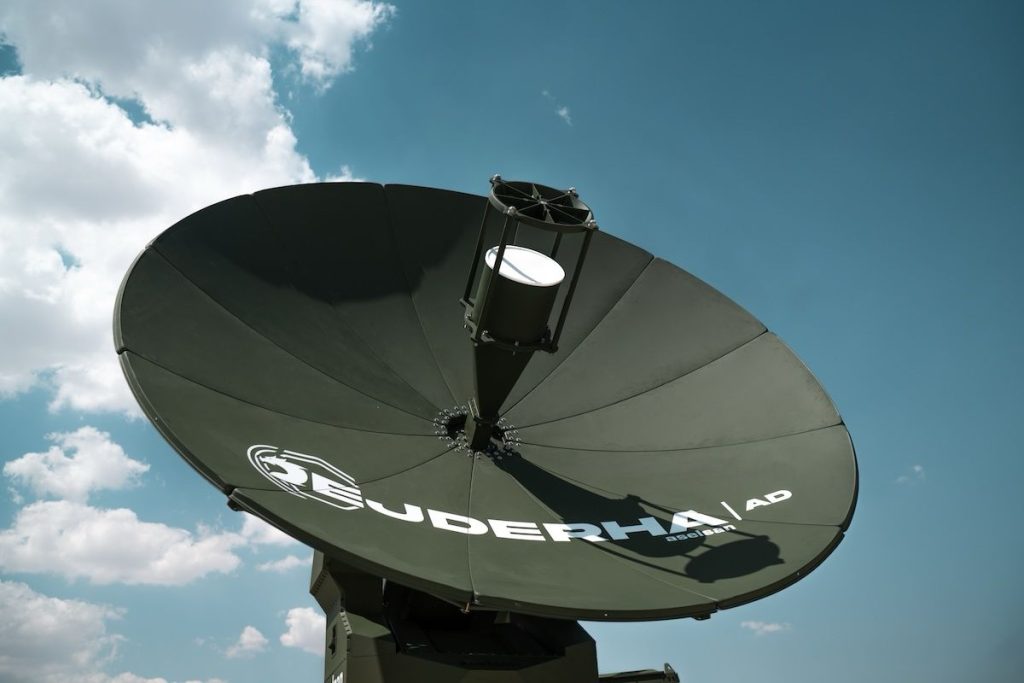
Mounted on a towed trailer platform, EJDERHA offers rapid deployment and tactical repositioning without dependence on a dedicated combat vehicle. An integrated electro-optical camera supports threat detection, enabling automatic and semi-automatic target engagement. The directed antenna employs an advanced steering mechanism for precise electromagnetic intervention, with a narrow-beam fixed-view mode for concentrated energy against individual threats and a wide-view steering mode for broader area coverage during swarm defense or perimeter protection scenarios.
Pulse parameters are adjustable according to operational requirements. An integrated cooling system ensures sustained high-power pulse generation during extended engagements. Because the weapon relies on electromagnetic energy rather than expendable munitions, it can continue operating as long as power is available, eliminating the ammunition depletion problem that constrains kinetic counter-UAV systems.
Tested and entering production
Unveiled at the 17th International Defence Industry Fair (IDEF 2025), EJDERHA AD/200 has since undergone rigorous field validation. In January this year, the system was demonstrated at ASELSAN’s Gölbaşı Technology Base against four distinct attack scenarios. Three wired FPV drones simulating a simultaneous swarm approach were neutralised within seconds of activation. Subsequent scenarios tested the system against mixed wired and wireless FPV configurations approaching from different angles, as well as against various commercial drone motor and servo types commonly found in field-modified threats. The system succeeded across all scenarios, engaging targets at ranges of hundreds of metres.
EJDERHA AD/200 has entered low-volume serial production and is scheduled for operational deployment in 2026 as part of Türkiye’s Steel Dome multi-layered integrated air defence architecture, complementing radar-guided missiles, gun-based close-in systems and laser effectors with a non-kinetic hardware-kill capability.
Why it matters
Kinetic interceptors remain essential for larger UAV threats, but the economics of spending a missile worth tens of thousands of dollars against a drone costing a few hundred are unsustainable at scale. HPEM fills a distinct niche: near-instantaneous effect at the speed of light, low cost per engagement, effectiveness regardless of control-link type, and the ability to engage multiple threats in rapid succession. With its proven performance against realistic swarm scenarios and integration into a fielded air defence framework, EJDERHA AD/200 offers regional forces a deployable answer to the threat reshaping modern warfare.