
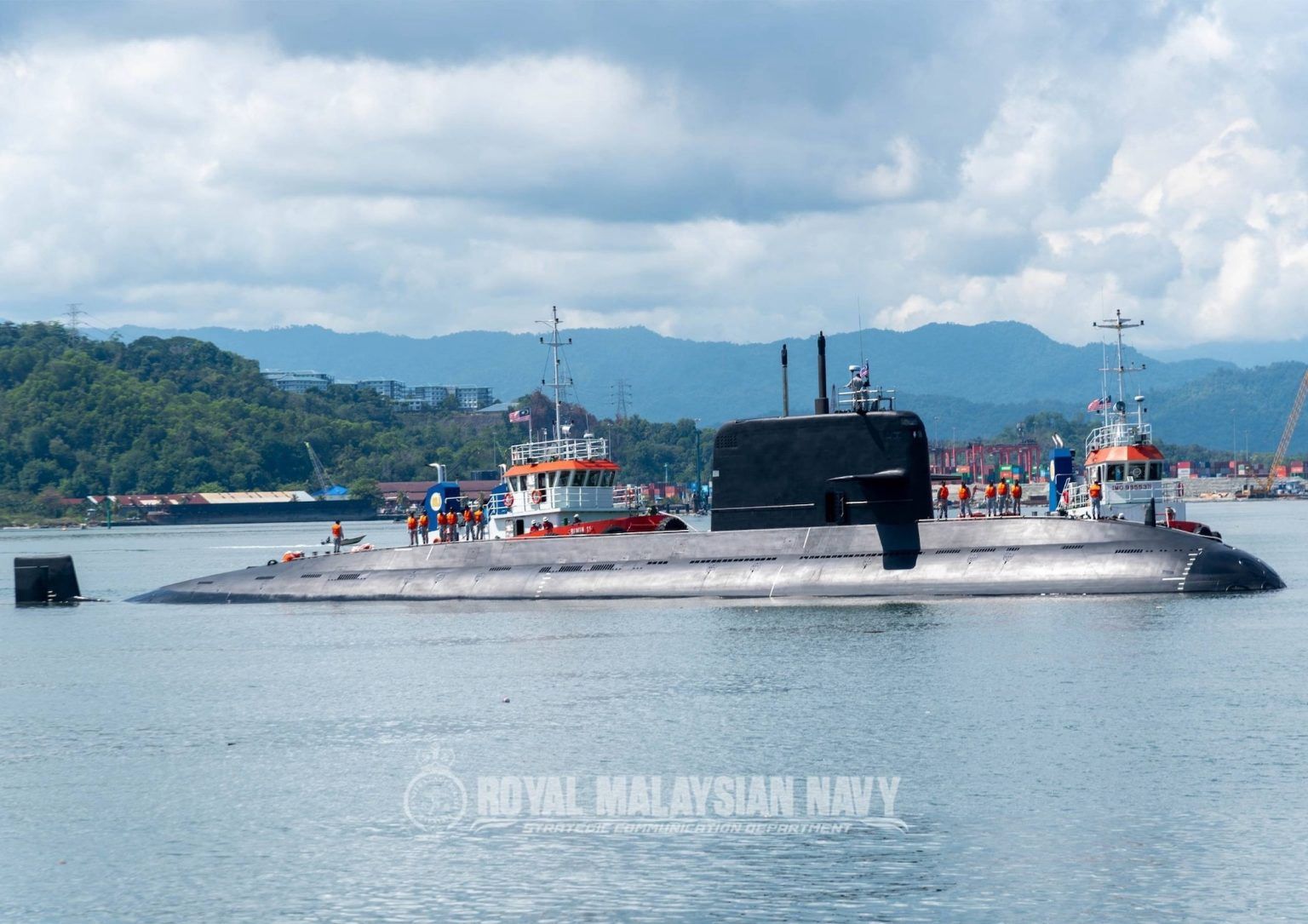
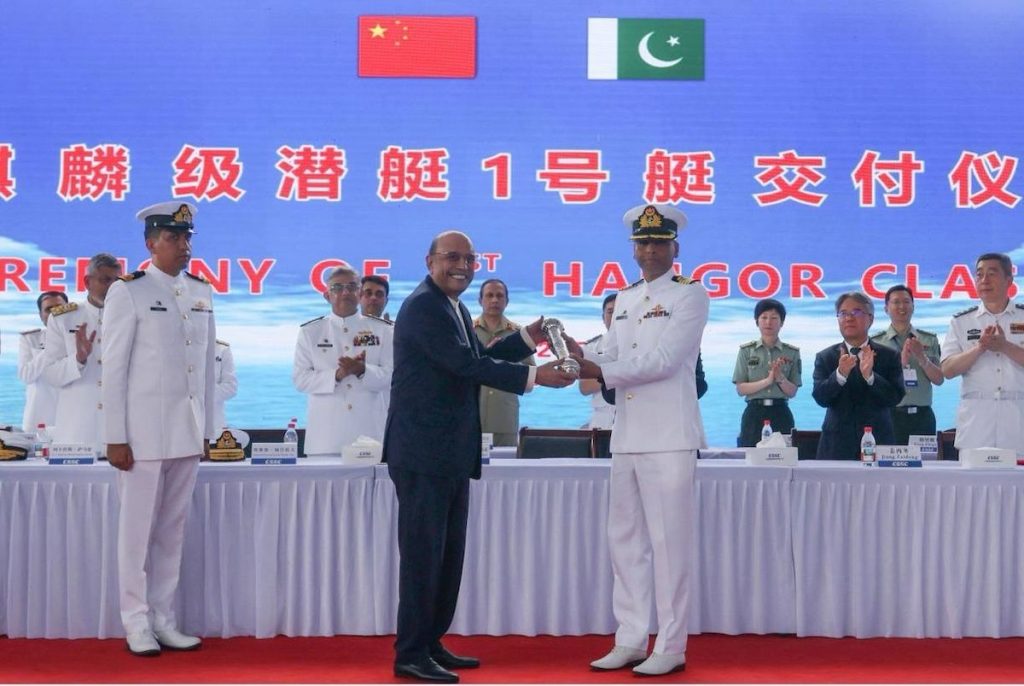
PAKISTAN commissioned the first of its Hangor-class diesel-electric attack submarine–the PNS/M Hangor in China’s port city of Sanya on April 30. The commissioning ceremony was attended by Pakistani president Asif Ali Zardari who was in China for a visit and accompanied by Chief of Naval Staff Admiral Naveed Ashraf alongside senior People’s Liberation Army Navy (PLAN) officials.
The president described the commissioning as a historic milestone in Pakistan Navy’s (PN) modernisation, affirming Pakistan’s resolve to maintain a robust, balanced and credible defence posture. He added that Pakistan is fully capable of defending its sovereignty, protecting its maritime interests and ensuring the security of its economic lifelines.
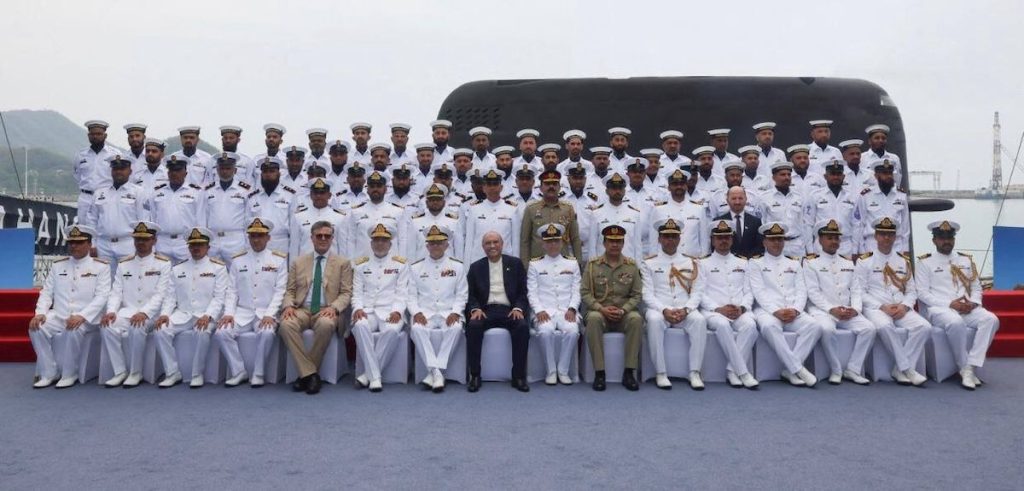
Additionally, Adm Ashraf highlighted that disruptions at critical maritime choke points increasingly threaten global trade and energy security, and maintaining a stable, rule-based maritime order demands technologically advanced naval forces. Stating that the Hangor-class Submarines, armed with state-of-the-art weapons, advanced sensors and air independent propulsion (AIP) will be key in preserving maritime order and stability in the region. These submarines will play a pivotal role in deterring aggression and ensuring security of vital sea lines of communication (SLOCs) across the Arabian Sea and the wider Indian Ocean region.
The submarine’s namesake also holds a significant place in Pakistan’s national history with the previous PNS HANGOR becoming the first submarine since World War II to sink a warship in 1971. “PNS/M Hangor will carry this illustrious legacy forward as this is an important milestone for Pakistan Navy that will bolster our maritime defence and modernise our fleet with cutting-edge technology”, a Pakistan Inter-Services Public Relations (ISPR) release stated.
“The commissioning of the first Hangor-class submarine marks another chapter in the time-tested and enriching friendship between Pakistan and China.
The Government of Pakistan signed an agreement with China Shipbuilding & Offshore International Company Ltd (CSOC) in 2015 to acquire eight Hangor-class submarines. Under the contract, four submarines are to be built in China, while the remaining four will be constructed in Pakistan at Karachi Shipyard and Engineering Works Ltd (KS&EW) under a transfer of technology program.
The second submarine, Shushuk was launched in March 2025, followed by Mangro in August and Ghazi in December. The vessels are said to be based off the Chinese Type 039A Yuan-class submarine.
According to China’s Ministry of National Defense (MND), the Hangor-class is also known as the Qilin-class, and said that the delivery of the Hangor “represents normal military equipment cooperation between the two countries and serves as a vivid embodiment of their all-weather strategic cooperative partnership.”
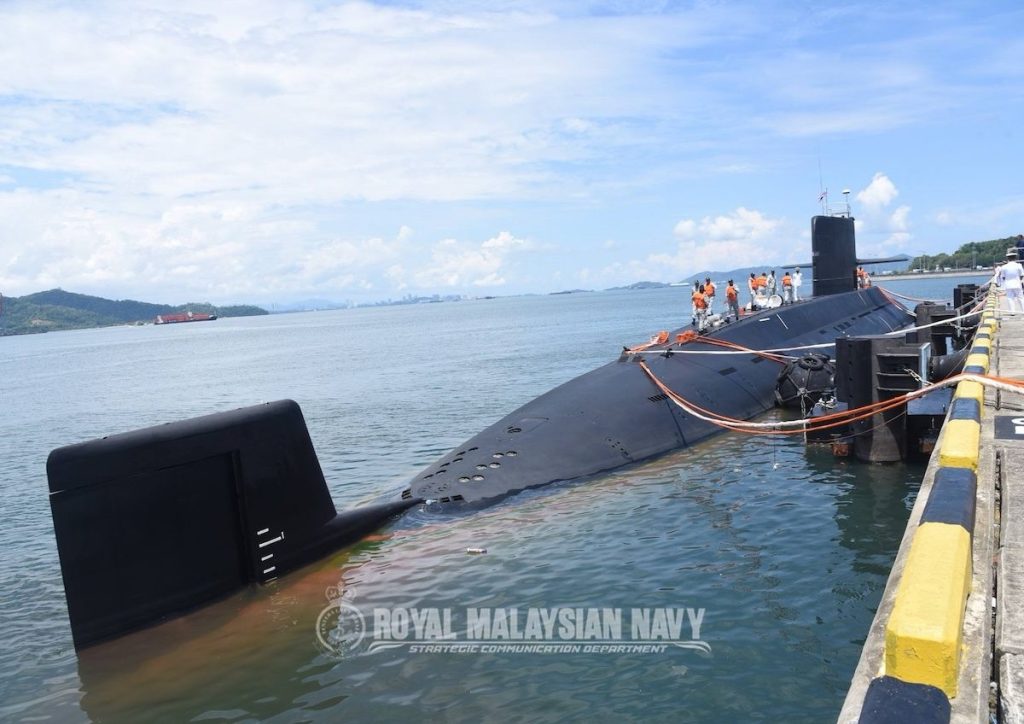
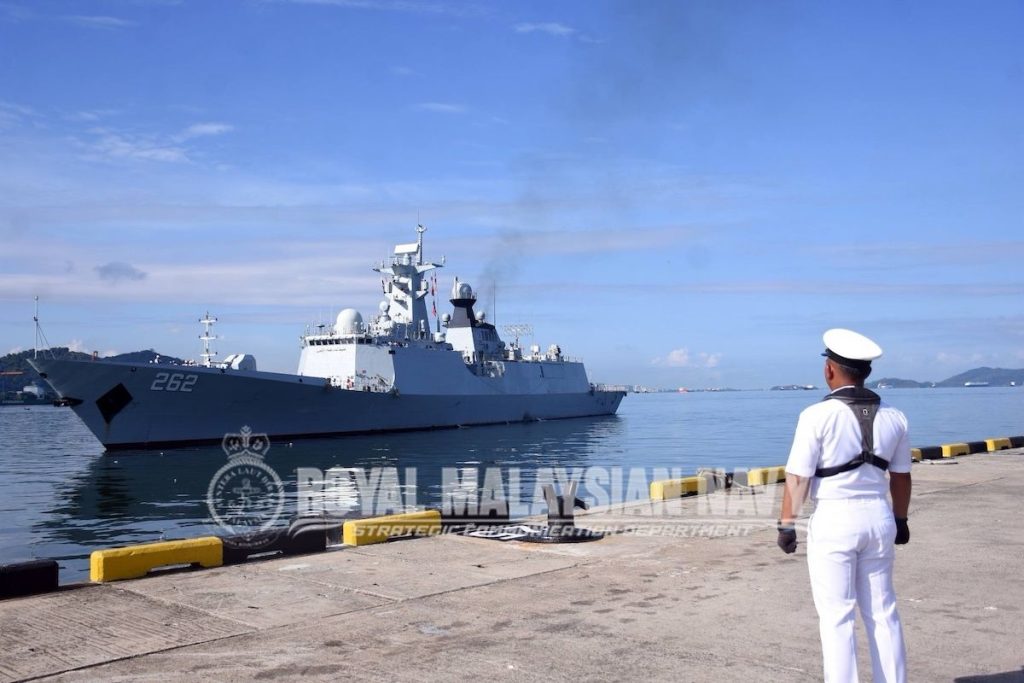
On May 8, the Hangor arrived in Malaysia’s Kota Kinabalu Naval Base alongside another Chinese-made Type 054A/P Tughril-class frigate PNS Taimur for an operational visit until May 11. A social media post from the Royal Malaysian Navy (RMN) stated that the operational visit was “conducted for replenishment, logistical coordination, and crew rest purposes before both vessels continue their voyage back to Pakistan.”
The RMN and PN also recently concluded Exercise MALPAK from April 18-21 around Lumut Naval Base and the surrounding waters of the Straits of Malacca, reaffirming the strong and enduring partnership between both navies.
The exercise involved Zulfiquar-class frigate PNS Aslat and the PNS Taimur, engaging in a series of professional interactions, including the introduction of the Subject Matter Expert Exchange (SMEE) before progressing onto the Sea Phase with RMN assets, multi-role support ship KD Mahawangsa and training ship KD Teguh Samudera, operating alongside their Pakistan Navy counterparts as a unified Task Group. “Key activities included personnel exchanges, allowing participants to gain firsthand operational experience onboard partner ships, as well as cross deck landing training to enhance procedural understanding and interoperability at sea”, the RMN said.–shp/adj/dl (Pix:PN, RMN)